Sri Lanka’s economic future lies not in the hands of the IMF but in decisive reforms led by its own government, warns economic analyst Dhananath Fernando, as misconceptions about the Fund’s role continue to spread.
IMF Not Bound to Grow Sri Lanka’s Economy
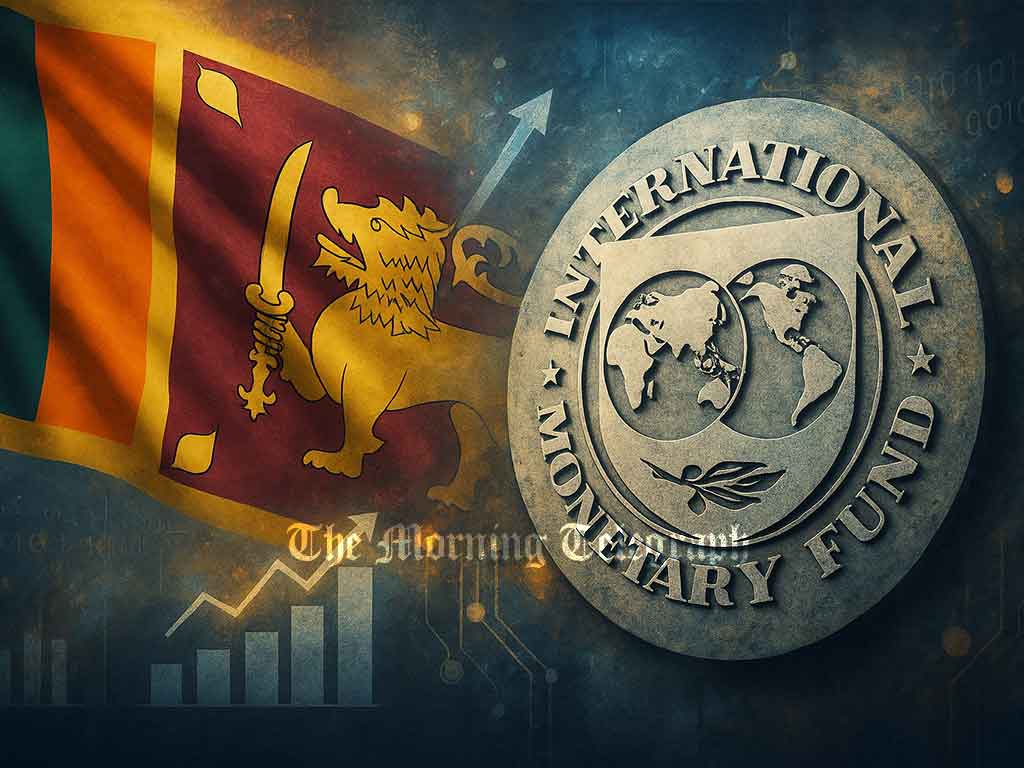
There is a widespread misconception that the International Monetary Fund (IMF) is responsible for driving Sri Lanka’s economic growth. However, economic analyst Dhananath Fernando emphasized that while the IMF provides stabilization support, real growth must come from government-led reforms.
Fernando explained that the IMF does not stand for economic growth but instead focuses on economic stabilization. Growth reforms, he said, are the sole responsibility of the Sri Lankan government through strong and consistent policies.

He highlighted that the IMF will only monitor structural areas such as the primary balance between income and expenditure, which has been set at 2.3, the reserves that the Central Bank is required to maintain, and the allocation of social security expenditure.
“The IMF is not committed to Sri Lanka’s economic growth. The reason is simple: growth is outside the IMF’s scope. It is the government’s responsibility to prepare a program to expand the economy,” Fernando said.
He pointed out that Sri Lanka must enact the Economic Transformation Act, encourage foreign direct investment, and remove barriers in market processes to achieve sustainable progress.
Fernando further explained that the IMF has no objection to whether revenue targets are met through state-owned enterprises or private sector efforts, as long as the required outcomes are delivered.
Sri Lanka is currently under a 48-month IMF program worth $2.9 billion, which will run until March 2027. Out of this amount, the country has already received $1.74 billion following the completion of the fourth program review.
Citing global examples, Fernando noted that nations such as South Korea, Iceland, and Ireland successfully completed their IMF programs and achieved stability. However, countries like Pakistan, Egypt, and Argentina were forced into second IMF programs after failing to meet debt reduction and stabilization goals in their first attempts.
This, he stressed, should be a lesson for Sri Lanka: while the IMF can provide a framework for stabilization, the real responsibility for growth rests firmly with the government and its ability to deliver credible reforms.