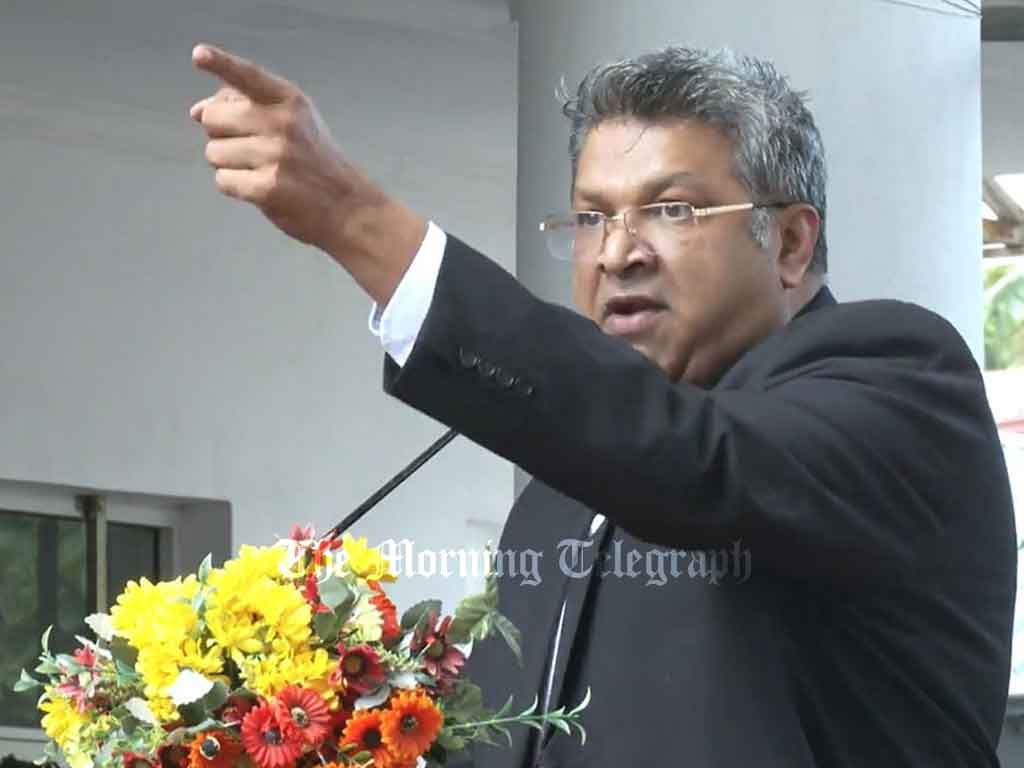
Justice and National Integration Minister Harshana Nanayakkara delivered a powerful message in Parliament as he joined the debate on the Presidential Privileges (Removal) Bill, making it clear that retired leaders who have stolen from the people have no moral right to enjoy taxpayer-funded privileges. He insisted that political office is a sacred trust, not an entitlement, and that Sri Lanka’s leaders must finally be held accountable for decades of misuse of power and wealth.
The minister reminded Parliament that the 1986 Presidential Privileges Act gave former presidents and even First Ladies generous benefits, regardless of the service they had rendered to the nation. He argued that in other countries, retirement benefits for leaders are tied to their contributions to progress, stability, and development, but in Sri Lanka, no such contributions had been made. Instead, he accused past leaders of corruption, exploitation, and theft of public funds. “Today, this bill is being presented to repeal the 1986 Presidential Privileges Act. We had a great judge named Weeramanthri. Whether it is a king or a president, the power should be exercised by the trustee and not by the owner. Since our presidency, everyone has been saying that the people do not need any money. We are only trustees,” Nanayakkara said, stressing that the presidency should never be viewed as a personal possession.
The minister questioned the fairness of allowing retired presidents to continue drawing pensions and receiving allowances for housing even when their contribution to the nation was negligible. “What will happen to the presidential pension in the future can be considered. But if there is no official house, one-third of the pension was given. But is it justified to do these things? Or not? This bill is not good. People’s money is being stolen. This power is being misused,” he told Parliament. He also noted that under the old act, unnecessary privileges were extended to First Ladies, an unfair burden on taxpayers at a time when the country continues to face economic hardship.

He pointed out that the new bill does not ignore security concerns. If a former president needs protection, the government can approve additional security through the Cabinet. However, Nanayakkara stressed that this should not be misused as a cover for excessive expenses. “This bill does not mention security. If there are concerns about security, it can be increased with the approval of the Cabinet. This bill must be prevented from being misused. If this is the case, it will only be shared with its own spoon,” he explained, warning against turning legitimate security needs into another opportunity for waste.
Nanayakkara tied this debate directly to Sri Lanka’s current economic situation, highlighting that the government cannot afford to waste money on retired leaders who failed the people. He said the economy is moving forward with purpose and progress, and that the repeal of wasteful privileges will help protect taxpayer money while supporting broader fiscal discipline. “Today, the economy is successfully moving forward. Today, rulers live like other people. Economic progress has made remarkable progress. Looking at the situation in Sri Lanka, the government’s efforts are fast and purposeful. In the future, the government’s revenue growth can be increased by 2 percent,” he said, positioning the bill as part of a wider reform agenda.
The minister was emphatic that no one should be above the law. “We do not need anyone who is above the law. Some say that pensions need to be paid. In some countries, presidents are entitled to privileges even after retirement. That is because they do some service to the country. They do something for the progress of the country. There is such a situation in countries like England and Germany. They contribute something. But such a thing does not happen in our country. What is the contribution made to the country?” he asked, challenging anyone to prove that past Sri Lankan presidents had earned their lavish privileges.
He explained that in democratic nations like England and Germany, leaders who genuinely serve the people are granted retirement privileges as recognition of their contribution. In Sri Lanka, however, leaders often used their time in office to enrich themselves and their families while leaving the public to struggle. “It is not fair to do that with the money of the taxpayers. Under these circumstances, we decided that we should not make such expenses,” he added, making clear that the government is determined to protect the public purse.
Nanayakkara said that abolishing such privileges is not about cruelty or disrespect, but about fairness and accountability. If a former leader faces real financial hardship, they can appeal directly to the president for assistance, but there should be no automatic entitlement funded by taxpayers. “As promised to the people, we will repeal this act and take steps to protect the people’s tax money,” he stated.
The minister’s strong words echo the frustrations of ordinary Sri Lankans who are weary of political corruption and elite entitlement. By pushing to repeal the privileges law, the government is sending a signal that leadership is not a lifetime reward but a temporary trust given by the people. Nanayakkara reminded the House that leadership should be exercised with humility, not arrogance, and that when leaders misuse their power, they betray the very citizens they are meant to serve.
In closing, the minister stressed that this reform is not simply a financial measure but a moral imperative. Political leaders should never be treated as untouchable or placed above the law. Retired presidents who looted the nation must no longer enjoy benefits paid for by citizens who continue to struggle daily with high costs of living and economic pressures. The repeal of the 1986 act is a step toward justice, accountability, and the rebuilding of public trust in governance.
Sri Lanka’s Justice Minister has drawn a clear line in the sand: leaders who steal from the people cannot continue to feed on the people’s tax money after retirement. His call is a demand for fairness and a reminder that true leadership is service, not privilege. The question that remains is whether Parliament will follow through with the courage to act.