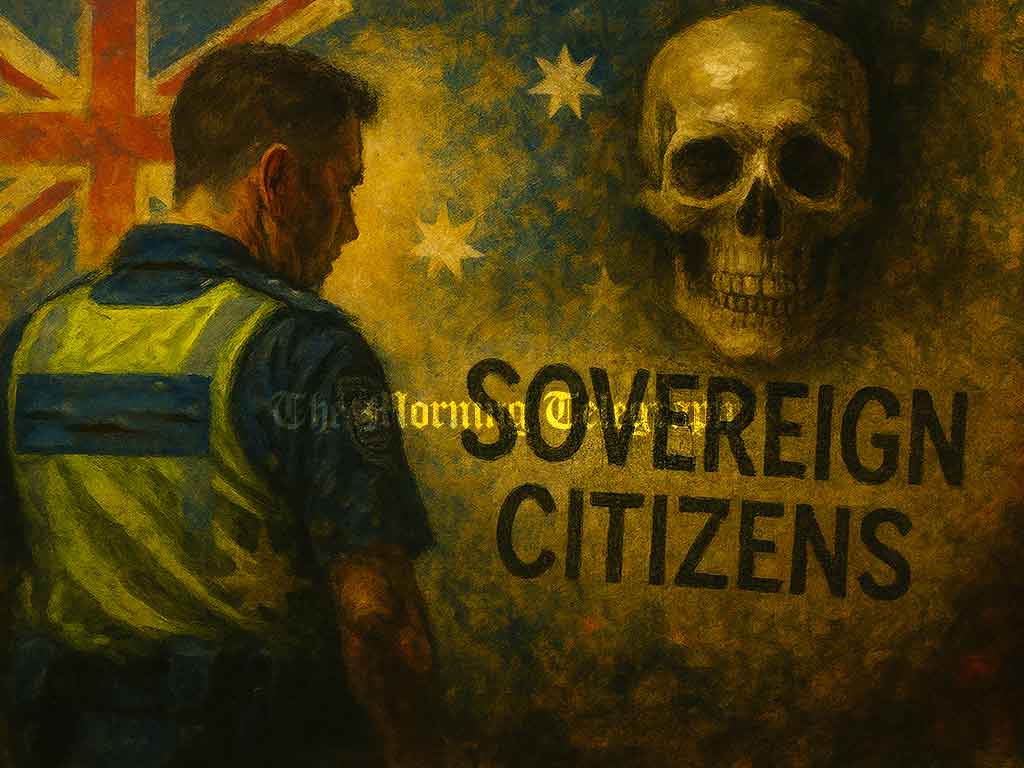
A deadly police shooting in rural Victoria has exposed the growing threat of Australia’s sovereign citizen movement, a U.S.-inspired ideology that rejects government authority, thrives on conspiracy theories, and is increasingly turning violent.
The fatal shooting of two police officers in rural Victoria has thrown a harsh spotlight on the rise of the “sovereign citizen” movement in Australia — a belief system imported from the United States that rejects government authority and, experts warn, is becoming increasingly violent.
The suspect, 59-year-old Desmond “Dezi” Freeman, fled into bushland after allegedly killing the officers who had arrived to serve a warrant on his property. Freeman, previously convicted of traffic offenses, had long railed against authorities, describing police as “Nazis” and “terrorist thugs.”
For decades, Australia’s sovereign citizens were dismissed as fringe figures pushing bizarre legal theories and filing endless lawsuits. But analysts say the Covid-19 pandemic, strict lockdowns, and growing financial pressures have fueled anger and drawn new recruits to the ideology. A survey last year suggested thousands of Australians now share elements of sovereign thinking, even if not all embrace violence.

Unlike cults with central leaders, sovereign citizens operate independently. They often clash with police during traffic stops, promote conspiracy theories online, and sometimes pay for “training” from U.S.-inspired activists. Once known mainly for “paper terrorism” — flooding courts with pseudo-legal claims — the movement now poses real risks, especially as some members reject Australia’s strict gun laws.
The Freeman case marks the deadliest episode linked to the movement in Australia, echoing a 2022 police ambush in Queensland that was also fueled by conspiracy theories. Authorities warn the ideology is adapting to local conditions and could spread further, fueled by economic stress and social distrust.
Counterterrorism and criminology experts say preventing radicalization will require addressing underlying grievances. Still, they acknowledge that once sovereign beliefs take root, they are extremely resistant to change. As one expert put it: “The government is damned if they do, damned if they don’t.”