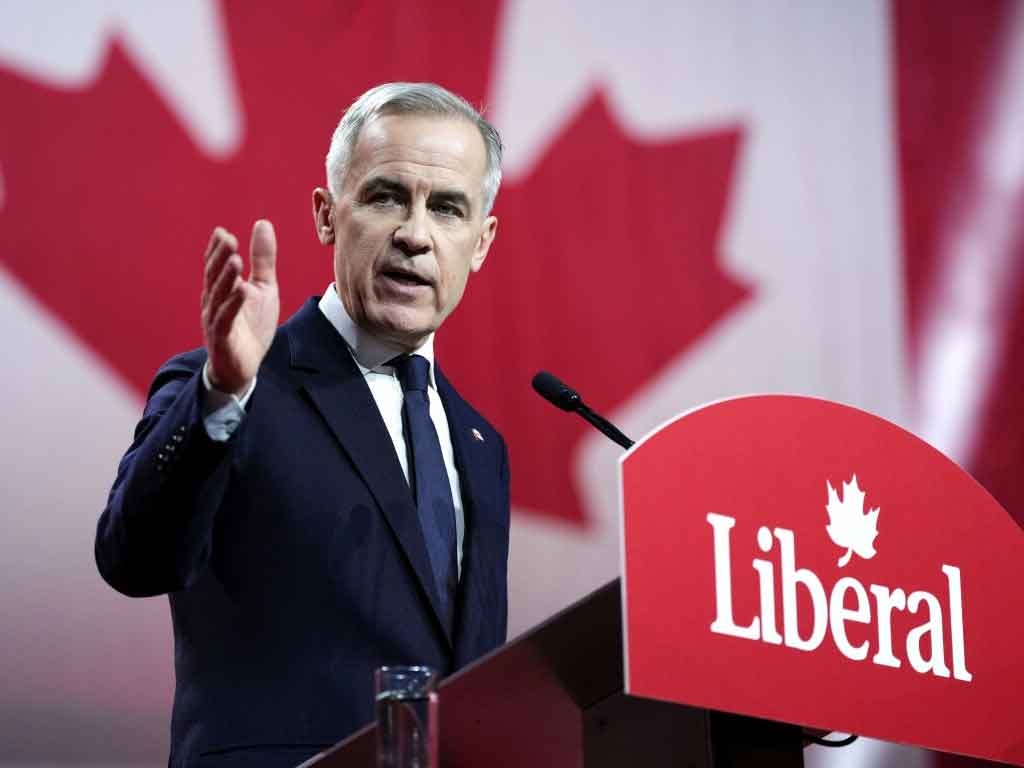
Six months into his tenure, Canadian Prime Minister Mark Carney is grappling with a slowing economy, impatient voters, and a reinvigorated opposition — a crucible that could define his leadership and the future of the Liberal government.
Half a year after replacing Justin Trudeau, Carney finds himself under pressure to deliver on sweeping promises that fueled his rise to power. The former central banker campaigned on bold commitments to turbo-charge infrastructure, transform housing, diversify trade away from the United States, and bolster Canada’s global standing. Now, with parliament returning for its autumn sitting, Canadians are demanding results.
Last week, Carney unveiled the first set of “nation-building” projects Ottawa plans to fast-track: doubling liquefied natural gas production at a British Columbia facility, expanding Montreal’s port, and building a modular nuclear reactor in Ontario. He also announced a new $13 billion federal housing agency aimed at accelerating home construction.
But expectations remain sky-high. “There’s already impatience from those who are waiting to see results,” said Marci Surkes, a former senior adviser in the Trudeau government. “Mr. Carney has set the bar very high.”

Economic strains deepen
While Carney campaigned on insulating Canada from the risks of Donald Trump’s presidency, voters are now more concerned about domestic woes. Unemployment has climbed to 7.1% — its highest level since 2016 outside the pandemic — and the economy contracted by 1.6% this summer.
Polling shows growing frustration, with Canadians feeling the government is distracted by foreign politics rather than focusing on affordability, healthcare, and housing. Analysts warn that a “souring economy” could quickly erode Carney’s popularity unless his policies deliver tangible relief.
A familiar foe returns
Carney also faces renewed pressure from Conservative leader Pierre Poilievre, who re-entered parliament in August after losing his long-held seat earlier in the year. Poilievre, known for relentless attacks on cost-of-living issues, has accused Carney of offering lofty promises without results.
“The real fighting match is about to begin,” Surkes warned, predicting Carney will face fierce opposition on immigration, crime, and affordability.
Austerity versus investment
Carney’s upcoming budget poses another test. He has described it as a balance of “austerity and investment,” directing ministers to cut departmental spending by up to 15% over three years while also committing billions to housing, infrastructure, and defense.
“This government is trying to walk and chew gum at the same time,” Surkes said. “It is both cutting and restraining, but also committing to major new investments.”
Pushback grows
Carney’s drive to fast-track projects has already triggered backlash. Indigenous leaders warn it risks undermining proper consultation, while environmental groups argue that expanding fossil fuel production undercuts Canada’s climate pledges. Early criticism of the British Columbia LNG expansion signals potential turbulence ahead.
“There’s a lot of support for boosting oil and gas at this moment,” said pollster Sébastien Dallaire. “But that support may not last.”
As economic headwinds intensify and political battles loom, Carney’s ability to balance ambition with delivery will determine whether his government sustains momentum — or falters under the weight of its promises.