In one of Sri Lanka’s most shocking health scandals, twelve high-profile accused, including a former health minister were granted bail after allegedly supplying fake medicine worth millions. The courtroom drama even saw case files arrive in a lorry, underlining the magnitude of the fraud.
The Colombo Special High Court made headlines yesterday when it granted bail to twelve individuals, including former Health Minister Keheliya Rambukwella, in the high-profile fake medicine scandal that has gripped the country. The decision was delivered by a special three-judge bench, despite opposition from the Attorney General’s Department.
The accused, who faced indictments for their alleged role in a fraudulent procurement deal, were each released on cash bail of Rs. 500,000 along with two surety bonds worth Rs. 5 million each. Among them were senior officials of the Ministry of Health, medical supply administrators, and the owner of the implicated pharmaceutical company.
According to the indictment, the case involves the conspiracy to misappropriate Rs. 1.44 billion in state funds by supplying 6,195 vials of non-medicinal substances, falsely labeled as human immunoglobulins and Ritopsimap, to the Medical Supplies Division. The fraudulent consignment was reportedly accepted as authentic, triggering one of the biggest medical procurement scandals in Sri Lanka’s history.

The case was heard before Justices Mahen Weeraman, Amali Ranaweera, and Pradeep Abeyratne. In addition to Rambukwella, the accused list includes Sudath Janaka Fernando, the pharmaceutical company’s owner; Dr. Kapila Wickramanayake, former Director of the Medical Supplies Division; Assistant Director Shanthini Solomon; Accountant Neran Dhananjaya; Stock Controller Sujith Kumara; and former Secretary to the Health Ministry Janaka Sri Chandragupta.
Others indicted were Dr. H.M.D.R. Herath, Deputy Director General of the Medical Supply Unit; Dr. Jayanath Buthpitiya, Procurement Committee member; Dr. Saman Ratnayake, Additional Secretary; Dr. Thusitha Sudarshana, Director of the Medical Supply Unit; and Vijith Gunasekara, former Chairman of the Drug Regulatory Authority.
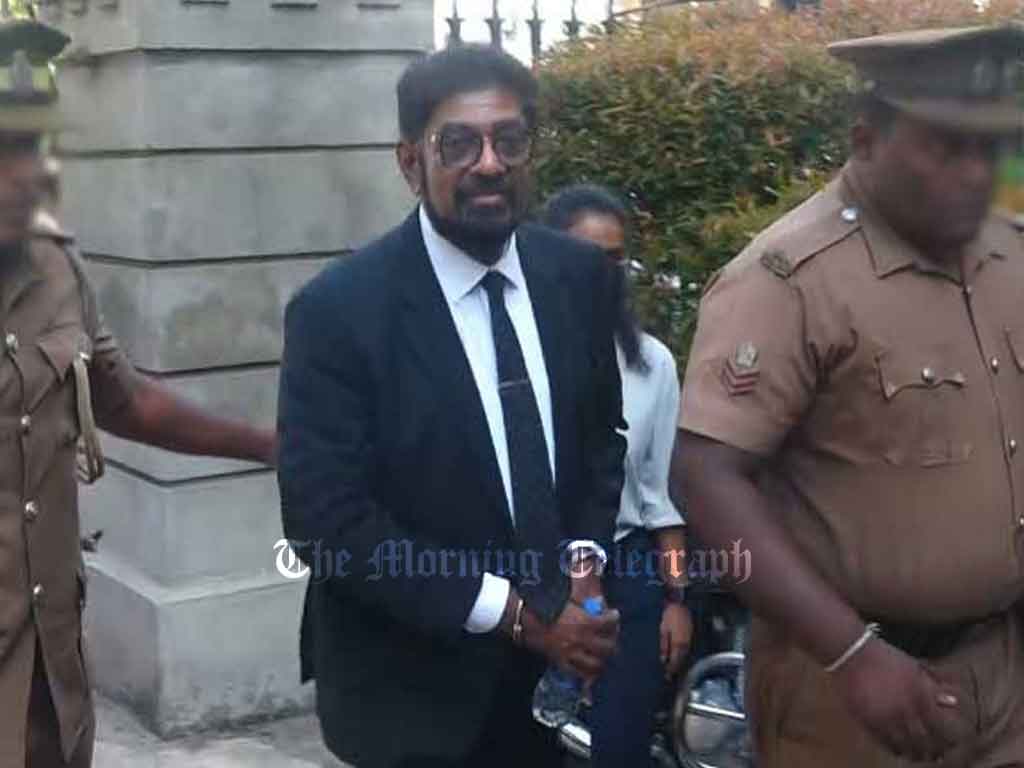
Adding to the spectacle, Criminal Investigation Department (CID) officers transported the mountain of case files to court in a small lorry, underscoring the scale of the documentation. The first accused, Sudath Janaka Fernando, was brought to court by prison officers after spending one year, eight months, and ten days in remand custody. His release on bail was granted once all bail conditions were satisfied.
One notable absence was that of Dr. Jayanath Buthpitiya, the ninth accused, who is reportedly abroad. His lawyer appeared on his behalf, while the indictments were formally handed over to the remaining eleven suspects in open court.
Deputy Solicitor General Lakmini Girihagama, appearing for the Attorney General, opposed the granting of bail, arguing that the public and victims deserved a fair trial. She stressed that the earlier grounds cited by the defense in the Magistrate’s Court were no longer valid. Girihagama also dismissed the argument about the vast volume of documents, stating that many cases involved large quantities of evidence, and this alone could not justify bail.
Defense lawyers, including President’s Counsel Anuja Premaratne and senior counsels Nalin Ladduwahetti, Priyantha Navana, and Sarath Jayamanne, countered that their clients had already been granted bail previously and had complied with all conditions. They emphasized that there was no practical reason to re-incarcerate the accused at this stage.
Justice Pradeep Abeyratne queried whether it would even be feasible to conduct the trial with the defendants in custody. Following a brief adjournment of ten minutes, the bench delivered its verdict, ruling in favor of releasing the twelve accused on bail.
The order brought relief to the defendants, particularly to Sudath Janaka Fernando, who has spent nearly two years in remand prison. However, the decision has stirred public debate, as critics argue that granting bail in such a massive fraud case risks undermining public confidence in the justice system.
The case, which touches on the misuse of taxpayer money, corruption in medical procurement, and the endangerment of public health, remains one of the most closely watched trials in recent memory. The court has scheduled the next hearing for October 31, when proceedings will continue.