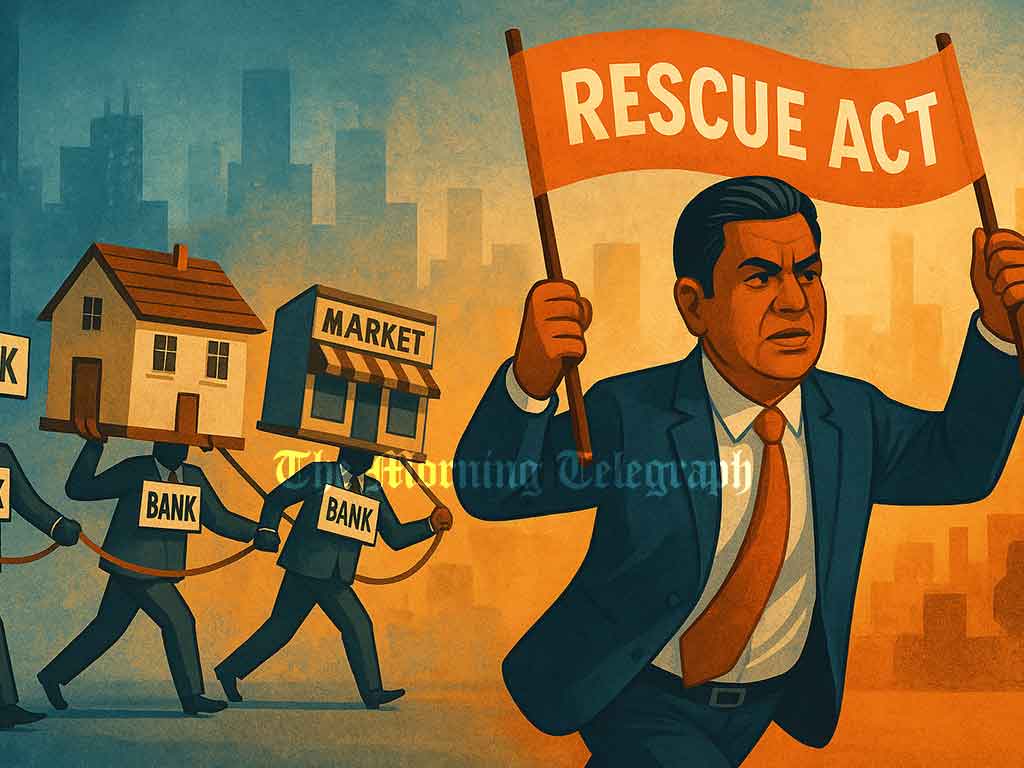
As Sri Lankan banks prepare to confiscate the properties of struggling small and medium-sized entrepreneurs, MP Ravi Karunanayake steps in with a bill promising relief, reform, and political drama, but will it actually save businesses, or is it just another parade in Parliament?
The economic crisis in Sri Lanka has once again placed small and medium-sized entrepreneurs on the chopping block, with banks preparing to confiscate properties under the Parata law. Into this chaos steps New Democratic Front MP Ravi Karunanayake, announcing a new private member’s bill aimed at protecting small and medium-sized enterprises (SMEs) from financial collapse.
Karunanayake confirmed that the proposed legislation, titled the Small and Medium-Sized Entrepreneurs Protection Act, has already been submitted to the Secretary General of Parliament. The bill is designed to provide relief to SMEs battling ongoing financial challenges and to prevent banks from seizing properties at will.

According to Karunanayake, SMEs form the backbone of Sri Lanka’s economy, contributing over 60% to the country’s gross domestic product. Yet these businesses have been hit hardest by the Covid-19 pandemic, the global economic downturn, and rising local financial pressures. Many now stand on the brink of collapse.
The MP highlighted that the most pressing issue lies in the high-interest burdens and the enforcement of the Parata law, which places entrepreneurs at immediate risk of losing their properties. He argued that without relief, thousands of jobs created by these businesses will disappear, further weakening the national economy.
“The country cannot afford to let SMEs collapse,” Karunanayake stressed. “They provide jobs, sustain industries, and drive growth. This bill is essential to strengthen their role and secure Sri Lanka’s economic future.”
The proposed act seeks to ease interest charges and restructure debt obligations, creating breathing space for businesses that fuel economic development. Karunanayake expressed hope that both the ruling party and the opposition will support the measure, framing it as a bipartisan effort to protect entrepreneurs who have long carried the weight of the nation’s economy.
As banks continue their march to seize properties, the fate of thousands of Sri Lankan entrepreneurs may now hinge on whether Parliament views this bill as genuine relief or just another political performance.