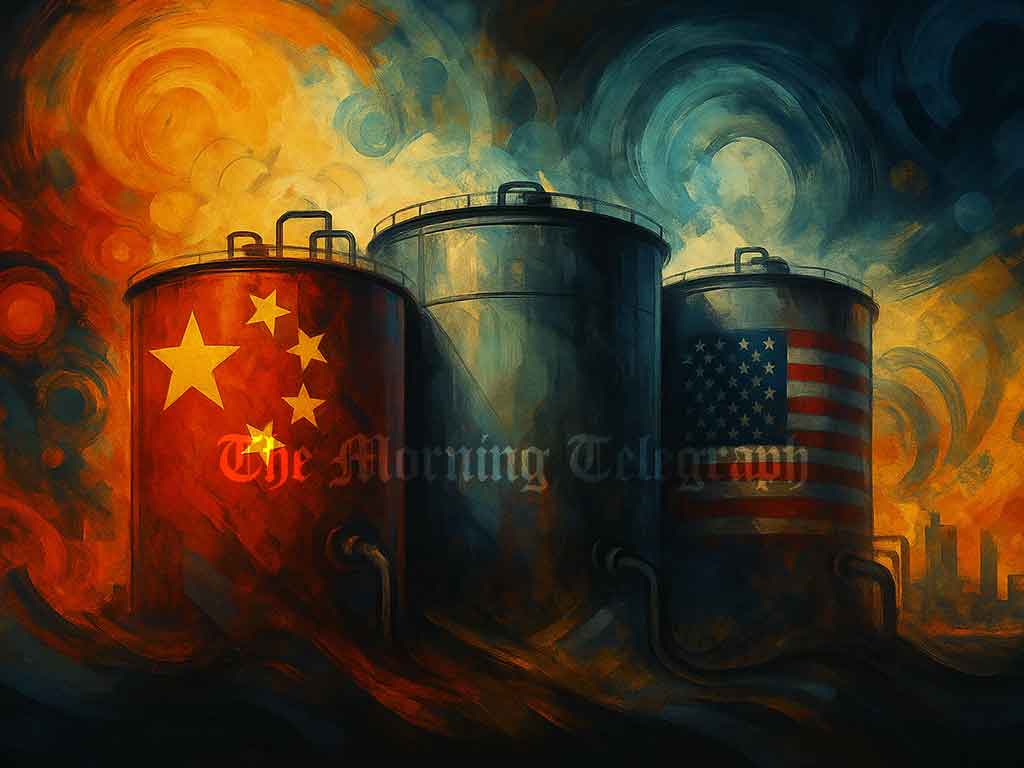
Sri Lanka’s $3.7 billion Hambantota oil refinery project with Chinese giant Sinopec is under fresh scrutiny, as the government signals it has no obligation to buy refined products while U.S. crude oil continues to feed Sapugaskanda.
Sri Lanka’s much-anticipated Hambantota refinery, a $3.7 billion investment by China’s state-owned energy giant Sinopec, is facing uncertainty over its domestic sales prospects. The Ceylon Petroleum Corporation (CPC) has clarified that there is no firm commitment to purchase Sinopec’s refined products, leaving the future of the Chinese refinery’s role in Sri Lanka’s fuel market hanging in the balance.
CPC Managing Director Dr. Mayura Netthikumarage explained that while the government is considering allowing Sinopec to sell up to 40% of its refinery output in Sri Lanka, the arrangement remains under negotiation and will not involve guaranteed contracts. Instead, domestic buyers, including CPC and Lanka IOC (LIOC), will only purchase Sinopec’s fuel if it is competitively priced through standard tender processes.
“If the price is competitive, anyone can buy up to 40% of Sinopec’s production, but there is no guaranteed commitment from CPC or any other player,” Dr. Netthikumarage stated. He further confirmed that CPC has no plans to cut back its own capacity, meaning market shares of existing players will remain largely intact.
The Hambantota Gamble
Sinopec, the world’s largest oil refiner by capacity, signed its agreement with Sri Lanka in January to accelerate the Hambantota refinery project, strategically located near the Hambantota International Port. The refinery is designed to process 200,000 barrels of crude oil per day, making it four times larger than the Sapugaskanda refinery. Much of its production is designated for export, but up to 40% could be released into the local market if terms are finalized.
In 2023, Sinopec produced 70.92 million metric tons of oil and gas, processed 258 million tons of crude oil, and posted a net income of 60.5 billion yuan (about $8.37 billion). Headquartered in Beijing, Sinopec remains a dominant force in the global petroleum and petrochemical industry.
However, the uncertainty surrounding Sri Lanka’s willingness to purchase its refined products raises questions about the project’s long-term integration into the domestic energy market.
U.S. Oil and Sapugaskanda’s Future
Concerns have also emerged over whether Sinopec’s local sales could affect Sri Lanka’s current crude oil purchases from the United States. Dr. Netthikumarage was quick to clarify that Sinopec’s refined output would not overlap with CPC’s crude oil imports. “The products from Sinopec are refined products, not crude. Their crude purchases are independent, and the crude we purchase from the U.S. is used exclusively for Sapugaskanda refinery operations,” he said.
The Sapugaskanda refinery, operated solely by CPC, has a refining capacity of 50,000 barrels per day. CPC continues to dominate Sri Lanka’s petroleum sector with a market share exceeding 50%. In the first half of 2025, CPC reported a profit of Rs. 18 billion, underscoring its strong financial standing.
A Crowded Energy Market
Lanka IOC, a subsidiary of the Indian Oil Corporation, remains the second major player in the market, holding an 18-20% share of retail fuel. It operates more than 260 fuel stations across Sri Lanka and controls 15.8% of the domestic lubricant market and 35% of the marine fuel supply market.
Meanwhile, the Sri Lankan petroleum market has attracted new foreign players, creating further competition. Australian company United Petroleum briefly operated in the country but closed its 64 stations in December 2024, which CPC later absorbed. At the same time, U.S.-based RM Parks is preparing to launch Shell-branded fuel outlets in partnership with Shell Brands International, signaling another wave of international competition.
The Unanswered Question
While Sinopec’s Hambantota refinery is set to become one of the most significant energy projects in Sri Lanka’s history, doubts remain about how much of its capacity will realistically feed the local market. The absence of guaranteed commitments from CPC and the reliance on competitive pricing raises questions over profitability and long-term viability.
As U.S. crude continues to fuel Sapugaskanda and local players like CPC and LIOC tighten their hold on market share, Sinopec may find itself competing harder than expected in a crowded, politically sensitive, and price-driven energy landscape.