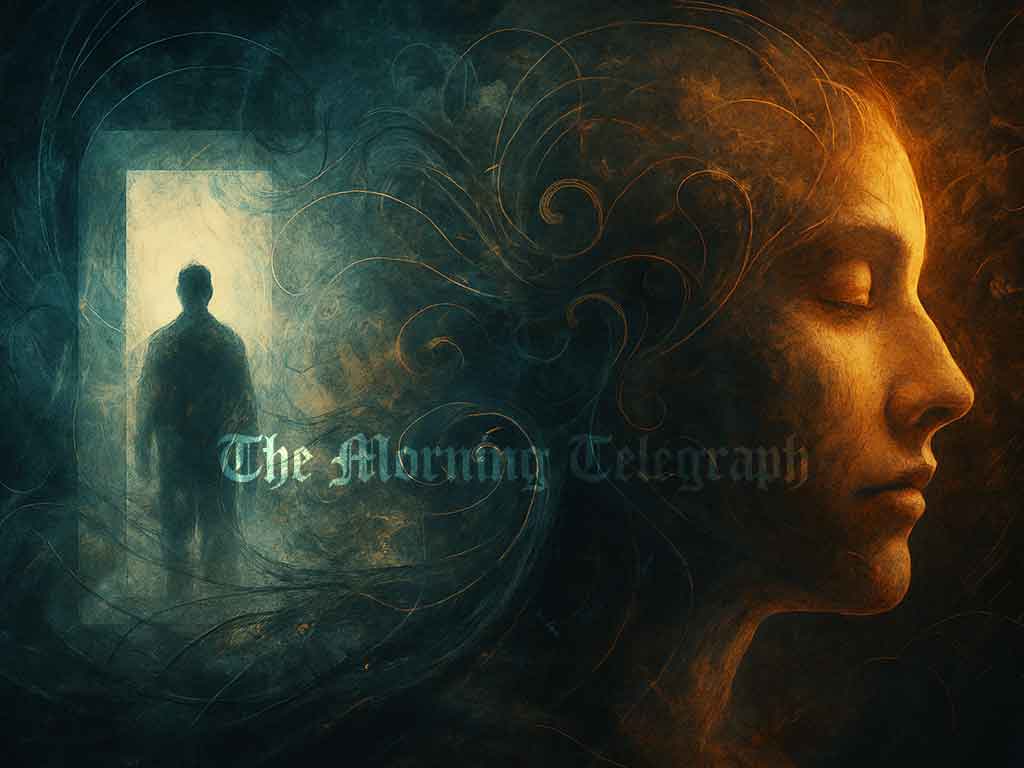
We mistake thoughts for truth and actions for identity. Yet freedom may lie in seeing ideas as tools, not prisons.
By: Roshan Jayasinghe
Every society, every person, is carried forward by thought. It is our blessing and our burden. We create bridges, nations, and art from thought. But we also create prisons, illusions, and endless discontent. This reflection explores how ideas shape our lives, not as enemies, but as companions that must be held lightly.
Every day we wake up to life, yet most of the time we don’t live it.
We live our ideas of it.
We live in the story of what we should be, what we should have, what we must become. Reality is here, in the breath, in the touch of another, in the ground beneath us, but we are somewhere else, caught in imagination.
We chase the idea of wealth.
We cling to the idea of importance.
We hunger for the idea of power.
Even goodness and badness, which belong to action, we shrink into identity: “I am good, I am bad.” But are we truly these ideas? Or are we only what we do in each passing moment?
Good and bad live in action, not in labels. To love is an act. To harm is an act. But an act of love does not mean a person is forever loving, just as an act of harm does not mean a person is forever bad. Each action arises from conditions, the thought we believe, the state we are in, the awareness we bring to that moment.
When we confuse the act with the whole person, we reduce ourselves and each other to ideas. But life is not asking us to be fixed identities. Life is asking us to meet each moment freshly, to see what we are choosing now, and what our action reveals.
Thought by itself is like wind moving across water, light, passing, harmless. But when thought hardens into an idea, it becomes a lens. Through that lens, we act, and the weight of consequence follows.
You may ask: If thought is neutral, why do ideas feel so heavy?
Perhaps because ideas take root. And once rooted, they grow into patterns of action.
“I must be successful” — striving, competing, dominating.
“I am unworthy” — shrinking, resisting, hiding.
“I am enough” — presence, generosity, creativity.
An idea itself is not the prison. The prison is built when we act as if the idea is the only truth.
Even the pursuit of stillness can turn into another idea. We hold silence as an achievement, presence as a goal.
You may ask: Isn’t stillness the answer? Isn’t being the goal?
Not if we make it into something to grasp. True being is not frozen, not performed. It is alive, fluid, responsive. Seeking has value, it wakes us up, shakes us out of complacency. But if we cling to seeking, we miss what is already here.
Presence cannot be achieved. It can only be noticed.
Between the rise of thought and the silence of being, there is a space. In that space lies freedom. Not freedom from thought, but freedom from being owned by it.
Life keeps teaching through opposites. Good and bad. Joy and sorrow. Silence and sound.
You may ask: Why must life be so divided? Why can’t there only be light?
Because without shadow, light is not seen. Without sorrow, joy has no depth. Without illusion, truth cannot shine.
Duality is not punishment. It is the classroom in which we grow. Yet we cling to one side and run from the other, celebrating joy, fleeing sorrow; praising good, denying shadow. In doing so, we miss half the lesson.
Both sides are mirrors. They do not trap us; they show us who we are.
If thought cannot be destroyed, and duality cannot be dissolved, perhaps the task is different.
You may ask: So what am I to do with my thoughts? How do I live in this duality without being trapped?
Perhaps the way is not to escape, but to walk lightly. To let thought come and go, without giving it the weight of truth. To let ideas point the way, but not sit on the throne of your heart.
You may ask: But how does one walk lightly when thoughts feel so loud?
Maybe it is as simple as noticing that thought is already passing. No thought has ever stayed. No sorrow has ever been permanent. No joy has lasted forever. Duality itself proves this. What is heavy today becomes light tomorrow. What is shadowed now may shine by morning.
To walk lightly is to move with this flow, to see the rise and fall without clinging. To allow both the thought and the silence, the joy and the sorrow, to have their moment and then let them pass.
Life is not asking you to win against thought. It is asking you to see that you were never bound by it in the first place.
Life is not asking for your ideas about it. It is asking to be lived.
Not as wealth, but as the bread you place on the table.
Not as power, but as the hand you extend.
Not as importance, but as the presence you bring.
And so, you may ask: But what does it mean to live wisely, if thought and duality never leave me?
Perhaps it means this: to act without being owned by the idea behind the act. To love without needing the idea of being “a loving person.” To face sorrow without collapsing into the idea of being “a broken one.” To see both poles of duality, yet move through them with balance.
You may ask: Then what remains, if not the story of who I think I am?
What remains is life itself, raw, immediate, unfiltered. Not the idea of wealth, but the food shared. Not the idea of power, but the kindness offered. Not the idea of importance, but the presence you bring here and now.
What remains is the recognition that thought and silence, joy and sorrow, good and bad, are not enemies. They are mirrors. And when you see them as mirrors, they no longer trap you, they show you the way.
So the real question becomes: when the next idea arises, as it surely will, will you live through its shadow, or through the life that is already shining here?
Author’s Note
This reflection is part of my ongoing exploration of thought, action, and the duality we all live in. I do not offer answers, but invitations, for each reader to see their own life reflected in these words, and perhaps pause long enough to glimpse the freedom that has always been here.
Editor’s Note
The author’s reflections are presented here as part of a continuing series on philosophy and self-inquiry. The views expressed are those of the author and are offered as contemplative insight, not prescriptive doctrine.
About the Author
Roshan Jayasinghe writes about consciousness, nature, and the unfolding of human experience. His reflections invite readers to pause, question, and return to the quiet clarity within. He contributes regularly to Morning Telegraph.