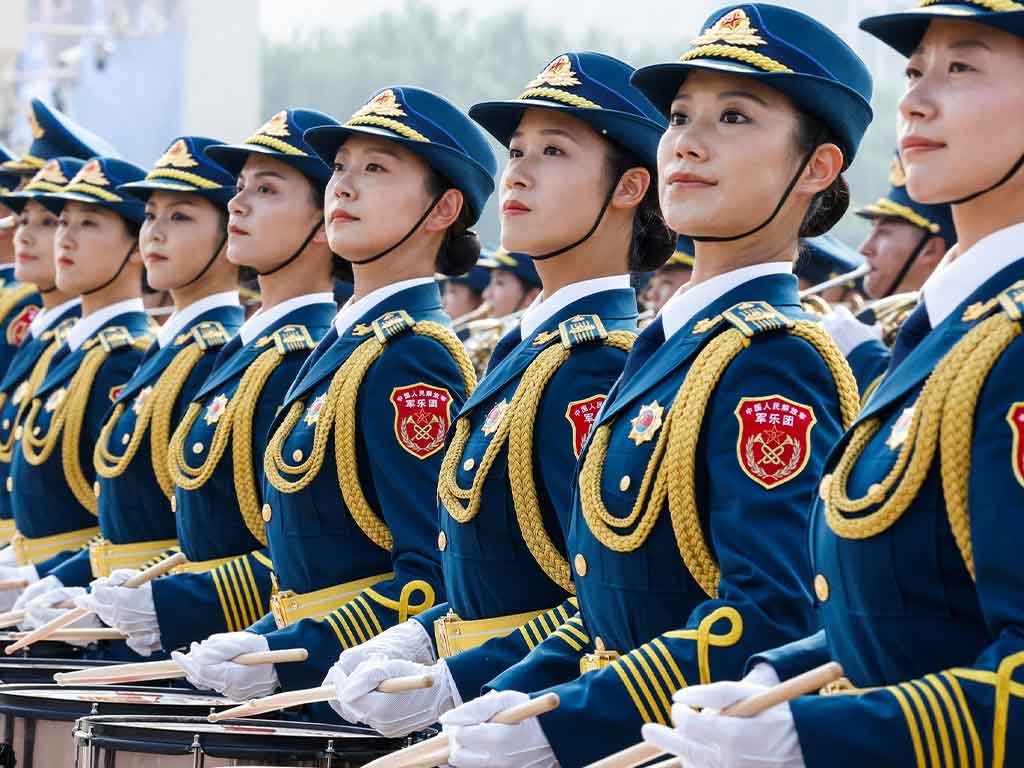
China’s women are no longer just participants in the nation’s story, they are becoming its authors. From political leadership to cultural preservation, sports to environmental stewardship, and domestic empowerment to international cooperation, the journey of women in China reflects a transformation that is both national and global.
The progress of women in China is a profound achievement of the new era, combining opportunity, agency, and global outreach. With the release of the white paper “China’s Achievements in Women’s Well-Rounded Development in the New Era” by the State Council Information Office, the world is presented with a sweeping account of how policies, social structures, and persistent effort have collectively empowered half of China’s population to become central drivers of national development and international engagement.
A New Framework for Women’s Leadership
Over the past decades, women in China have moved from the margins of governance into the heart of decision-making. The state has implemented strong policies to ensure women are not only included in leadership but also excel in it. By 2024, women represented 30.9 percent of CPC membership, marking a 7.1 percentage point increase from 2012. At the 20th CPC National Congress, 27 percent of delegates were women, signaling consistent upward mobility in political representation.
Women also increasingly dominate in law and governance. They hold 42.3 percent of judicial positions, 43.78 percent of prosecutorial roles, and 51.5 percent of juror positions nationwide. These numbers reveal a growing female influence in shaping legislation, overseeing justice, and guiding public accountability. This shift reflects a deliberate policy framework that not only recognizes women as voters and citizens but as core architects of governance.

Grassroots Democracy and Community Power
China’s transformation has not been confined to elite politics. At the grassroots level, women’s participation has been equally dramatic. By 2022, women made up 26.1 percent of village committee members and an impressive 54.3 percent of urban residents’ committee members. In enterprise governance, women now constitute 37.7 percent of boards of directors and 41.9 percent of boards of supervisors.
What amplifies this progress is the establishment of 431,000 women’s councils across rural and urban communities. These bodies provide platforms for women to articulate concerns, shape local decision-making, and drive community innovation. In practical terms, it means women are now deeply embedded in the structures that determine how villages, towns, and cities grow, and how resources are allocated.
Culture and Creativity as Engines of Change
Women in China are increasingly visible as cultural innovators and preservers of tradition. They have transformed literature, art, music, and performance into platforms that reflect the voice of modern Chinese womanhood. From Peking opera and ballet to contemporary television dramas and documentaries, women have asserted themselves as both custodians of tradition and pioneers of cultural modernity.
By the end of 2023, 457,000 women were employed in media and cultural industries, representing 43.14 percent of employees in this sector. Beyond numbers, their achievements in journalism are significant: women hold 44.1 percent of senior journalism titles and 50.6 percent of associate senior titles. These women not only inform but shape public narratives, guiding how society interprets itself and its values.
Even more striking is the role of women in preserving ethnic cultural heritage. Women constitute 25 percent of the 3,997 nationally recognized intangible cultural heritage bearers. Over 57 percent of trainees in these heritage programs are women. From Miao embroidery in Guizhou to Tu coiling embroidery in Qinghai, women are transforming local crafts into industries that blend tradition with modern entrepreneurship.
Sports as a Stage for Equality
In the arena of sports, women’s achievements mirror China’s rising international influence. Since 2012, female athletes have consistently represented over 55 percent of China’s Olympic competitors and have brought home more than 60 percent of the nation’s medals. In Paralympic competition, women account for more than half of the medals, reaffirming their place as champions of resilience and excellence.
Beyond elite sports, women drive community-level fitness initiatives. By 2024, more than 65,000 women had been trained as sports instructors in rural areas, and 56.1 percent of all community sports instructors nationwide were female. This grassroots influence underscores women’s leadership in advancing public health and promoting fitness for millions of families.
Social Harmony and Grassroots Governance
Chinese women are also central to building social cohesion. Community harmony programs, such as the “Family Points” initiative in Gansu Province, reward households for positive behaviors like public service, civic responsibility, and community engagement. By 2024, women led 3,690 county-level mediation commissions that resolved nearly 1.36 million family disputes since 2016.
Volunteerism is another domain where women dominate. Over 24 million registered female volunteers and 350,000 women-led teams now deliver nearly one million services aligned with the UN 2030 Sustainable Development Goals. This highlights not only their community-level impact but also their alignment with global humanitarian visions.
Environmental Leadership
China’s women are also frontline leaders in ecological stewardship. In Sanjiangyuan National Park, women make up one-third of eco-environmental guardians. They lead initiatives in reforestation, desertification control, and climate resilience. Teams like the Women Tree-Planting Team in Hainan Province and sand-control militias in Shaanxi have become symbols of sustainable environmental action.
By 2024, 445,000 women-led enterprises were active in the green economy, covering sectors from clean energy to organic farming. Nearly 70 percent of rural homestay management certifications were held by women, anchoring them as leaders in eco-tourism and sustainable livelihoods. Their work extends to household-level practices such as waste sorting, energy conservation, and community beautification campaigns.
A Global Stage for Chinese Women
The white paper highlights China’s expanding influence on global women’s development. From securing the UNESCO Prize for Girls’ and Women’s Education to hosting 29 women-focused conferences across platforms like APEC, G20, BRICS, and SCO, China has positioned its women as central figures in global dialogue.
China’s Belt and Road Initiative and South-South cooperation have extended opportunities abroad, empowering women in 106 countries through skill training, Juncao technology, and entrepreneurship initiatives. Thousands of female professionals have been trained through international exchange programs, reinforcing the role of women in cross-border development.
China has also made major contributions in humanitarian and peacekeeping contexts. More than 1,200 female peacekeepers and 100 women police officers have participated in UN missions. Women-led initiatives in solar distribution and clean cooking technologies are directly improving resilience in developing nations. These contributions reveal how Chinese women are not only transforming their own nation but influencing the future of global gender equality.
Toward an Inclusive Future
China’s journey toward empowering women is framed by equality, empowerment, and opportunity. With nearly 31 percent representation in Party membership, growing influence in law, grassroots governance, culture, athletics, volunteerism, and ecological leadership, women are integral to the story of national modernization.
The state’s commitment to gender equality, women’s rights, and holistic development reflects a vision where women are not confined to roles but are empowered as innovators, leaders, and decision-makers. By enhancing capabilities and fostering inclusive growth, China is positioning its women not just as contributors to national progress but as central actors in global advancement.
The transformation of women’s roles in China demonstrates that progress is not merely statistical but societal. With the combined strength of millions of women, China is shaping a new global era where resilience, creativity, and leadership are the cornerstones of development.