Allegations of corruption, hidden files, and political interference erupt as opposition leaders claim Minister Kumara Jayakody’s Rs. 8 million tender fraud case has been quietly buried by an “invisible hand.”
At a fiery media conference held in Maharagama, opposition figures unleashed sharp criticism of the government’s failures and raised damning questions about the fate of a corruption case against Power and Energy Minister Kumara Jayakody. Party leader Sugeeshwara Bandara, joined by Ajantha de Silva, Vikum Kitsiri, and Dinesh Abeykoon, accused the administration of deception, separatist appeasement, and shielding ministers from accountability.
Marking the first year of what they called the “Chethiya state,” Bandara argued that President Anura Kumara Dissanayake’s government has delivered little but broken promises and political theatrics. He accused the administration of fueling hatred and revenge politics, while failing to provide economic relief or meaningful reforms. Out of 1,329 pledges made, Bandara claimed only one had been fulfilled, dismissing the year as “the greatest deception in 76 years.”

The opposition leader slammed the government’s decision to amend the Retired Presidents’ Entitlements Act, stripping benefits in what he described as a targeted move against Mahinda Rajapaksa that brought no economic benefit. He further warned that dismantling military barriers, redistributing land in high security zones, and preparing to release the Vavuniya Air Force Base had emboldened separatist movements.
Adding fuel to the fire, Bandara highlighted the scandal of 323 containers released without inspection, calling it the “biggest theft in history.” With no accountability from Minister Bimal Ratnayake or the Director of Customs, he claimed corruption now sits at the heart of governance.
But the most explosive charge centered on Minister Kumara Jayakody. On August 17, a major media outlet revealed that he was to be charged over a 2015 tender fraud at the Fertilizer Corporation, which cost the government Rs. 8 million. At the time, a government spokesperson promised that justice would be served regardless of rank. Yet, more than a month later, no case has been filed.
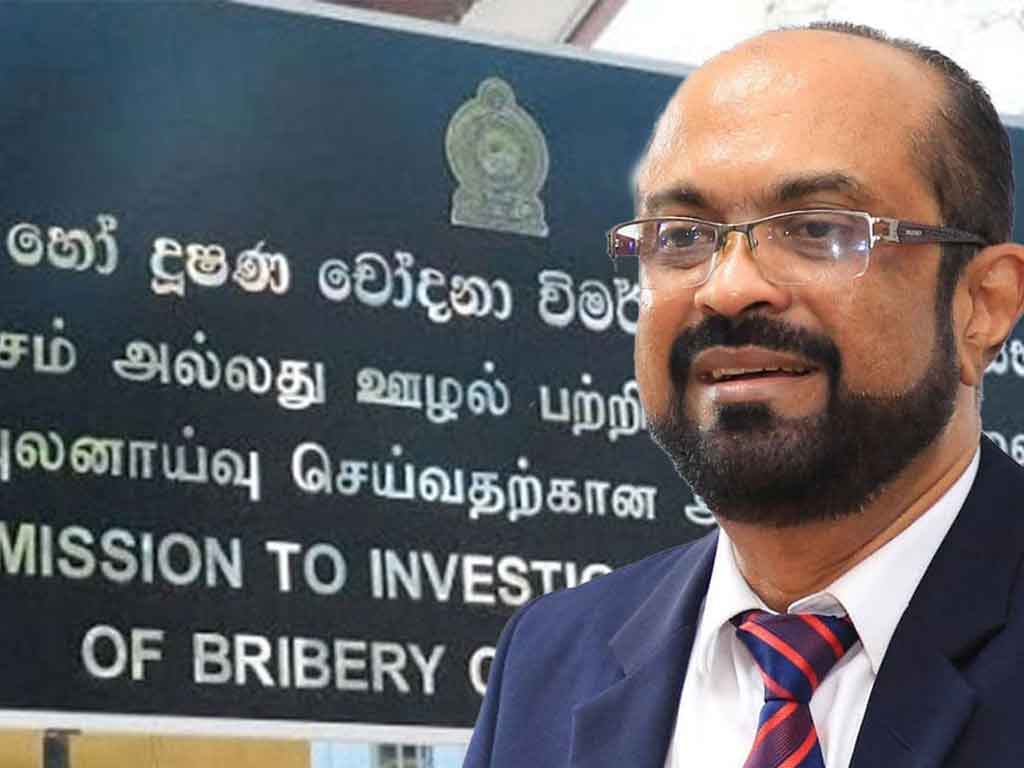
According to information disclosed at the press conference, investigations into Jayakody’s case were fully completed. The file was reportedly signed by all three officers of the Commission to Investigate Bribery and Corruption, as well as by its Director General. Despite this, the file remains idle, and no indictment has been presented in court.
Bandara accused unseen forces of manipulating the system to protect Jayakody. “An invisible hand is preventing the Bribery Commission from filing the case,” he said, pointing directly at Director General Ranga Dissanayake. Once praised as a respected High Court Judge and a model of integrity, Dissanayake is now being accused of yielding to political pressure.
“We call on Mr. Dissanayake to reveal to the country whether Minister Jayakody will face justice,” Bandara declared. “There is no need for this file to gather dust on your desk. Prove your impartiality and integrity to the people of Sri Lanka.”
The opposition argued that Jayakody’s stalled case is emblematic of a larger culture of impunity within the ruling coalition. They alleged that the government manipulates institutions, buries corruption scandals, and shields its allies while ignoring the suffering of ordinary citizens.
Critics further questioned the moral integrity of Parliament’s leadership, pointing to the appointment of a Speaker with a fake degree certificate and subsequent allegations of embezzlement against his successor. The opposition insisted that these incidents have degraded the dignity of the legislature and exposed the rot within state institutions.
As the controversy grows, the government faces mounting calls for transparency, with civil society groups and political opponents demanding that the Bribery Commission act independently. For many, the silence surrounding Jayakody’s case is a test of whether Sri Lanka’s anti-corruption laws will be enforced or reduced to hollow promises.
The revelations have sparked widespread public anger, as citizens grapple with economic hardship while political elites appear shielded from justice. If the allegations of political interference prove true, the scandal could deepen mistrust in government institutions already reeling from years of corruption and mismanagement.
For now, the unanswered question remains: who closed the file on Kumara Jayakody’s case, and will the truth ever see the light of day?