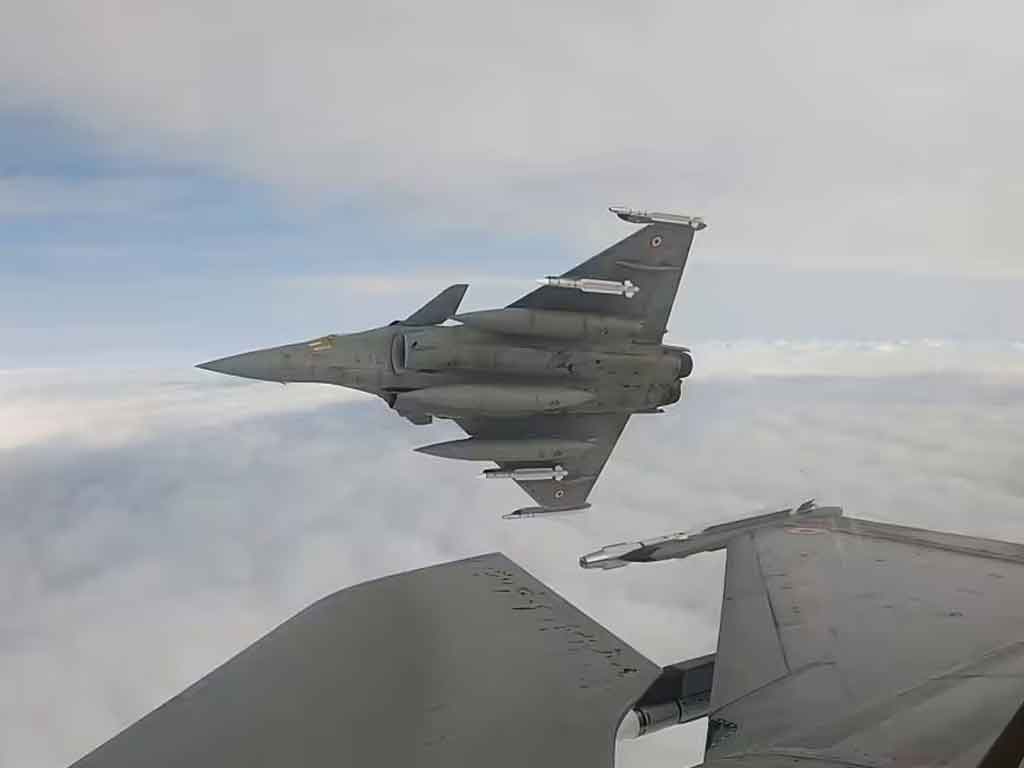
British RAF Typhoons scrambled over Poland under NATO’s “Eastern Sentry” mission after Russian drones brazenly violated allied airspace, marking the most serious incident since the Ukraine invasion. The patrols send a stark warning to Moscow while reaffirming NATO’s ironclad defense of Eastern Europe.
British fighter jets flew over Poland on Friday night as part of NATO’s efforts to strengthen its eastern defenses following multiple incursions by Russian drones. Two RAF Typhoon jets took off from the Lincolnshire base to patrol Polish skies, deter potential threats, and defend against aerial violations. The operation formed part of NATO’s “Eastern Sentry” mission, which also involves forces from Denmark, France, and Germany. According to the UK Ministry of Defence, the mission underscored Britain’s “unshakeable” commitment to NATO and was launched in response to what it described as the most serious violation of NATO airspace by Russian forces since the full-scale invasion of Ukraine in 2022.

Earlier this month, Russian drones violated Polish airspace, prompting Poland to shoot down several unmanned aircraft and trigger a Quick Action Alert. Allied forces scrambled jets to respond, marking the first time NATO had fired on Russian aircraft since the invasion of Ukraine began. The violation came amid growing tensions across the region, with European airspaces on high alert following incursions into multiple NATO member countries. Romania, for example, scrambled fighter jets in response to similar breaches, while Estonia intercepted three Russian MiG-31 fighter jets in an incident officials described as “unprecedentedly brazen.”
The NATO alliance has strongly condemned the actions, calling them “absolutely dangerous” and warning that such violations threaten regional stability. Operation Eastern Sentry was launched to prevent further incursions and to maintain a visible NATO presence along the alliance’s eastern flank. The mission illustrates the heightened readiness of allied militaries and their willingness to act swiftly against Russian provocations, reinforcing NATO’s collective defense principle. Analysts say the operation sends a clear message to Moscow that any violations of NATO airspace will be met with immediate and coordinated military response, while also reassuring eastern European member states of NATO’s protective commitments.