Russia has reignited talks on building a nuclear power plant in Sri Lanka, challenging the dominance of the United States, India, and China in the region. With Moscow presenting itself as a respectful partner while others see hidden geopolitical risks, the proposal puts Colombo at the center of a global tug-of-war over energy and influence.
Russia has renewed its proposal to establish a nuclear power plant in Sri Lanka, reviving an initiative first floated during the administration of Ranil Wickremesinghe. The move comes as the United States, India, and China compete for strategic influence on the island, placing Sri Lanka in the spotlight of a growing geopolitical struggle.
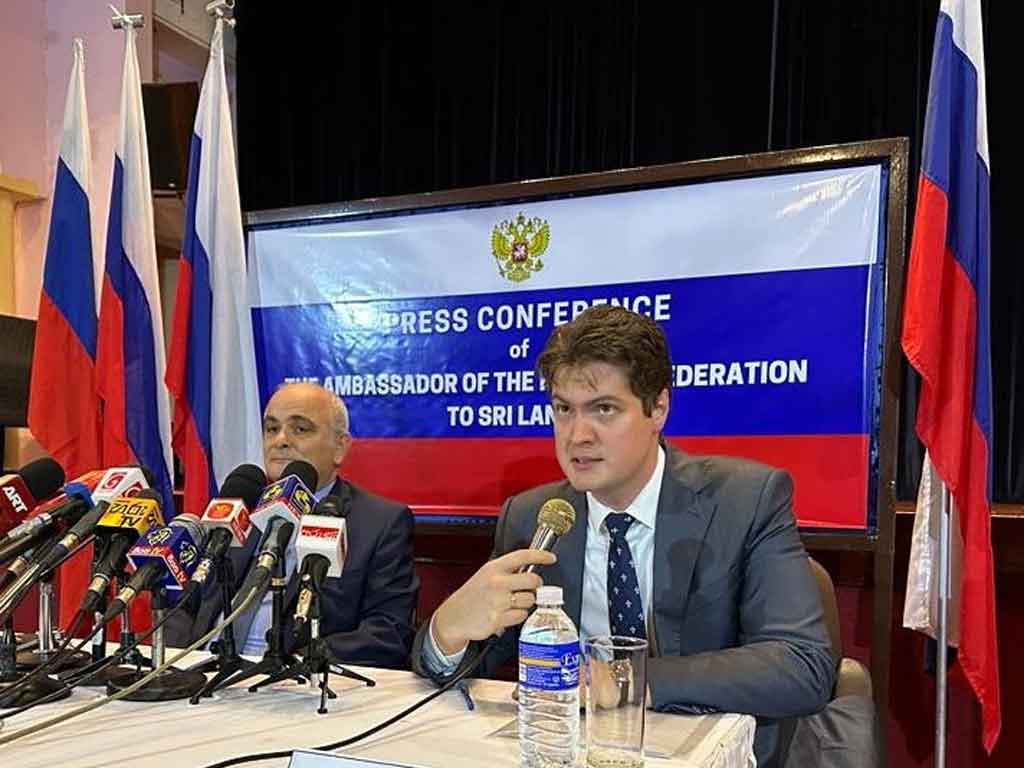
Speaking at a media briefing held at the Russian Cultural Centre in Colombo, Russian Ambassador Levan Dzhagaryan stressed Moscow’s respect for Sri Lanka’s sovereignty. He noted that Russia does not interfere in the internal affairs of other nations and that the decision on the nuclear project rests entirely with Colombo. “Sri Lanka is a sovereign country. Unlike other external actors, we do not interfere in the internal affairs of sovereign nations. As you know, progress has been made on the nuclear power plant project, but it is up to Sri Lanka to decide, as the ball is now in their court,” Dzhagaryan said.

The nuclear power proposal, originally discussed under Wickremesinghe’s pro-Western government, has resurfaced under a new political climate. Observers suggest Moscow may believe it has a better chance of advancing the initiative with Sri Lanka’s leftist-led JVP government. Yet, signs indicate that the current leadership is taking a cautious stance toward Moscow. JVP leader and current head of state Anura Kumara Dissanayake even declined a personal invitation from Russian President Vladimir Putin to attend the BRICS summit, signaling careful distance.
The relationship between Russia and the JVP has a long and complicated history. Party founder Rohana Wijeweera once received support for studies in Moscow during the 1960s, but after falling ill and returning home, he grew disillusioned with Soviet communism. Wijeweera instead aligned with the Chinese communist line, setting the stage for decades of tension with Russia. Analysts suggest that this historical backdrop may help explain the JVP’s reluctance to deepen ties with Moscow today, given the potential risks of straining relations with the United States while also complicating ties with China.
The revived nuclear power proposal also comes as Moscow uses diplomatic platforms to defend its global position. At the same Colombo briefing, Russian Embassy spokesperson German Fedorov addressed Moscow’s concerns about Ukraine’s new law on national memory, passed by the Verkhovna Rada on August 21. The law, titled On the Fundamentals of State Policy of National Memory of the Ukrainian People, has been criticized by Russia as a neo-Nazi effort to erase Soviet history. Fedorov argued that glorifying controversial nationalist figures such as Stepan Bandera while banning Soviet symbols, including the St. George ribbon, violates Ukraine’s constitution and international law. He warned that such measures undermine peacebuilding efforts involving both Russia and the United States.
For Sri Lanka, the question remains whether the nuclear power project offers a path to energy security or a doorway into geopolitical tension. With Washington, New Delhi, Beijing, and Moscow all competing for influence, Colombo must weigh the benefits of Russian nuclear technology against the risk of entangling itself further in global rivalries.