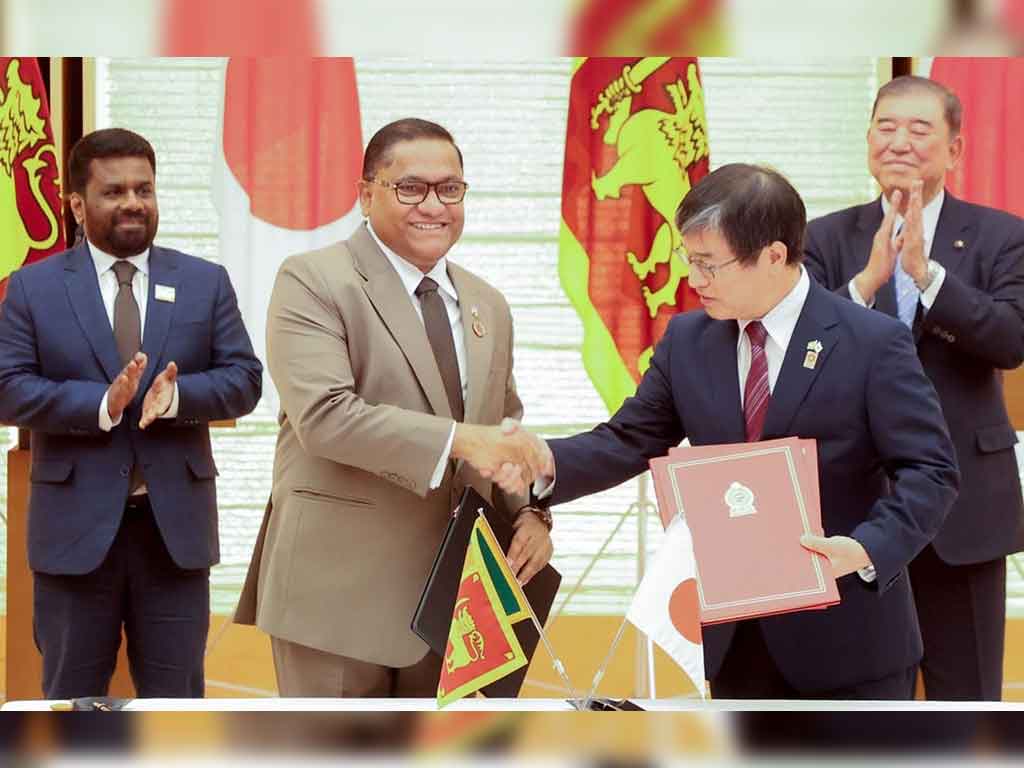
A heated political storm has erupted after allegations surfaced that President Anura Kumara Dissanayake’s recent visit to Japan was marred by misuse of public funds and questionable agreements.
Former Provincial Councilor Waruna Rajapaksa has accused President Anura Kumara Dissanayake of misusing state funds during his official visit to Japan, sparking yet another controversy in Sri Lanka’s political arena. Speaking on a Derana TV debate program, Rajapaksa claimed that the President’s trip, undertaken during a caretaker government, raised serious questions about legality, transparency and the true purpose of the agreements signed abroad.
According to Rajapaksa, agreements signed during the visit lack validity as they were conducted under the authority of a caretaker administration, which traditionally does not have the mandate to finalize binding deals of such magnitude. He argued that this undermines the legitimacy of the documents signed and casts doubt on their enforceability in the future.

He further alleged that the agreements themselves were highly irregular. The Japanese side, Rajapaksa pointed out, was represented not by a government minister or high-ranking secretary but instead by Japan’s ambassador to Colombo. This unusual circumstance, he argued, called into question the seriousness and credibility of the deals. He insisted that there was no justification for transporting Sri Lanka’s head of state and an ambassador to Japan simply for a signing ceremony that could have been conducted at the Japanese Embassy in Colombo with Minister Vijitha Herath.
Rajapaksa claimed this episode reveals not only wasteful expenditure of public funds but also an attempt to create political optics rather than genuine diplomatic progress. By flying an ambassador overseas to sign agreements, he said, the government demonstrated poor judgment and failed to uphold accountability.
These allegations have intensified scrutiny of President Dissanayake’s foreign engagements and the government’s handling of international relations. Critics argue that in a time of economic strain, Sri Lanka cannot afford to waste resources on symbolic gestures while ordinary citizens face daily financial hardships.
With public debate heating up, the accusations could deepen political divisions and force the administration to clarify the details of the Japan visit, the true cost of the trip, and the validity of agreements signed under contested circumstances.