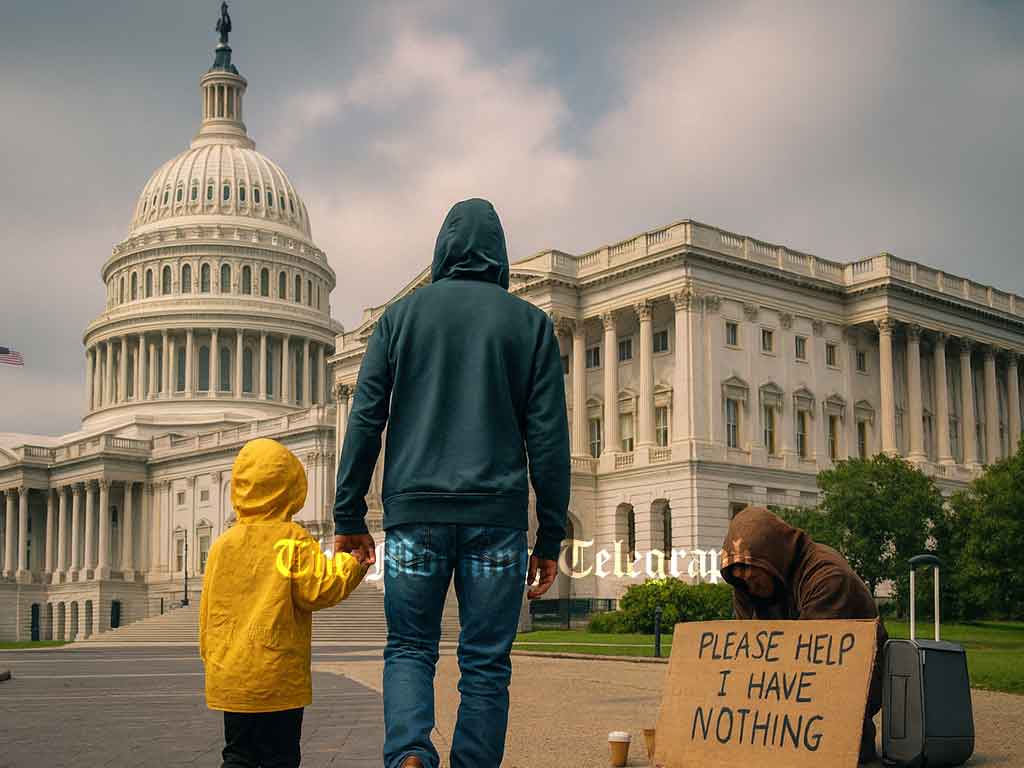
The United States government has officially shut down, throwing federal operations into chaos and leaving thousands of workers facing unpaid leave. With Congress failing to approve a funding bill before the start of the new fiscal year, essential services continue under strained conditions while non-essential departments grind to a halt. The political standoff in Washington shows no clear resolution, raising fears of prolonged disruption that could hurt both citizens and the economy.
This shutdown, like many before it, stems not from a lack of resources but from political deadlock. Republicans, who control both the House and the Senate, demand that federal spending bills be separated from policies tied to healthcare subsidies. Democrats insist that Affordable Care Act subsidies must be extended as part of the budget. The inability to find compromise has now left the federal government without funding to fully operate.

For federal employees, the situation is devastating. Agencies have already begun placing staff into two categories: essential and non-essential. Essential workers, such as air traffic controllers, border patrol officers, and defense personnel, must continue working without pay until a resolution is reached. Non-essential staff are furloughed, placed on temporary leave with no pay and no ability to work, even voluntarily. While retroactive pay has historically been approved once a shutdown ends, contract workers, such as cleaners, maintenance staff, and food service providers, are not guaranteed repayment. For many, every missed day is permanent lost income.
The consequences extend beyond government workers. Federal programs that millions of Americans rely on face delays and closures. Passport applications, federal student aid, small business loans, and nutrition assistance programs may be suspended or slowed. Museums and visitor centers close their doors, while national parks remain technically open but without critical services like trash collection or restroom maintenance. In previous shutdowns, such closures caused mounting frustration among citizens and tourists alike.
Shutdowns do not last forever, but their economic impact can linger. The 2018–2019 shutdown, the longest in U.S. history at 35 days, cost the American economy an estimated $3 billion that was never recovered. Businesses that depend on government contracts lost revenue, households reduced spending due to unpaid wages, and investors lost confidence in Washington’s ability to govern. This time, economists warn that a prolonged shutdown could cause even greater harm given ongoing global economic pressures, trade disputes, and rising interest rates.
The shutdown highlights how deeply partisan politics affect the functioning of government. For Democrats, tying healthcare subsidies to the budget is a matter of protecting millions of Americans from higher insurance costs. For Republicans, separating the issues is about controlling spending and avoiding what they see as an overreach of federal policy. Both sides are digging in, with little indication of compromise on the horizon.
Agencies, however, were not unprepared. Each federal department maintains contingency plans for shutdowns, outlining which positions are essential. These plans go into effect immediately when funding lapses. In the past, roughly 800,000 of the government’s 2.2 million employees were affected during a shutdown, and similar numbers are expected this time. For those deemed essential, working without pay creates significant stress, particularly for families who depend on timely wages to cover rent, mortgages, or bills.
The impact on ordinary Americans is also real. Students applying for federal loans may face delays. Families reliant on federal nutrition assistance could see interruptions. Communities near closed federal offices lose access to services, and businesses dependent on federal contracts face uncertainty. Even air travelers could experience disruptions if staffing shortages hit air traffic control and safety inspection schedules.
The White House Office of Management and Budget has asked agencies to prepare for prolonged disruption. Officials estimate that more than 100,000 government workers may face temporary layoffs if negotiations continue to stall. While political leaders argue, workers and families across the nation brace for missed paychecks.
Shutdowns have become increasingly common in modern U.S. history, occurring 14 times since 1981. Some lasted less than a day, while others dragged on for weeks. The primary cause has nearly always been partisan disputes over budget priorities, with immigration, healthcare, and spending levels often at the center. Because of this frequency, agencies are practiced at implementing emergency plans, but no amount of preparation eliminates the disruption and stress caused to millions.
The longer the shutdown continues, the greater the risk to economic stability. Consumer spending could fall sharply if federal employees stop receiving pay. Delays in government contracts ripple through private companies, especially in construction, defense, and research. Wall Street watches nervously, as investor confidence often dips when the government appears dysfunctional. At the same time, America’s global reputation as a stable democracy suffers when budget gridlock repeatedly paralyzes the government.
Despite the bleak outlook, there are some safeguards. Essential services tied to national security, law enforcement, medical care in federal hospitals, and air travel safety continue to operate. Military personnel, federal prison staff, and border patrol agents remain on duty. However, they too are caught in limbo, forced to work without knowing when their pay will come.
Public frustration is mounting as Americans ask why Congress cannot fulfill its basic duty of passing a budget. Temporary funding measures, known as continuing resolutions, have often been used to buy time when deadlines loom. This time, however, even those stopgap bills have failed due to partisan disputes. The deadlock may drag on until one side bends under public or economic pressure.
The current standoff is not simply about numbers on a spreadsheet but about competing visions of government itself. Democrats argue for protecting healthcare subsidies as part of a broader safety net. Republicans press for fiscal restraint and separating budget decisions from long-term policy commitments. Until compromise emerges, federal workers, families, and businesses remain the collateral damage of Washington’s political battles.
The coming days will be critical. Lawmakers face pressure not only from their parties but from millions of Americans who depend on functioning government services. Each day without a deal increases the strain on workers, the economy, and public trust. The shutdown may end quickly, but the scars it leaves on citizens and institutions often outlast the budget dispute itself.
America’s government shutdown is not just a political impasse in Washington. It is a national crisis touching families, businesses, and communities across the country. Whether it lasts days or weeks, its impact will be felt long after Congress finally agrees to fund the government again.