The U.S. government shutdown has triggered a fierce partisan standoff, with the White House warning of imminent mass layoffs of federal workers. As Republicans and Democrats refuse to compromise, the shutdown threatens to cripple services, devastate families, and cost the American economy billions.
The United States has entered its first government shutdown in nearly seven years, and the impact is already being felt across the nation. Lawmakers failed to agree on a spending plan before the midnight deadline, forcing non-essential federal services to grind to a halt and leaving hundreds of thousands of employees in limbo. The White House has now confirmed that mass layoffs of federal workers could begin within two days if no deal is reached.

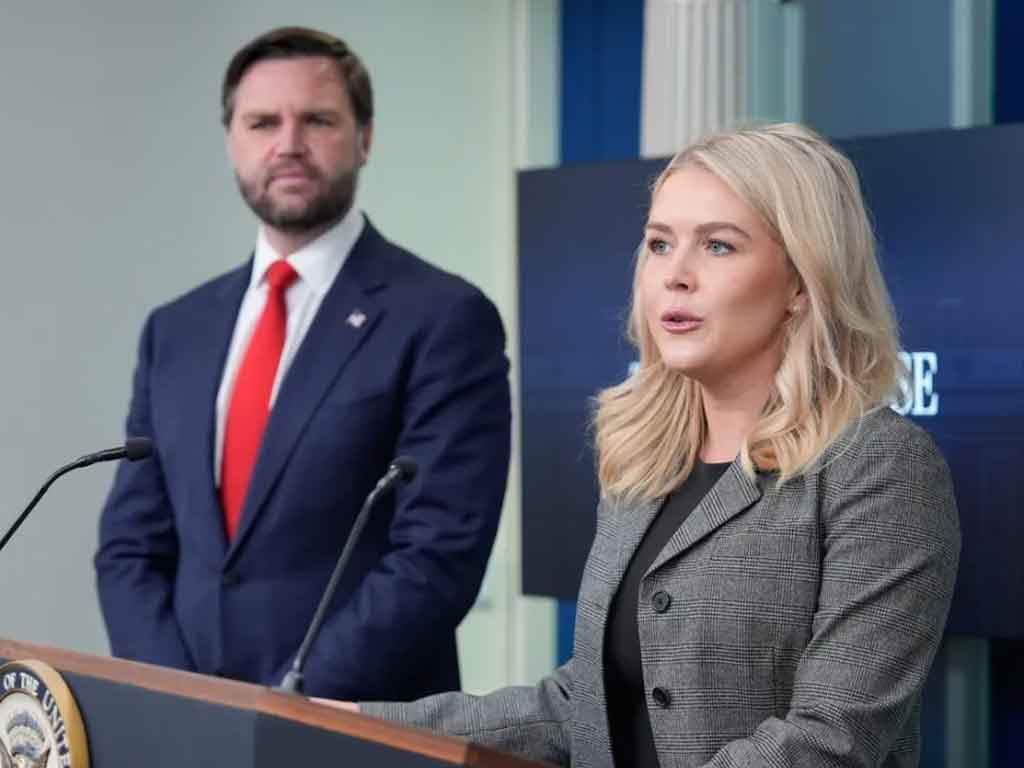
At a tense press briefing, Vice-President JD Vance, flanked by Press Secretary Karoline Leavitt, accused Democrats of political brinkmanship. “If they are so worried about the effect this is having on the American people, what they should do is reopen the government, not complain about how we respond,” Vance said. Leavitt added that painful layoffs are unavoidable if Democrats refuse to negotiate. “Sometimes you have to do things you don’t want to do,” she said, blaming Democrats for putting the country in this position.
Democrats, however, insist they are fighting to protect healthcare benefits for low-income Americans. They argue that Republicans’ proposed short-term funding bill, which would keep the government open until mid-November, does nothing to safeguard essential health subsidies. Senator Chris Murphy described the situation as Republicans “boycotting negotiations” and accused them of prioritizing political games over people’s lives.
The blame game has been bitter. Senate Majority Leader John Thune accused Democrats of taking Americans hostage by attaching healthcare funding demands to the budget. Republicans say the subsidies Democrats want are costly relics of Covid-era policy. Democrats counter that extending healthcare benefits is essential for millions of vulnerable families. House Minority Leader Hakeem Jeffries dismissed Republican claims that Democrats want to extend benefits to undocumented migrants, calling it a fabrication designed to inflame tensions.
The human cost of the shutdown is already mounting. Federal agencies have divided employees into essential and non-essential categories. Essential workers, including border patrol officers, air traffic controllers, and military personnel, must continue working without pay. Non-essential workers are furloughed, placed on temporary unpaid leave and barred from even checking email. While history shows that most federal employees are eventually paid retroactively, contract workers such as janitors, food service staff, and maintenance crews are not guaranteed back pay. For them, every day without work is permanent income lost.
Analysts warn this shutdown could be even bigger than the 2018-2019 closure, which lasted 35 days and cost the U.S. economy an estimated $3 billion. This time, roughly 750,000 federal workers—about 40% of the workforce—are expected to be furloughed. Some have already been sent home, while others brace for paychecks that may never come. Businesses reliant on government contracts face delays, while households dependent on steady federal income are cutting spending. The ripple effect could choke local economies, deepen public frustration, and erode trust in government institutions.
Essential services continue but under strain. National security, defense operations, federal prisons, and medical care in veterans’ hospitals remain active. But many public-facing services are disrupted. Passport processing, small business loans, and IRS support lines are slowing or shutting down. National parks are technically open, but trash collection, restroom cleaning, and visitor center operations have ceased, echoing scenes of chaos from past shutdowns. Museums and cultural sites funded by federal dollars have also closed their doors.
The White House’s Office of Management and Budget has instructed agencies to prepare for the worst. Russell Vought, the administration’s budget chief, privately briefed Republicans on what impending layoffs may look like, though details remain unclear. Reports suggest that in addition to furloughs, the administration is considering permanent cuts if the standoff drags on. “Let’s be honest, if this thing drags on, we are going to have to lay people off,” Vice-President Vance admitted.
On Capitol Hill, there is little appetite for compromise. Republican Speaker of the House Mike Johnson said there is “nothing to negotiate,” signaling that the GOP is unwilling to alter its bill. Democrats remain equally entrenched, refusing to abandon their demand for healthcare funding guarantees. Another vote on the Republican short-term funding proposal is expected on Friday, but without bipartisan cooperation, it is unlikely to pass.
The standoff highlights deeper questions about America’s political system and its ability to function. Shutdowns have become increasingly common, with 14 occurring since 1981. While some lasted less than a day, others dragged on for weeks. Each time, partisan disputes over spending priorities or policy riders have paralyzed the government, leaving millions caught in the crossfire.
The economic risks this time are significant. A prolonged shutdown could dampen consumer confidence, disrupt supply chains, and weaken markets already jittery from global trade disputes and rising interest rates. Investors are watching closely, and Wall Street has historically responded poorly to signs of governmental dysfunction. With U.S. debt already a concern, a shutdown that drags on could also dent America’s global reputation as a stable democracy.
For ordinary Americans, the frustration is palpable. Families who depend on federal nutrition programs worry about food insecurity. Students face delays in federal aid. Veterans worry about medical appointments. Travelers may face safety delays if air traffic control staffing is affected. And federal workers across the country are bracing for missed mortgage payments, rent, and bills.
The White House and Congress now face mounting pressure. Public anger is likely to grow as services remain shuttered and families struggle to make ends meet. Historically, prolonged shutdowns have ended only when public opinion turns sharply against one party, forcing leaders back to the table. Until then, the political standoff is set to continue, with millions of lives and billions of dollars hanging in the balance.
America’s latest shutdown is not just a budget dispute. It is a national crisis, exposing the fragility of governance in the face of entrenched partisanship. As the White House warns of mass layoffs and families prepare for economic hardship, the urgency for a deal has never been greater. Yet the question remains: will leaders in Washington prioritize the American people over political advantage before the damage becomes irreversible?