Sri Lanka’s 2026 Appropriation Bill reveals a staggering 300% jump in presidential expenditure, raising fresh debate on fiscal priorities and transparency under President Anura Kumara Dissanayake.
Sri Lanka’s political and economic landscape has been shaken by the presentation of the 2026 Appropriation Bill, which revealed a dramatic surge in presidential spending. Acting Minister of Finance, Planning and Economic Development, Dr. Anil Jayantha, presented the bill to Parliament on September 26 in the absence of President and Finance Minister Anura Kumara Dissanayake, who was overseas at the time.

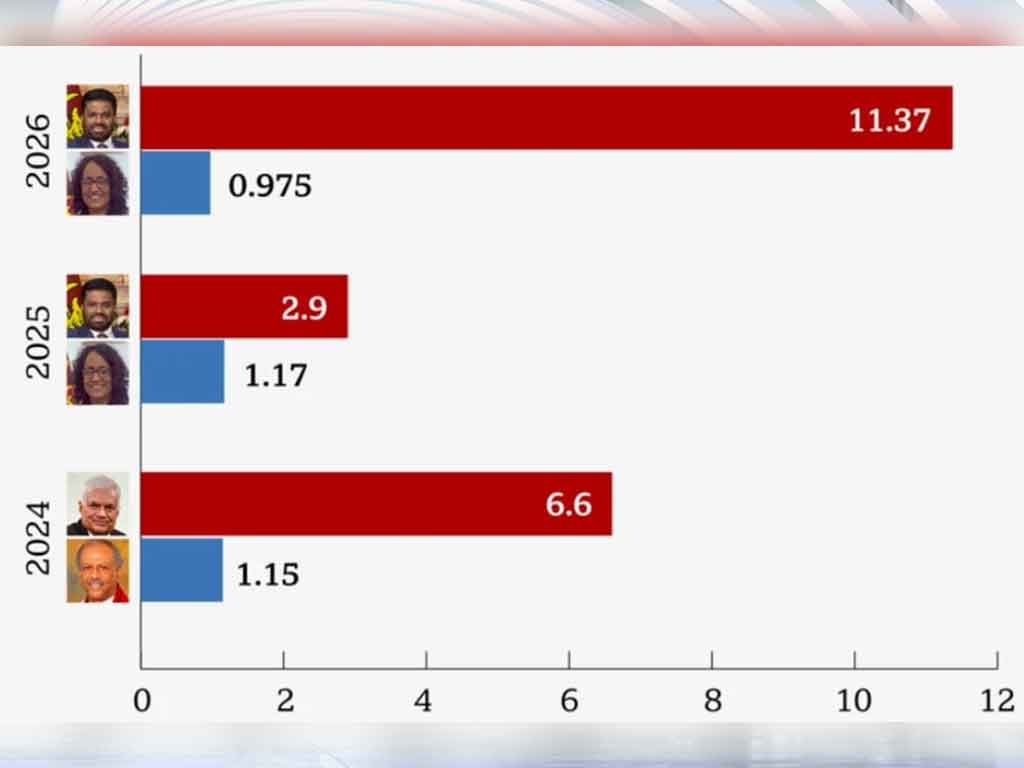
The Appropriation Bill marks the first step toward the annual budget, a process that requires three readings in Parliament before being passed into law. But this year’s bill has already sparked headlines, with the disclosure that the Presidential Expenditure Head has ballooned by nearly 300% compared to 2025.
This increase represents a sharp reversal of President Dissanayake’s 2025 budget, where one of his most celebrated measures was cutting presidential spending by nearly half when compared to 2024. That move was widely praised as a symbolic gesture of fiscal discipline and political accountability. Now, less than a year later, the numbers tell a different story.
According to the 2026 proposal, the President’s expenditure head is about 72% higher than what former President Ranil Wickremesinghe spent in 2024, raising questions over consistency and commitment to budgetary restraint. The sharp rise has ignited debate across the political spectrum, with critics questioning whether this represents a betrayal of earlier promises to reduce waste and rein in executive privilege.
While the presidency’s allocation has skyrocketed, the Prime Minister’s expenditure has actually decreased compared to 2025, a detail that underscores the uneven distribution of financial adjustments within the highest offices of government.
A closer look at the allocations shows where the largest sums are flowing. The Ministry of Finance, Planning and Economic Development, directly overseen by President Dissanayake, has received the highest allocation of Rs. 634.78 billion. This ministry has emerged as the central hub for managing Sri Lanka’s fragile economy, which remains under significant pressure from debt restructuring, IMF commitments, and public demand for relief.
The second-largest allocation has gone to the Ministry of Public Administration, Provincial Councils and Local Government, followed by the Ministry of Health and Mass Media. These allocations reflect the government’s attempts to balance national administration with health sector stability, though questions remain about the adequacy of health funding amid ongoing shortages.
The Ministry of Defense, another portfolio under the President, has been allocated Rs. 455 billion. Defense spending has traditionally been one of the largest components of the national budget, but the fact that it remains this high even during a period of economic austerity raises eyebrows.
Observers argue that the sudden rise in presidential spending could be tied to structural costs associated with overseeing multiple ministries, particularly Finance and Defense. Others suggest it points to a lack of transparency and a possible return to practices of centralizing power and resources under the executive branch.
With Sri Lanka still grappling with debt burdens, IMF targets, and a fragile recovery, the spike in presidential expenditure risks undermining confidence in the government’s stated commitment to financial discipline. For many, this budget is not just about numbers but about trust, trust in leadership, trust in promises, and trust in the path toward economic stability.
As the budget debate unfolds in Parliament, the government will face mounting pressure to explain why presidential expenditure has soared while many citizens continue to struggle with rising living costs. The coming months will determine whether the administration can defend these allocations as necessary for governance or whether the public will see them as evidence of misplaced priorities.