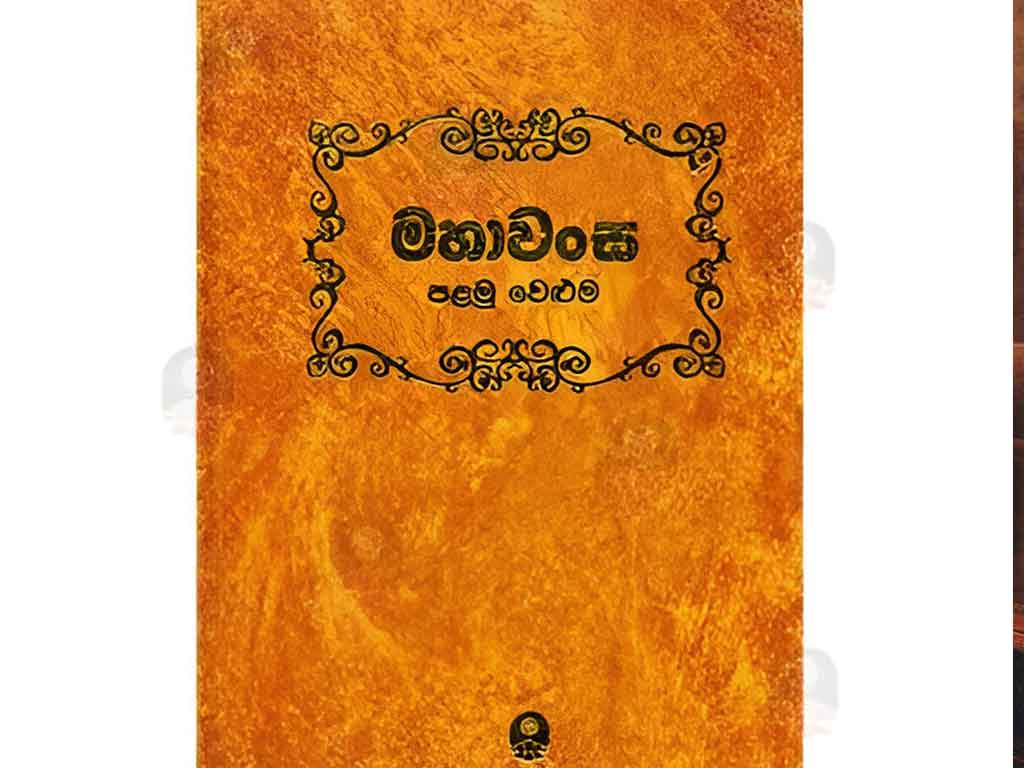
The Mahavamsa, Sri Lanka’s revered chronicle of history, is now at the center of controversy as scholars and political commentators expose glaring factual distortions in its latest volume. From misreporting Rajiv Gandhi’s assassination to fabricating battlefield heroics, critics warn that state-backed errors threaten to undermine the integrity of Sri Lanka’s historical record and inflame political divides.
The Mahavamsa, Sri Lanka’s ancient chronicle of kings and kingdoms, has long stood as one of the nation’s most sacred historical texts. Begun in the 4th century by the monk Mahanama, it has been updated across centuries to document successive rulers, wars, and turning points that shaped the island’s destiny. For centuries, it has symbolized the cultural and religious continuity of the Sinhala Buddhist civilization. Yet today, this hallowed document has been drawn into sharp controversy, with the integrity of its latest modern editions questioned by political commentators, scholars, and historians alike.

At the heart of the dispute lies the sixth volume of the Mahavamsa, which covers the period from 1978 to 2010. Critics argue that this edition contains blatant distortions of fact and historical inaccuracies that risk turning the chronicle into a work of propaganda rather than history. The most vocal criticism has come from a recently published book titled Mahavamsa: The Unfolding of the Eelam War, co-edited by retired Major Sarath Jayawardena. This work directly challenges the credibility of the government-appointed Mahavamsa Compilation Committee, accusing it of rewriting modern history with glaring errors.
One of the most striking examples cited involves the LTTE attack on the Kokavil camp on July 10, 1990. According to the new Mahavamsa, Lieutenant Aladeniya is described as having climbed a TV tower and attacked the Tigers with a cannon. Critics insist this is a fabrication, pointing out that cannons are heavy artillery weapons not carried by individual soldiers, let alone mounted on towers. Such inaccuracies, they argue, distort the memory of real sacrifices made in the war and replace fact with fiction.
Another glaring error involves the assassination of former Indian Prime Minister Rajiv Gandhi. The newly compiled Mahavamsa claims Gandhi was killed a week after the LTTE attack on the Temple of the Tooth in Kandy. In reality, Rajiv Gandhi was assassinated in 1991—nearly seven years before the Temple attack. For scholars, such a mistake is more than a slip of chronology; it is an unforgivable distortion that damages the credibility of Sri Lanka’s official historical record.
Senior Lecturer Anuruddha Pradee of the University of Sri Jayewardenepura’s Department of Political Science described the errors as shocking, particularly since they were produced under official state patronage. He noted that while the original Mahavamsa, though not without its biases, was a noble attempt to document Sri Lankan history, the current distortions threaten to erode the trust that generations have placed in this chronicle. “The task of recording the history of Sri Lanka, begun by Mahanama, has now been pushed into the realm of political manipulation,” he warned, urging the government to step in and correct the errors.
The debate touches a deeper issue: the political use of history in Sri Lanka. Scholars caution that rushing to release volumes of the Mahavamsa that cover recent history, especially politically sensitive periods like the civil war, risks injecting bias and eroding objectivity. If written hastily or under political pressure, these editions risk becoming tools of ideology rather than accurate chronicles of fact. Pradee stressed that modern editions of the Mahavamsa must be compiled with patience, neutrality, and rigorous fact-checking to preserve their integrity.
Deputy Minister of Buddha Sasana, Religious and Cultural Affairs Gamagedara Dissanayake has acknowledged the seriousness of the allegations. Responding to reporters, he said that if such mistakes exist, they will be taken up with the compilation board and corrected immediately. “Reporting on history and historical events should be done accurately. This is a responsibility to future generations,” he said. “If something untrue is published, social issues can arise. Works like the Mahavamsa must be research-intensive and free of editorial whims. These are not novels or short stories. They are historical documents.”
His remarks underscore the gravity of the issue. Unlike ordinary publications, historical chronicles like the Mahavamsa shape not only public memory but also national identity. In a society still grappling with the legacy of the civil war, any distortion of recent history could deepen wounds, inflame divisions, and erode trust in state institutions.
The controversy also raises a larger question about how modern Sri Lanka records its past. Should politically charged contemporary events be enshrined in chronicles alongside ancient kings and battles? Can a state-backed committee be trusted to record history impartially in a polarized society? Critics argue that Sri Lanka risks undermining its cultural heritage if the Mahavamsa is used as a political tool rather than a historical archive.
As calls grow for a review and correction of the latest volume, there is consensus that the mistakes cannot be left unaddressed. The credibility of Sri Lanka’s national history depends on an honest reckoning with fact, free of embellishment or distortion. The Mahavamsa, which has survived more than 1,500 years as a cornerstone of Sri Lankan identity, now faces a modern test: whether it can preserve its sacred trust in an age of political polarization.
For now, the government’s promise to review the errors offers some hope. But scholars warn that unless a more careful, non-partisan approach is taken, future editions may risk being dismissed not as chronicles of truth but as monuments of manipulation. And if Sri Lanka’s most revered chronicle is stripped of its integrity, the damage to national memory may be irreparable.