The relationship between New Delhi and Washington has entered one of its most unpredictable phases in decades, with President Donald Trump’s aggressive policies placing India in the crossfire of tariffs, diplomatic snubs, and geopolitical gambits. Experts warn that India must brace for more “known unknowns” in its dealings with the United States.
India and the United States have always maintained a complex relationship shaped by both cooperation and conflict. Today, that relationship sits at an uneasy crossroad. What once seemed like a steady upward trajectory of strategic partnership is now riddled with tariffs, penalties, and surprise policy decisions emanating from Washington. President Trump’s second-term style of diplomacy delivered as much through Truth Social posts as through official channels has left Indian policymakers constantly on edge.

The challenges began with Washington’s decision to impose a crippling 25 percent penalty on India’s oil imports from Russia. This effectively doubled overall tariff rates to 50 percent, hitting vital sectors ranging from textiles to precious stones. At a time when India’s economic recovery depends on keeping costs competitive, such penalties act like shackles. The ripple effects of this oil tariff have already begun to inflate prices across industries, and businesses in Delhi are increasingly vocal about their frustrations.
If that blow was not enough, the Trump administration then introduced a dramatic increase in H1B visa fees, raising costs to $100,000 per IT professional recruited in the United States. For a country like India, which contributes the largest number of H1B workers, this is not just a tariff, it is an economic chokehold. The fee hike represents a 10- to 20-fold jump from the earlier $5,000 to $10,000, effectively pricing out many smaller firms that rely on overseas opportunities. Although the US insists that other nations face similar increases, Indian officials argue that the penalties disproportionately impact them, especially since India is the largest supplier of tech talent to the American economy.
India’s pharmaceutical sector was next on the list, with Washington imposing a steep 100 percent tariff. The Indian pharma industry, worth billions and crucial to affordable global healthcare, suddenly faces the risk of losing access to one of its biggest markets. As if to add insult, even the film industry was not spared. Restrictions and added costs on screening Indian films in the United States sent shockwaves through Bollywood producers, with many questioning if cultural diplomacy itself was under attack.
Yet, tariffs are only one side of the turbulence. Diplomatically, India has been left unsettled by the Trump administration’s handling of appointments. Sergio Gor, nominated as ambassador to India, has also been assigned as Special Envoy for South and Central Asian Affairs. Analysts say this dilutes India’s importance, grouping it with volatile regions like Afghanistan and Pakistan. A full-time ambassador dedicated to India would have signaled strong bilateral commitment, but the dual role instead hints at Washington’s shifting priorities.
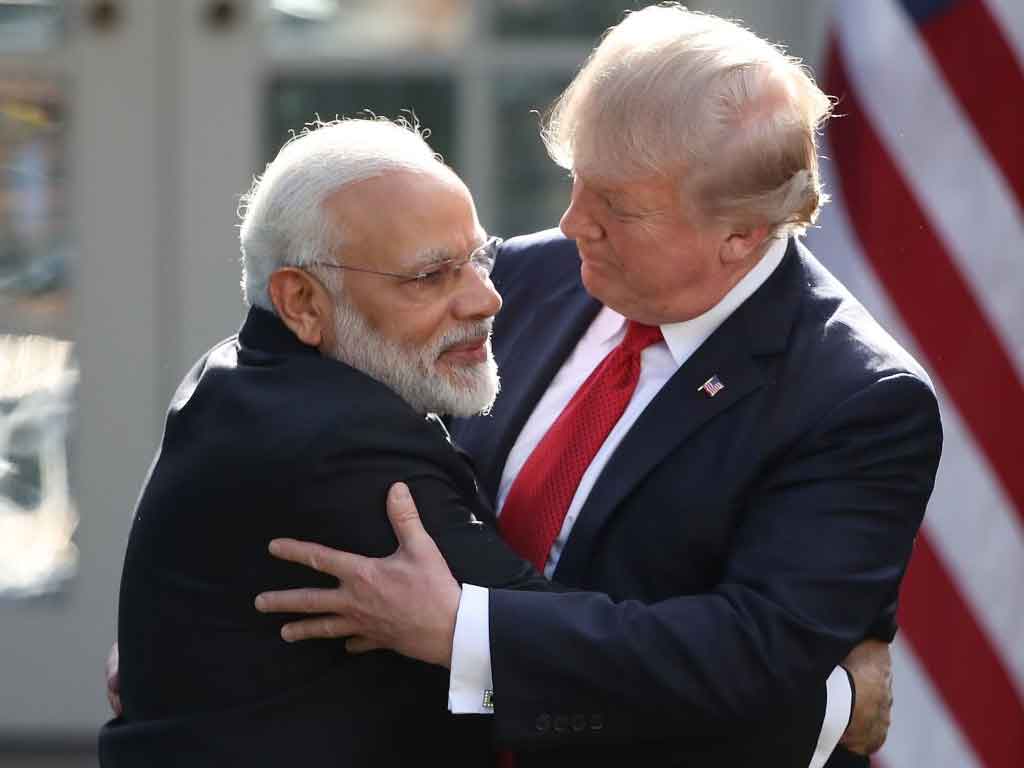
These issues, analysts note, are the “knowns.” The real danger lies in the “unknowns” the sudden, unpredictable decisions that could alter the trajectory of India-US relations overnight. Despite Trump’s repeated proclamations of friendship with Prime Minister Narendra Modi going as far as publicly wishing him happy birthday, there are signs that Delhi is increasingly viewed with suspicion in Washington.
Speculation is rife that personal frustrations may also be at play. India did not credit Trump for his role in brokering a ceasefire between India and Pakistan during a deadly four-day aerial skirmish earlier this year. Meanwhile, Pakistan has openly lauded Trump, even nominating him for a Nobel Peace Prize. Adding to Delhi’s unease, Pakistan’s Army Chief Syed Asim Munir has been invited twice to the White House, including one occasion where he was the only foreign military leader to dine with the US President. Recently, Pakistan’s Prime Minister Shahbaz Sharif was also seen alongside Munir in meetings with Trump, in the backdrop of a Saudi-Pakistan Strategic Defence Agreement that echoes NATO-style commitments.
Such optics have left Indian officials questioning where they stand. Trump’s Gaza Plan has further complicated matters. In a surprising move, Trump sought Pakistan’s support for his controversial roadmap for Gaza, sidelining India despite Modi’s cautious endorsement of the plan. For Indian policymakers, this raises a chilling prospect: New Delhi may no longer be Washington’s go-to partner in shaping sensitive Middle East policy.
India’s strategy, therefore, must be recalibrated. Officials are urging a pragmatic approach, where New Delhi quietly builds parallel alliances with other global stakeholders while maintaining a working relationship with Washington. India’s defense cooperation with the US still appears functional, with joint military exercises like Yudh Abhyas continuing and defense deals such as the procurement of GE 404 engines moving forward. However, the atmosphere of trust that once defined the partnership is eroding.
The reality is that India cannot afford to let its guard down. The list of known unknowns is expanding: sudden tariffs, targeted visa hikes, unexpected diplomatic shifts, and public optics that favor Pakistan. What remains unclear is why India, despite its strategic importance and economic scale, is bearing the brunt of such policies. Is it deliberate targeting, or simply the collateral damage of Trump’s broader “America First” doctrine?
Whatever the reason, India must adapt. As history shows, Indo-US ties have always been cyclical—warming during periods of shared interests, cooling during times of political divergence. Today’s moment may be one of those troughs. For policymakers in Delhi, the challenge is not just to react to Washington’s erratic behavior but to anticipate it. India needs a narrative that acknowledges risks, prepares for setbacks, and invests in alternative partnerships with the EU, Japan, and other Asian allies.
India’s leaders must also recognize that the unpredictability may not end with Trump. The structural shifts in US foreign policy, from tariffs to transactional diplomacy, reflect a broader trend that could outlast one presidency. In such an environment, the safest course is resilience. Strategic autonomy, long touted by Delhi, now demands practical execution.
The United States remains a vital partner, but it is no longer a predictable one. For India, the task is to build a buffer against shocks while still engaging with Washington in defense, trade, and technology. The key is to ensure that every setback in the relationship does not derail the larger national interest.
India has weathered storms in its foreign policy before. This one may be more turbulent, but with careful planning and realistic expectations, it can be navigated. The knowns are clear enough: tariffs, visa hikes, and diplomatic downgrades. The unknowns may continue to surprise, but India cannot afford to be blindsided. For Modi’s government, the priority must be to build layers of leverage regional, economic, and strategic that can safeguard India’s interests no matter which way the Trump winds blow.