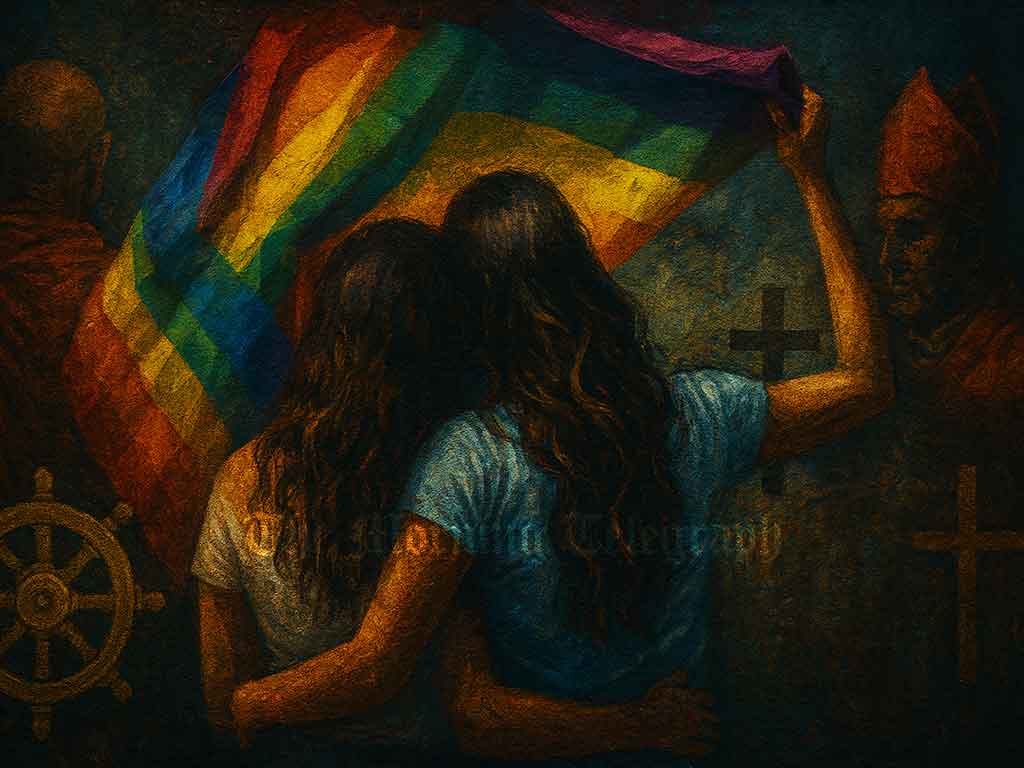
Amid rising opposition from Buddhist monks and Catholic leaders, the Sri Lankan government has begun retreating from promised reforms on corporal punishment and LGBTQI rights, raising concerns about policy stability and the future of social inclusion.
The Sri Lankan government is facing intense pressure after strong criticism from religious leaders over two highly sensitive issues: amendments to the Penal Code on corporal punishment and state support for promoting LGBTQI tourism. According to reports, the government is now stepping back from both proposals, highlighting deep divisions between reformist pledges and conservative influence.

The controversy came to a head during President Anura Kumara Dissanayake’s official tour of the United States and Japan, accompanied by Foreign Affairs and Tourism Minister Vijitha Herath. Back home, the chief abbots of the Malwatte and Asgiri Buddhist chapters and Malcolm Cardinal Ranjith, Archbishop of Colombo, voiced strong opposition. They condemned LGBTQI-focused tourism promotion and warned against the harmful consequences of legal reforms on corporal punishment.
The President met the Mahanayake Theros on Friday and assured them that Sri Lanka’s tourism promotion strategy will remain focused on its rich cultural heritage, natural beauty, and hospitality. He stressed that LGBTQI tourism would not form part of official government plans. Minister Vijitha Herath echoed this view at the Tourism Leadership Summit, declaring that the state does not endorse “LGBTQI tourism” and insisting that Sri Lanka will maintain equality for all tourists without segmenting or lowering industry standards.
The debate on corporal punishment laws has been equally heated. The Penal Code (Amendment) Bill, debated in Parliament on September 24, was adjourned without a final decision. The proposed amendment seeks to protect children from abuse, but critics fear it could limit teachers’ and parents’ authority in disciplining minors. Prime Minister Harini Amarasuriya, who also oversees the Education and Higher Education Ministry, sought to reassure stakeholders by clarifying that the amendment does not remove parental or teacher rights but specifically targets cases of child abuse.
The government is now caught between its electoral promises and mounting religious pressure. President Dissanayake’s manifesto included a commitment to reform discriminatory laws, including sections 365 and 365(a) of the Penal Code, which criminalize same-sex relations, while also pledging improved access to healthcare, legal aid, and social justice for the LGBTQI community. However, the latest signals from Colombo suggest that religious opposition may be powerful enough to derail or delay these reforms indefinitely.
The risk lies in Sri Lanka’s international reputation and investment climate. Policy reversals on human rights and inclusivity can discourage foreign investment, especially as international stakeholders closely monitor legal protections for minorities. Tourism, one of the island’s key economic drivers, could also suffer from mixed signals if travelers perceive inconsistency or discrimination. Moreover, withdrawing reforms could reinforce the image of a government unable to deliver promised change under pressure from conservative groups.
For now, Sri Lanka appears to be walking a tightrope. While promising inclusivity to international observers, it faces strong domestic resistance from religious leaders and traditional institutions. Whether the government can balance these competing pressures will determine not only the future of its legal reforms but also its credibility in building a modern, inclusive economy.