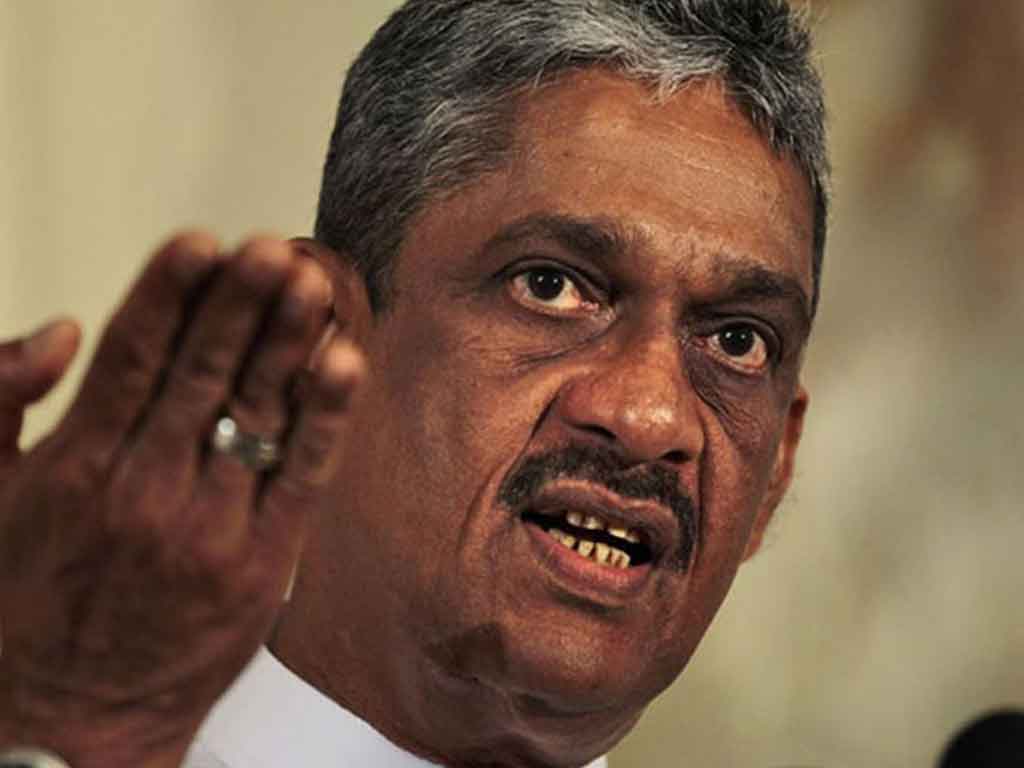
Former army chief Sarath Fonseka accuses Mahinda Rajapaksa of betrayal and corruption, prompting renewed political heat and questions about accountability and national reconciliation.
Former Army Commander Field Marshal Sarath Fonseka has launched a blistering public attack on former President Mahinda Rajapaksa, accusing him of treachery and corruption and demanding answers over alleged wartime conduct and appropriation of state property. Speaking at a public event, Fonseka said that in other countries, Rajapaksa would face the harshest penalties for his actions and accused the Rajapaksa family of running an international corrupt network that siphons state assets. Fonseka referenced claims that state furniture and equipment have been moved into private houses, and he warned that such acts deepen public distrust and undermine rule of law.

Fonseka also reiterated a long-running charge that Rajapaksa allowed a ceasefire at a critical moment in the conflict, a decision Fonseka said benefited the Liberation Tigers and points to possible acts of betrayal. He further alleged that money was sent to armed groups to influence the 2005 election, a claim that, if substantiated, would amount to grave criminality. Those accusations immediately raised the political temperature and revived calls for thorough, transparent investigations.
The remarks are likely to increase pressure on institutions responsible for accountability, including courts, anti-corruption bodies, and parliamentary oversight committees. They highlight the fragility of national reconciliation and the continuing disputes over wartime conduct, property transfers, and political patronage. For investors and foreign partners watching Sri Lanka’s governance indicators, such accusations are a negative signal that can deter confidence unless addressed through credible, independent probes.
To reduce risk and restore public trust, experts say, Sri Lanka needs transparent investigations, protection of institutional independence, and clear legal action where wrongdoing is proven. Political leaders on all sides must also avoid rhetoric that escalates tension. Without impartial accountability and rule of law, allegations of corruption and betrayal will continue to fuel polarisation, weaken governance, and impede the country’s economic and social recovery.