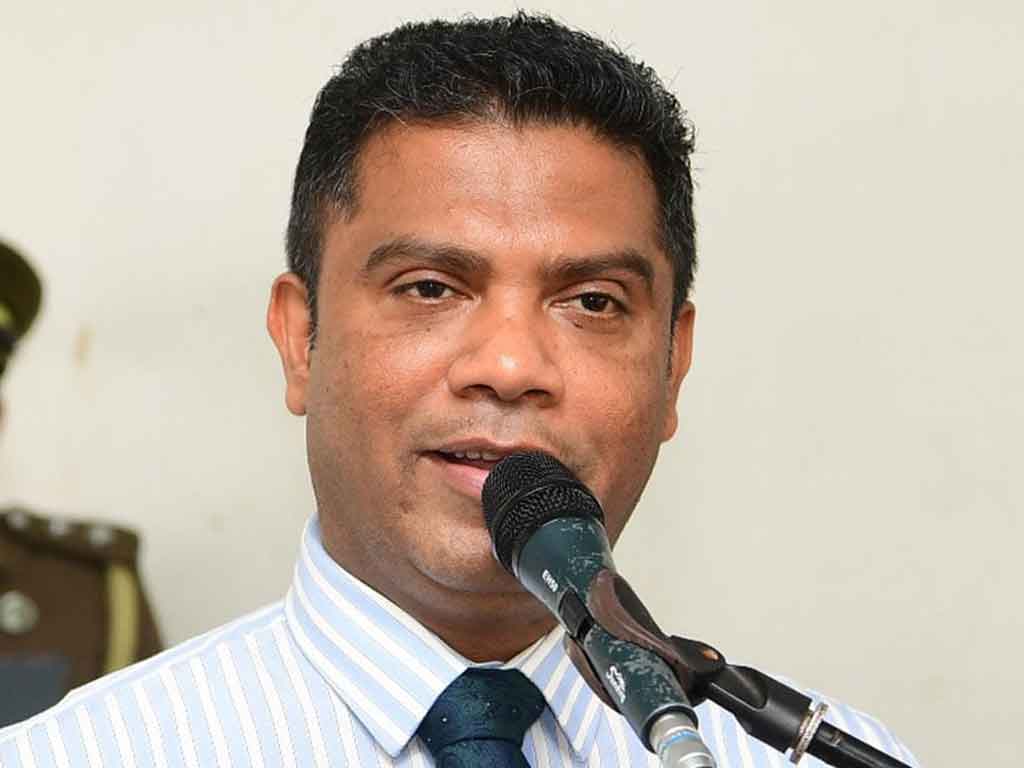
Health Minister Dr. Nalinda Jayatissa admitted that governing is far more complex than opposition politics, comparing it to running hurdles instead of a straight sprint, as he inaugurated the renovated Vipassi Buddhist Center and donated vital medical equipment to the Colombo National Hospital.
The Vipassi Buddhist Center, first established under the patronage of the late Most Venerable Madihe Pannaseeha Mahanayake Swamindra of the All Lanka Amarapura Maha Sangha Sabha, was recently reopened following major renovations carried out with joint funding and voluntary contributions. The center, located within the Colombo National Hospital premises, has now been modernized at a total cost of Rs. 68 lakhs. Out of this, Rs. 45 lakhs was allocated by the Ministry of Health, with the remaining funds provided by the Hospital Services Board. The Sri Lanka Navy also contributed labor support for the renovation, underlining a collective effort to preserve this historic health and spiritual facility.

Alongside the reopening, a donation of hospital and medical equipment valued at nearly Rs. 20 million was handed over to the Colombo National Hospital. These resources, including patient beds and specialized medical supplies, are expected to strengthen hospital services and ease some of the ongoing shortages in the health sector. Minister of Health and Mass Media Dr. Nalinda Jayatissa, addressing the gathering, expressed his deep appreciation for the efforts of Venerable Rajawella Subhuthi Thero and his team, who coordinated donations from both local and international benefactors to support Sri Lanka’s healthcare system.
Dr. Jayatissa reflected on the challenges of governance, explaining that while voluntary and community-driven initiatives could be executed swiftly, government processes are bound by laws and regulations that often slow implementation. He likened it to the difference between running a hundred meters in a straight sprint versus running the same distance with hurdles placed in between. Some laws, he noted, date back to the British colonial era and continue to obstruct solutions to urgent issues such as the shortage of medicines. He emphasized the importance of carefully revising these outdated frameworks, but cautioned that such reforms must be approached responsibly as they are interconnected with wider systems of governance.
The Minister highlighted that his immediate responsibility upon assuming office was to stabilize the health ministry’s services and regain public trust. Part of this effort, he said, involved creating a transparent and reliable mechanism to regularize donor contributions. While acknowledging the indispensable role of philanthropists, foreign aid, and diplomatic donations in sustaining hospital operations, he stressed that these activities must be streamlined and supported with clear procedures to avoid unnecessary bureaucratic delays.
He reiterated that donations such as hospital beds, computers, and medical instruments are critical to daily operations in Sri Lanka’s public health system, especially during times of limited resources. To address long-term needs, Dr. Jayatissa revealed that the Ministry of Health is preparing a ten-year strategy outlining the types of equipment and infrastructure hospitals will require. This plan, he added, will guide investments and ensure that contributions from the Hospital Services Board and other partners align with the country’s future healthcare roadmap.
The Hospital Services Board, operating under the theme “For a Healthy Society,” plays a vital role in mobilizing resources for health, education, social, and cultural services. It is guided by an ordination committee of five senior monks, including the Maharagama Siri Vajiranana Dharmayanadhipathi Thero, along with denominational leaders, and is chaired by the Royal Venerable Rajawella Subhuthi Thero. Their efforts have been instrumental in bridging the gap between community philanthropy and state healthcare needs.
The inauguration event served not only as a symbol of restored heritage but also as a reminder of the challenges and responsibilities of governance. Dr. Jayatissa’s candid acknowledgment that political rhetoric in opposition differs greatly from the responsibilities of being in government underscored the realities of leadership. He urged all stakeholders, from policymakers to healthcare workers and community leaders, to act responsibly in strengthening the country’s health services.
With over two centuries of history, Sri Lanka’s postal service, schools, hospitals, and community centers reflect the legacy of public institutions in the island’s social fabric. The Vipassi Buddhist Center’s revival is part of that story, blending spiritual guidance with practical healthcare. What emerges from this effort is the need for collective responsibility—between government, citizens, religious leaders, and donors—to sustain the nation’s most critical services.