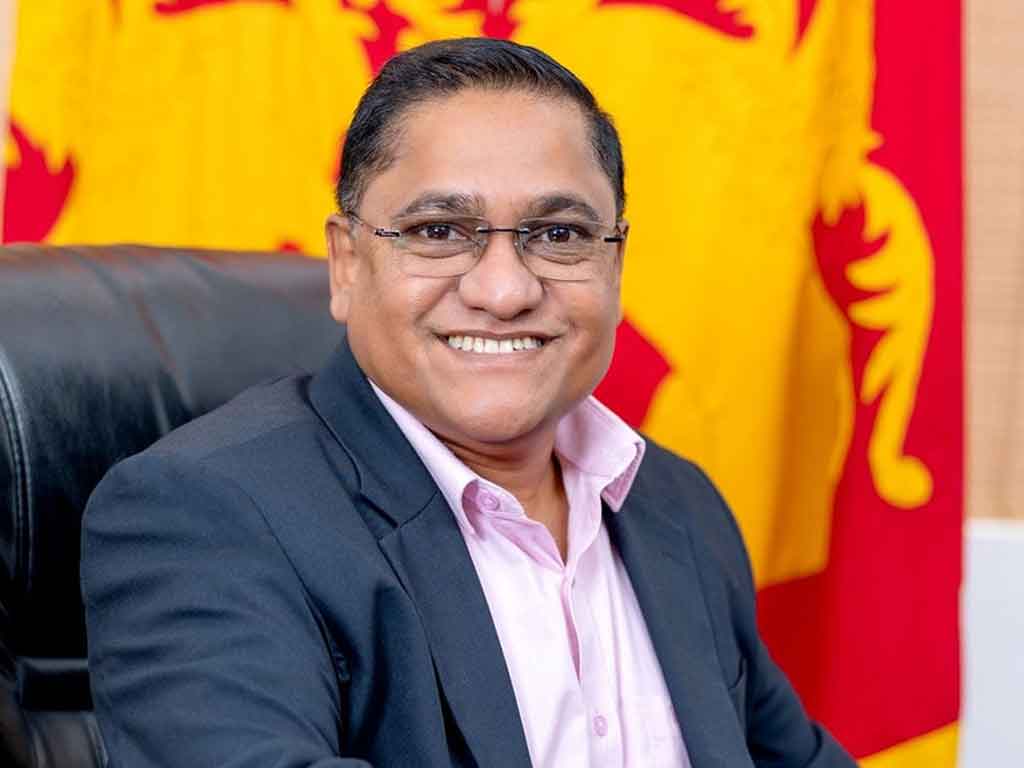
Sri Lanka’s government is bracing for renewed scrutiny as Minister of Foreign Affairs, Foreign Employment and Tourism Vijitha Herath prepares to deliver a special statement in Parliament on the fallout from the latest United Nations Human Rights Council (UNHRC) resolution in Geneva. Resolution 60-L 01, which concerns Sri Lanka’s human rights and reconciliation processes, was passed without a vote, raising fresh debate on sovereignty, accountability and international oversight.
The resolution was presented to the UNHRC on October 1, with the United Kingdom, Canada, Malawi, Montenegro and North Macedonia acting as its main co-sponsors. A total of 22 countries signed on as supporters, most of them European states, further strengthening the push for extended oversight on Sri Lanka. The resolution extends for another two years the process already underway by the Office of the High Commissioner for Human Rights, keeping international monitoring firmly in place until 2027.

Sri Lanka’s Permanent Representative to Geneva, Himali Arunathilaka, firmly rejected the resolution on behalf of the government. She expressed regret that no full agreement could be reached on key areas and warned against coercive international measures. Most importantly, she reiterated Sri Lanka’s refusal to accept an external accountability mechanism, stressing that such measures threaten national sovereignty.
Arunathilaka highlighted that the government has already undertaken significant steps in reconciliation, human rights and institutional reform within the domestic framework. She argued that Sri Lanka must be given the opportunity to progress on its own path without foreign intervention, describing domestic accountability processes as more legitimate and better suited for the country’s unique challenges.
The unusual passing of the resolution without a vote underscored the absence of direct opposition. When the Council asked if any member state required a vote, no country came forward, enabling the resolution to be officially adopted without contest. Analysts see this as a sign of growing consensus among powerful states on the need for continued oversight, while critics within Sri Lanka view it as evidence of diplomatic failure by Colombo.
Minister Vijitha Herath’s statement in Parliament is expected to defend the government’s position while also addressing concerns raised by the opposition about the implications of the Geneva resolution. The minister will likely emphasize the government’s commitment to human rights while rejecting what officials describe as unfair and coercive foreign pressure.
The issue has become a focal point of domestic politics. Critics argue that successive governments have failed to mount a strong diplomatic counter to Geneva’s recurring resolutions, leaving Sri Lanka increasingly vulnerable to international influence. Proponents of the resolution insist that external oversight is necessary given repeated delays and shortcomings in local accountability processes.
As the debate unfolds, the spotlight will remain on how the government balances international expectations with domestic priorities. For Sri Lanka, the Geneva process continues to symbolize both external pressure and an urgent reminder of the need for credible, transparent governance at home.