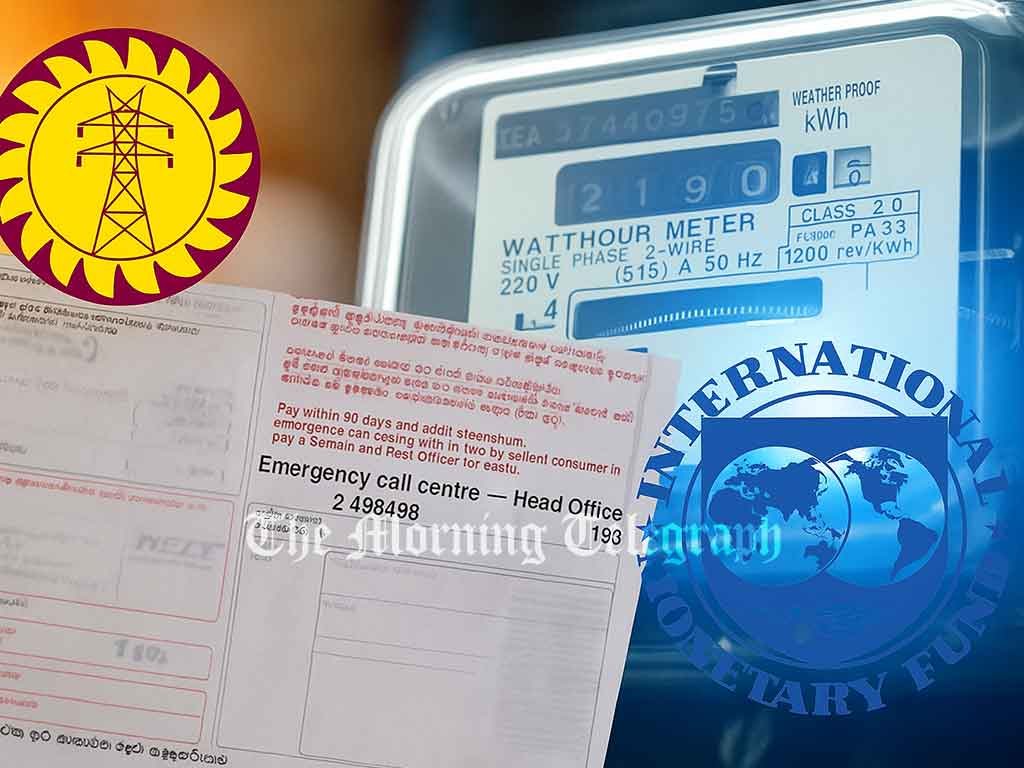
The IMF has laid down tough conditions for Sri Lanka’s energy sector, insisting on a power tariff hike and the restructuring of the Ceylon Electricity Board into four entities, warning of economic risks if reforms are delayed.
Sri Lanka is heading toward another electricity tariff hike, this time under the influence of the International Monetary Fund. As part of the fifth review of its Extended Credit Facility program, the IMF has instructed the government to submit new proposals on power pricing to the Public Utilities Commission of Sri Lanka within this month.

The Ceylon Electricity Board has already placed a proposal before the Commission to increase electricity tariffs by 6.8 percent, which was followed by a round of public consultation. This recommendation aligns with the IMF’s demand that Sri Lanka continue with a cost-based tariff system and accelerate reforms in the energy sector.
Evan Papagiou, the IMF’s Sri Lanka Mission Chief, recently underlined that in every country, private companies bill consumers in proportion to service costs, and the same principle should apply to Sri Lanka. He stated that for electricity prices to decline in the long run, the immediate step is to adjust rates upwards while restructuring the state utility. Papagiou highlighted that the Ceylon Electricity Board must be divided into four separate entities to ensure efficiency and transparency.
This restructuring is not only about reducing losses but also about preventing a wider financial crisis. The IMF has warned that unchecked deficits at the CEB could weaken the government’s financial position, trigger higher inflation, cause failures in tax collection, and force further borrowing. These outcomes would only add pressure to an already fragile economy.
The Fund has made it clear that benchmarks for electricity pricing reforms set under the fourth review will be reassessed in November. This means the government will be under close scrutiny, with the next tranche of funding hanging on compliance. For Sri Lankan households and businesses, the reality is simple: energy bills are set to climb again, with the promise of long-term stability coming at the cost of short-term financial pain.
The IMF’s message is clear. Without tough reforms, including tariff increases and splitting the CEB, the country risks sinking deeper into economic instability. For citizens, this signals yet another adjustment to rising living costs while the government struggles to deliver sustainable energy solutions.