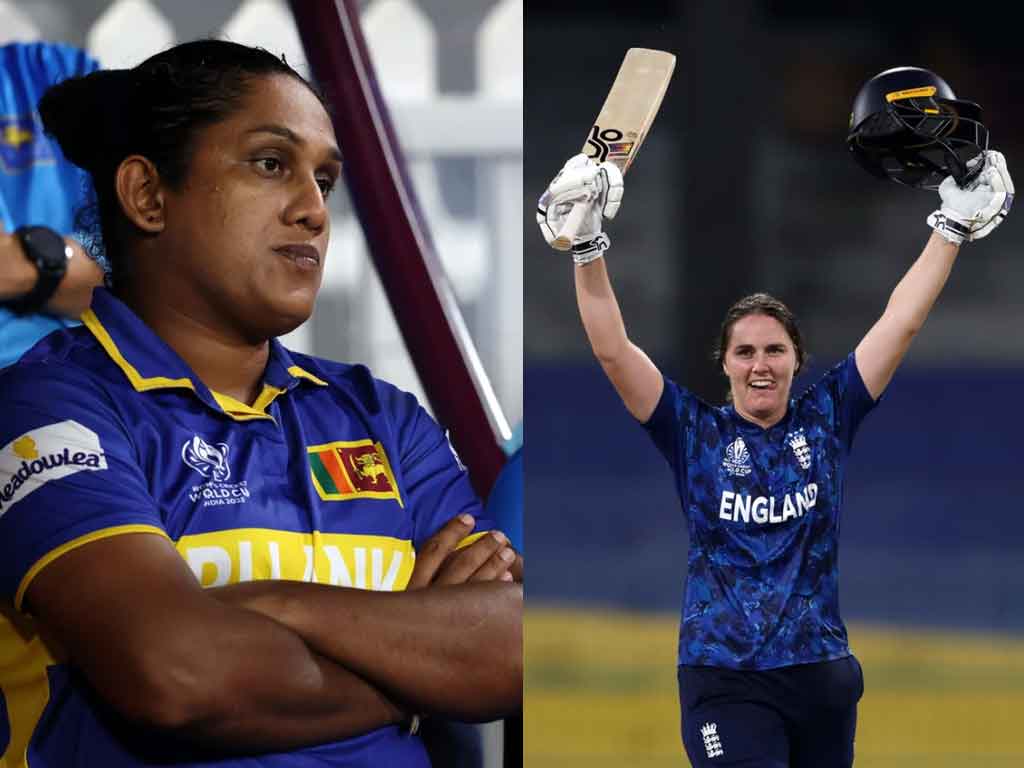
Nat Sciver-Brunt’s fifth Women’s World Cup hundred and Sophie Ecclestone’s devastating spell powered England to a commanding win against Sri Lanka in Colombo, but questions remain over Sri Lanka’s depth and resilience as the tournament heats up.
England produced a clinical performance at the R. Premadasa Stadium to register an emphatic 89-run victory over Sri Lanka, maintaining their unbeaten run in the ICC Women’s Cricket World Cup 2025. The victory, built on Nat Sciver-Brunt’s brilliant run-a-ball 117 and Sophie Ecclestone’s stunning figures of 4 for 17, propelled England to the top of the group stage table and underscored their credentials as one of the favorites for the title.

The innings began in dramatic fashion with Tammy Beaumont overturning an early LBW decision through review, before Amy Jones was needlessly run out in the fourth over. Beaumont played positively for her 32 off 29 balls but her dismissal at 49 for one opened the door for Sri Lanka. A solid partnership of 60 runs between Heather Knight and captain Sciver-Brunt steadied the innings, but Knight’s exit for 29 once again shifted the momentum.
Sciver-Brunt, however, seized her reprieve after being dropped on three, and from that point looked imperious. She mixed boundary strokes with smart rotation of strike, dictating play against Sri Lanka’s bowlers. Despite England’s middle-order wobble, with Sophia Dunkley falling for 18 and Emma Lamb and Alice Capsey dismissed in quick succession by Inoka Ranaweera during a brilliant double-wicket maiden, Sciver-Brunt held the innings together. Her century, brought up with a superb inside-out drive over extra cover, was her 10th in One-Day Internationals and her fifth in Women’s World Cups, making her one of the format’s greatest match-winners.
England eventually posted 253 for nine in their allotted 50 overs, a total that looked competitive given Colombo’s conditions and the pressure of a World Cup chase. For Sri Lanka, Inoka Ranaweera’s 3 for 33 and Udeshika Prabodhani’s 2 for 55 were the standout performances, but lapses in the field, including Sciver-Brunt’s early let-off, proved costly.
Sri Lanka’s response started steadily but was rocked by the early loss of Vishmi Gunaratne, bowled by Charlie Dean for 10. Their troubles deepened when captain Chamari Athapaththu, their talisman and run machine, was carried off with a suspected hamstring injury after scoring just seven. Without their leader at the crease, Sri Lanka lacked direction and momentum.
Hasini Perera and Harshitha Samarawickrama attempted to rebuild with a 58-run stand, keeping hopes alive with aggressive strokes that kept the required run rate within reach. But the introduction of Ecclestone changed the game completely. Ranked the world’s number one ODI bowler, she ripped through the middle order with guile and precision. Perera holed out for 35, Samarawickrama edged to fine leg for 33, and Kavisha Dilhari was bowled attempting an ambitious sweep. Athapaththu’s return to the crease was short-lived, as Ecclestone bowled her for 15, ending Sri Lanka’s resistance.
England’s bowlers closed out the innings clinically, with Sciver-Brunt herself chipping in with 2 for 25, Dean adding 2 for 47, and Linsey Smith finishing things off with the wicket of Prabodhani. Sri Lanka were eventually dismissed for 164 inside 46 overs, falling well short of their target.
The result leaves England at the top of the table, unbeaten and brimming with confidence. Yet the match also exposed vulnerabilities in Sri Lanka’s campaign, most notably their over-reliance on Athapaththu and the lack of batting depth to withstand pressure against world-class bowling attacks. If Sri Lanka cannot find solutions quickly, their hopes of advancing deep into the World Cup could collapse under the weight of inconsistency.
For England, the win was a statement. With Sciver-Brunt in sublime form and Ecclestone proving unplayable, they look set to mount another serious bid for global silverware. But in a long tournament where injuries, pressure, and unpredictability can shift momentum overnight, even the strongest sides must guard against complacency.