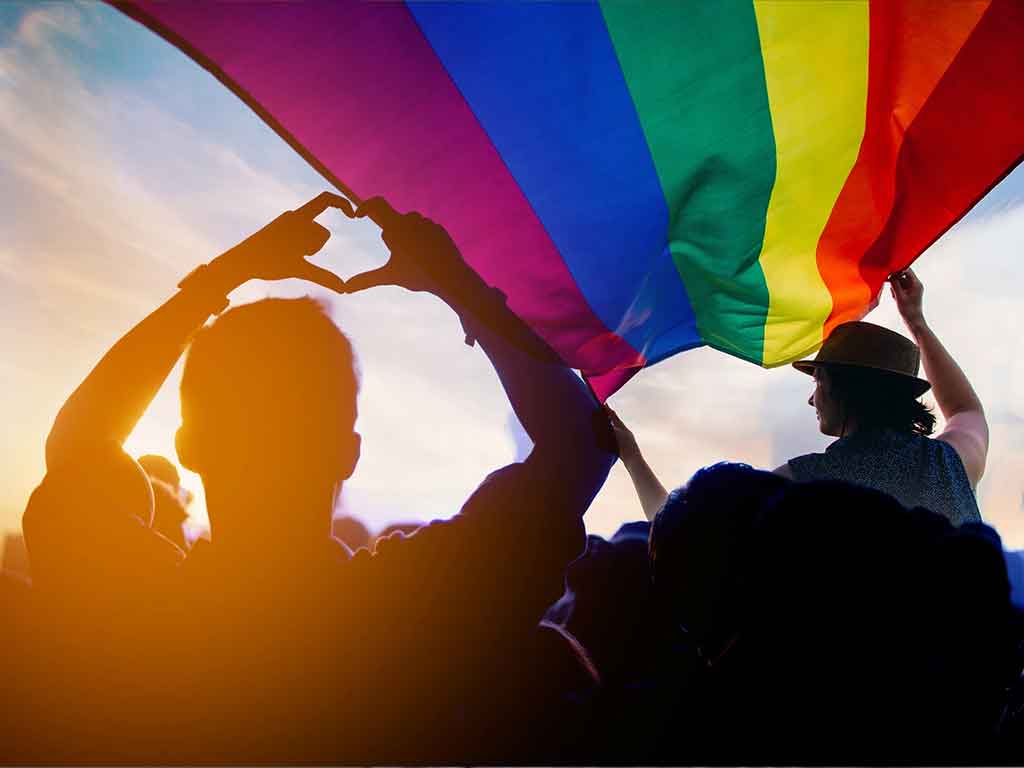
Sri Lanka’s LGBTQIA+ community is demanding clarity from political parties as the Parivarthan organization, a leading rights advocacy group, called on leaders to state their position openly. Amid growing misinformation and political manipulation, Parivarthan warns that silence and propaganda are endangering vulnerable communities while reinforcing outdated colonial-era morality.
Radhika Gunaratne, executive director of Parivarthan and a practicing lawyer, said the time has come for political leaders to stop evading the issue and to tell the country where they stand on LGBTQIA+ rights. She emphasized that while the community faces real struggles for acceptance, some political groups have chosen to weaponize these issues for electoral gain. By spreading false claims and misleading propaganda, these groups target a less powerful social community to rally anger and fear, creating divisions for votes.
Gunaratne explained that attacking marginalized groups such as the homosexual community has become a dangerous pattern in Sri Lanka’s political culture. She warned that politics built on “stirring up” hatred and suspicion among the people leads to disastrous consequences. Across the world, clear systems and guidelines exist to address the challenges faced by vulnerable communities, but the absence of such protections in Sri Lanka has allowed political actors to exploit LGBTQIA+ individuals with little accountability.

The lawyer also accused the government itself of playing a double role, at times making false accusations when the community demands recognition of their rights. She highlighted the hypocrisy in equating the demand for LGBTQIA+ rights with criminal behavior such as sexual relations between close blood relatives, pointing out that such claims are designed purely to provoke hostility. These accusations, she argued, not only distort the real conversation but also deliberately place the community under social attack.
Gunaratne noted that much of what is framed today as “our culture” is not authentically Sri Lankan but the result of Victorian morality imposed by British colonial rulers. These values were codified into law during imperial times and later inherited uncritically. She reminded that even Britain, the source of those laws, decriminalized homosexuality in 1967, yet Sri Lanka continues to cling to outdated systems that criminalize same-sex relationships. This, she said, shows how far behind the country remains in protecting fundamental human rights.
Parivarthan’s call comes at a time when global recognition of LGBTQIA+ rights is expanding, with many nations adopting frameworks that guarantee equality and safeguard against discrimination. In Sri Lanka, however, political silence and opportunism continue to dominate. Gunaratne stressed that it is not enough for leaders to offer vague assurances or quietly avoid the issue. Instead, they must declare openly whether they stand for equality or whether they support the continued criminalization and marginalization of LGBTQIA+ citizens.
She further warned that unless Sri Lanka confronts the realities of its outdated legal codes and entrenched prejudices, the country will not only fail its LGBTQIA+ citizens but will also remain isolated from global progress on human rights. For her, the struggle is about more than decriminalization; it is about dismantling colonial-era moral frameworks and replacing them with laws and policies that recognize dignity, love, and humanity in all forms.
The organization’s stance is clear: rights are not privileges to be granted or denied at political convenience. They are essential to building a society rooted in justice and fairness. For Parivarthan, the demand is simple—political leaders must speak, clarify, and commit, instead of hiding behind inherited values and fear-driven rhetoric.