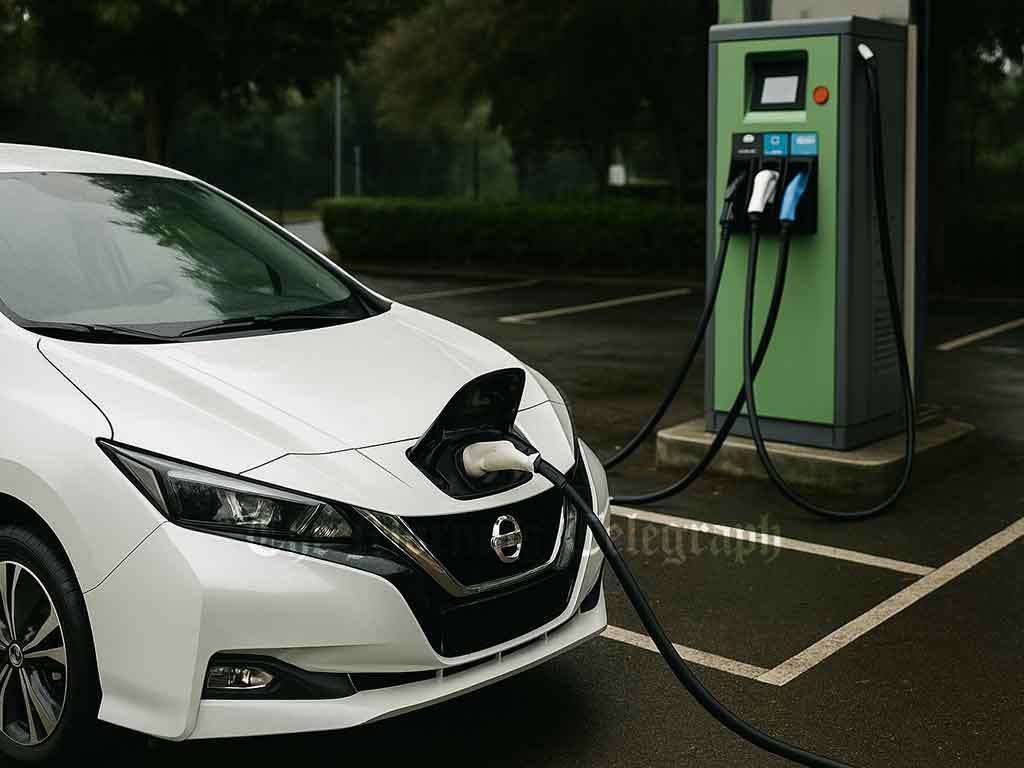
Sri Lanka has begun drafting long-overdue regulations for electric vehicle (EV) charging stations, a move that could reshape the nation’s EV infrastructure and protect consumer rights.
According to Sri Lanka Sustainable Energy Authority (SLSEA) Director General H.K. Wickramasinghe, the establishment and operation of EV charging points are currently unregulated, leaving the industry in a legal vacuum. He confirmed that work has now started on drafting regulations to provide a proper framework. “The regulations will cover how charging stations should operate and how to safeguard consumers,” Wickramasinghe said.

However, he admitted that the government has not yet decided whether the new framework will impose strict or soft regulations. The lack of oversight means officials do not even know the exact number of charging stations operating in the country. Based on estimates from platforms such as ChargeNet, there are roughly 200 charging points across the island, but no official registry exists.
Industry experts warn that the absence of a clear pricing mechanism remains a critical weakness. Solar Industry Association President Kushan Jayasuriya has argued that charging stations do not fall under any defined electricity tariff category. He emphasized that Sri Lanka currently uses a levelized tariff system, where consumers pay the same rate regardless of the time of day. Jayasuriya advocates for a Time of Use (TOU) tariff model, which would offer lower rates during off-peak hours and periods of renewable energy surplus. Such pricing could not only encourage EV adoption but also promote smarter energy consumption patterns.
The push to regulate EV charging stations marks a significant step toward modernizing transport infrastructure. Yet, without clarity on tariffs and stricter monitoring of operators, experts warn the country risks falling short of delivering a reliable and consumer-friendly EV ecosystem.