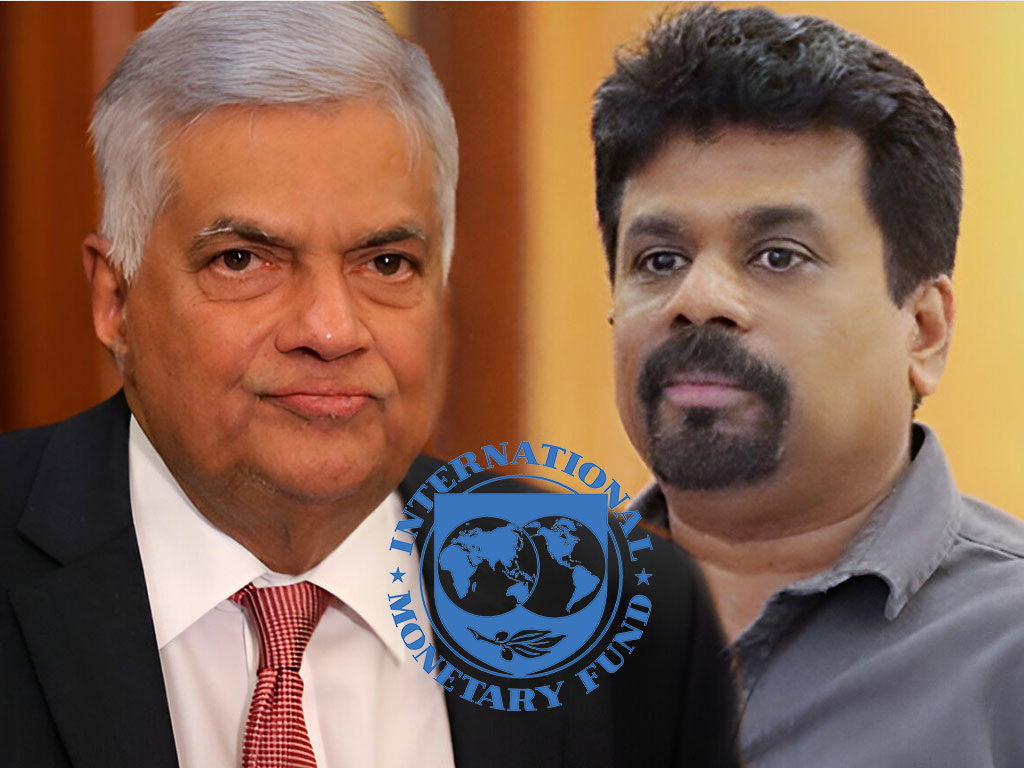
The International Monetary Fund has sent a clear message to Sri Lanka, there is no alternative to the reform path initiated under Ranil Wickremesinghe’s program, and Anura Kumara Dissanayake’s government must stay the course if the country wants to sustain growth and stability.
The IMF has praised Sri Lanka’s continued economic progress under its reform program, highlighting that the island nation is showing a strong growth momentum as it recovers from its worst economic crisis in decades. At a press conference to present the latest regional economic outlook, IMF Asia and Pacific Director Krishna Srinivasan and Deputy Director Thomas Helbling underscored the importance of reforms and fiscal discipline in safeguarding Sri Lanka’s future.
Helbling pointed out that Sri Lanka has successfully rebounded from the severe downturn that devastated the economy. He said the IMF-supported program has already yielded results, with growth hitting 5 percent last year and projected at 4.2 percent for both this year and next. While this momentum is encouraging, he explained that Sri Lanka’s long-term growth rate is expected to stabilize at around 3 percent, provided the reform process continues without disruption.

“The program has been implemented, and Sri Lanka is now experiencing very strong growth,” Helbling said. “But the most important thing is to continue implementing reforms fully. That is the only way to sustain gains and ensure growth remains on track.”
The IMF made it clear that policy continuity is critical. Any deviation, hesitation, or reversal of reforms could undermine recovery and put the country back into crisis. According to Helbling, Sri Lanka must prioritize fiscal consolidation, the financial viability of state-owned enterprises, and measures to mitigate potential financial risks. Without these steps, he warned, the stability achieved so far could unravel quickly.
Srinivasan, echoing the message, said Sri Lanka had made “remarkable progress” compared to just a few years ago when the country defaulted on its foreign debt and faced severe shortages of fuel, food, and medicine. He stressed that reforms are already paying off and that by continuing down the same path, Sri Lanka can secure long-term benefits. “The country has already come a long way. By continuing to implement reforms, you will continue to reap the benefits,” Srinivasan said.
The IMF also emphasized the importance of strengthening institutional frameworks to protect macroeconomic stability. That includes not only financial and fiscal discipline but also governance reforms to prevent corruption and enhance transparency.
The political implications of this IMF message are significant. It places the Anura Kumara Dissanayake administration in a position where abandoning Ranil Wickremesinghe’s framework is not an option. Instead, the current government must embrace and accelerate reforms, regardless of past political criticism of IMF-backed austerity measures.
For Sri Lanka, the IMF’s guidance is both a warning and a roadmap. The nation’s fragile recovery now depends on whether leaders can resist populist pressures and maintain the difficult but necessary policies that are stabilizing the economy.