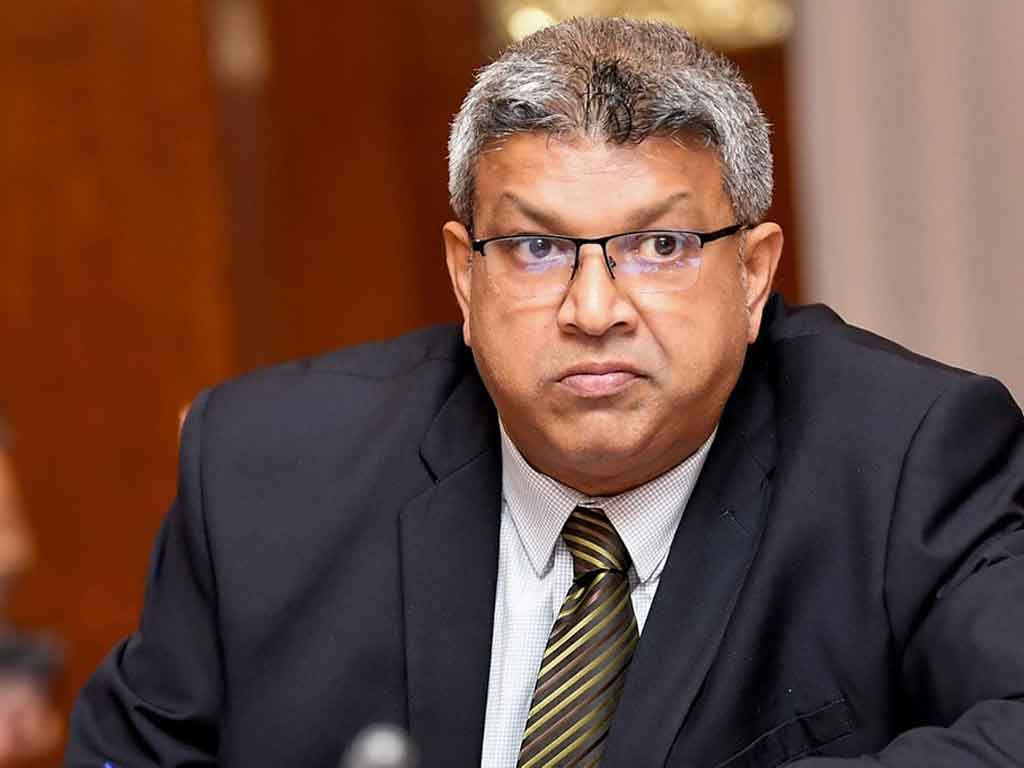
Justice Minister Harshana Nanayakkara has brushed off glaring errors in his asset declaration with a shrug, admitting to ‘human mistakes’ but insisting that omissions and missing signatures were nothing more than oversights, not attempts at concealment.
Speaking on Derana television, Nanayakkara admitted that when he first handed over his asset declaration, the document lacked the required signature of a Commissioner of Oaths. This immediately drew questions from the media. The Minister, however, downplayed the seriousness of the lapse, acknowledging it as a mistake and stressing that anyone, even a Minister of Justice or a veteran lawyer, is capable of making errors. He added that he accepted full responsibility and regretted the oversight but would not shift blame onto his staff.
After the issue was highlighted in the media, Nanayakkara claimed he acted promptly. About a month ago, he downloaded the copy, obtained the missing certificate, corrected the declaration, and re-submitted it. Yet, this was not the only flaw. Two significant omissions related to property values were also exposed. The estimated value of a 7.5-perch house and a 100-perch plot of land were left blank, in direct violation of the form’s instructions.

Nanayakkara explained these omissions as the result of confusion with the form. He insisted that if he had wanted to hide assets, he could have omitted them altogether. Instead, he listed them but left out the values—an error he says has now been rectified with corrections submitted a month earlier.
Questions were also raised about the complete absence of movable property such as vehicles in the declaration. To this, the Minister responded that he does not currently own any vehicles, having sold his last one before assuming ministerial office. The proceeds from that sale, he revealed, were placed in a fixed deposit, which he now lives off.
Nanayakkara maintained that no one is accusing him of providing false details or concealing the manner in which he acquired his assets. The controversy, according to him, is over omissions such as signatures and blank fields, which he has already admitted, corrected, and re-submitted. With characteristic sarcasm, he implied that mistakes are inevitable, but only those in his position seem to be hounded for them.