In Parliament, Minister Wijepala declared that slain Weligama Pradeshiya Sabha Chairman Lasantha Wickramasekera, also known as Weligama Lasa, was no saint but an entrenched criminal whose killing stemmed from gang rivalries rather than threats to national security.
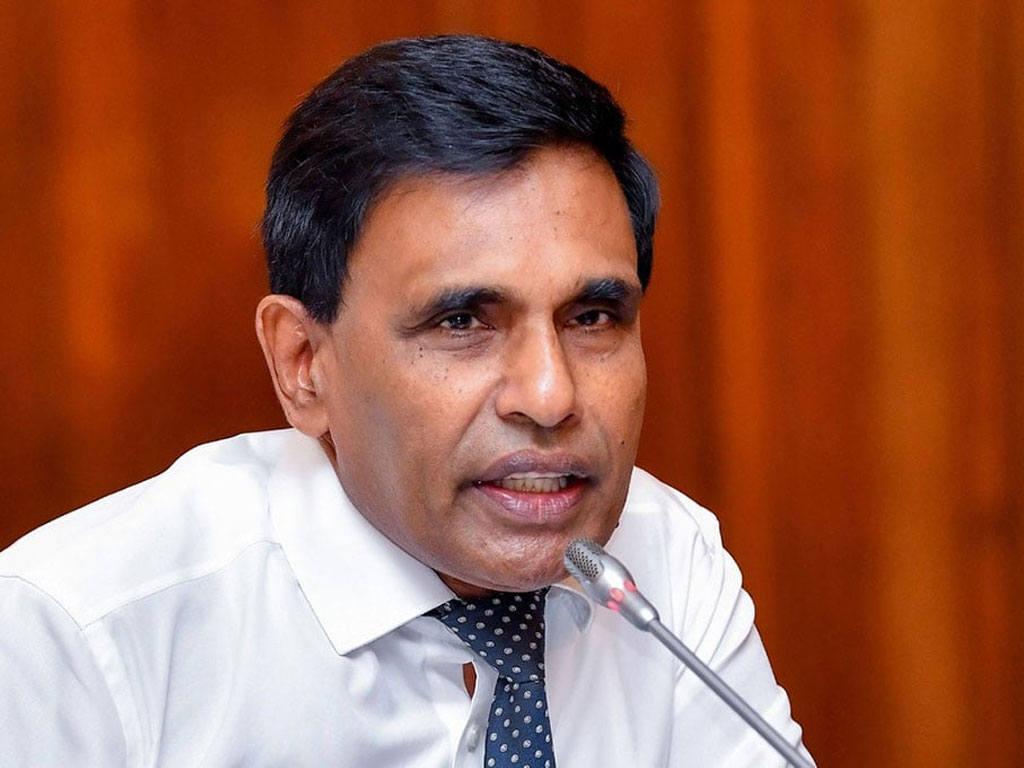
The shocking assassination of Weligama Pradeshiya Sabha Chairman Lasantha Wickramasekera has now taken a new turn inside Parliament. Minister of Public Security Ananda Wijepala openly stated that Wickramasekera, popularly known as Weligama Lasa, may have been a local politician, but his real life was steeped in underworld crime. According to the Minister, the murdered chairman was no victim of political violence but a criminal player whose end came through the very world he thrived in.
The Minister revealed that Weligama Lasa had no fewer than six criminal cases hanging over him. Two were being heard in the Matara High Court, two in the Kurunegala High Court, and another in Galle. Despite being a serving politician, he was a convicted individual who had even served prison sentences and was out on bail at the time of his death. Among the serious allegations against him were charges of drug trafficking, financial crimes, and illegal weapons possession.

In Parliament, Wijepala noted that statements from organized criminals brought back from Indonesia had further implicated Wickramasekera, alleging that he had stockpiles of weapons. Investigations are underway to uncover the full extent of his criminal dealings.
The Minister clarified that the murder, though dramatic, was not a threat to public security. Instead, it was the latest installment of long-running turf wars among Sri Lanka’s underworld gangs. These rival groups, armed with weapons and locked in bitter rivalries, often escalate disputes into fatal shootings. The killing of Weligama Lasa, Wijepala stressed, is another product of this cycle of violence.
At the same time, Wijepala assured Parliament that the government does not condone such killings. He reiterated that every human life holds value and emphasized that a formal investigation will be carried out. Still, he insisted that being elected as a public representative does not erase a criminal past. In his words, Wickramasekera should not be viewed as a political leader slain in duty but as a gang leader whose past inevitably caught up with him.
The Minister reminded Parliament that both the police and the Criminal Investigation Department had long maintained extensive files on Wickramasekera’s role as a leader of organized crime gangs. Those facts had been repeatedly reported to the courts, but politics had allowed him to maintain a dual identity — as a people’s representative by day and an underworld boss by night.
With his assassination, the line between political legitimacy and criminal notoriety has collapsed, leaving behind a grim reminder of how deep Sri Lanka’s politics and organized crime are entangled.