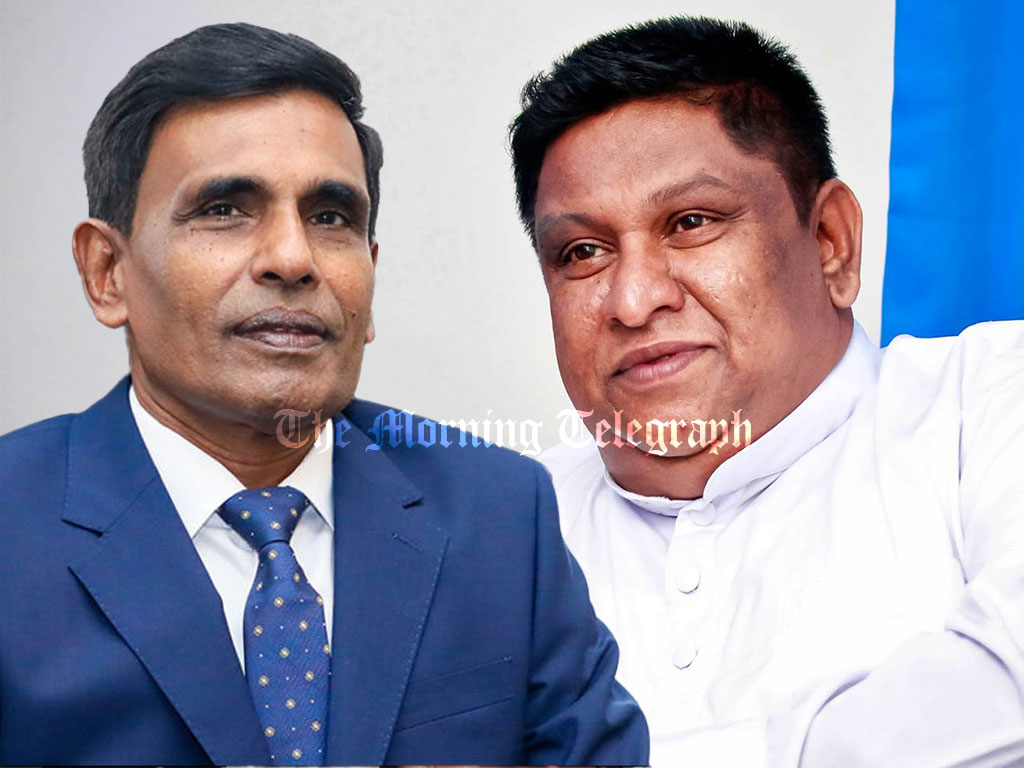
Accusations about Minister Ananda Wijepala’s turbulent past and his dismissal from the police service on alleged terrorism links resurfaced in Parliament, as MP Chamara Sampath Dassanayake launched a direct attack, questioning how such a man now presides over the Police Department.
In a heated session, MP Dassanayake pointed out that Minister Wijepala had recently described the assassination of Weligama Pradeshiya Sabha Chairman Lasantha Wickremesekera, better known as ‘Lasa,’ as an underworld crime. Seizing on that remark, Dassanayake declared that if Wijepala could speak so boldly of others, it was time to revisit his own life story.
He revealed that Ananda Wijepala had joined the Sri Lanka Police Department as a Sub-Inspector in 1988, but his career did not last. According to Dassanayake, while still undergoing training, Wijepala was removed from service following damaging intelligence and CID reports. These reports allegedly linked him to the armed wing during a turbulent period in Sri Lanka’s history.

The MP’s words cut sharply: “You were dismissed from the police at that time for acting as a leader of the armed wing, a terrorist. That is the reality.” He stressed that such a dismissal was no minor disciplinary matter but a clear indication that Wijepala had been identified as a threat to national security in the eyes of law enforcement itself.
What makes this revelation even more damning, Dassanayake argued, is the irony of today’s reality. A man who, according to him, was expelled from the very police service under suspicion of extremist involvement now sits at the top as the Minister in charge of the Police Department. Not only does he give directives, but he also enjoys full authority to shape the very institution that once cast him out.
The MP insisted that while most of the public remains unaware of these historical details, those living in Galgamuwa, Ambanpola and Kurunegala districts know Wijepala’s past well. “It is no secret in those regions,” Dassanayake added, accusing the government of turning a blind eye to the troubling backgrounds of those it elevates into high office.
By bringing these allegations to light in Parliament, Dassanayake cast a shadow over the credibility of the Police Ministry, asking how citizens could trust the leadership of a man allegedly expelled on charges of being tied to an armed movement.
This confrontation underscored the deep political divisions gripping Parliament and raised difficult questions about accountability, transparency and the standards expected of public officials. The issue has now ignited a broader debate: should those with controversial and suspect pasts be entrusted with overseeing critical state institutions like the Police?
The explosive claim has left many wondering whether the government will move to clarify Wijepala’s past or whether, as often happens, the issue will be quietly swept aside. For now, the revelation lingers, threatening to dent public trust in a ministry already under scrutiny.