A reflection on fairness, maturity, and the lessons life quietly teaches
By Roshan Jayasinghe
Every generation inherits a world built from the thoughts and choices of those before it.
We are taught how to read, how to earn, how to compete, but rarely how to see.
This writing is about learning to see clearly: not just with the eyes, but with the heart.
It is about growing into fairness, not as an ideology, but as a way of being.
It’s written from experience, not theory, from years of living both sides of what it means to be human: success and failure, knowing and not knowing, right and wrong.
A Simple Case for a Fair Life
When I was young, the world seemed simple. People worked, helped each other, and went home to rest.
I didn’t think about systems or structures. I only knew that kindness made life lighter and selfishness made it heavier.
That was my first lesson in fairness, learned not from books, but from watching how people treated one another.
“You don’t understand greed until you’ve felt it pull at your own choices.”
As I grew older, I saw more. I saw how money could divide families, how status could silence honesty, how good people could struggle for what should have been basic.
I watched and sometimes participated in the same patterns I now write about. I wasn’t above them; I was inside them. That’s how I learned.
You don’t understand humility until you’ve failed enough times to see your own pride clearly.
You don’t understand fairness until you’ve been treated unfairly and refused to pass that pain on.
I didn’t learn how to see both sides of truth in school.
My education, like most, was built on memorizing facts and repeating history, civilizations, wars, and ideologies passed down like inherited stories.
They told us what humanity had achieved, but not what it had overlooked.
They spoke about progress, but not the price of progress.
I left with knowledge of the world but very little understanding of myself.
“Real learning began later, through experience, through failure, through quiet observation.”
It came from the moments when life itself became the classroom: when success didn’t bring peace, when comfort didn’t mean happiness, when truth contradicted what I had been told.
That’s when I began to understand that knowing and not knowing coexist.
True understanding is not about choosing one side of truth; it’s about being able to stand between both, and see clearly enough to know what to keep and what to let go.
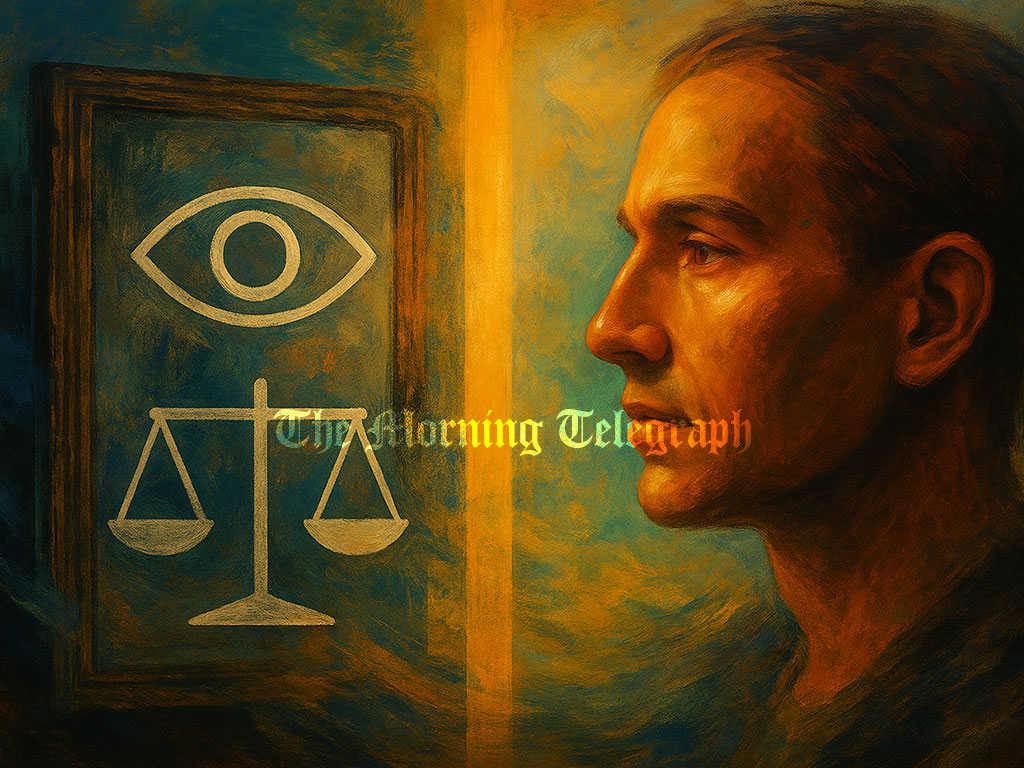
The Mirror
The human condition is built on a quiet paradox.
We live facing forward but never see our own back.
We move through the world looking outward, never directly at ourselves.
“To know what we look like, we need reflection.”
And reflection, in life, comes not from glass but from experience.
People, relationships, mistakes, and consequences, they are all mirrors showing us the parts of ourselves we cannot see.
The most useful instruments of knowledge are not technology or theory, but reflection, honesty, stillness, and time.
They are the quiet mirrors of life that reveal who we truly are, beyond what we present to the world.
When you begin to see yourself clearly, both the front and the back, both the light and the shadow, you stop judging others so quickly.
You understand why people repeat mistakes, and you recognize how easy it is to lose your way.
Growth is not about being right; it’s about being real.
Through this kind of seeing, I began to notice what happens when systems grow without conscience.
We’ve given our best intelligence to machines and markets, but not to wisdom.
We chase progress that often leaves the human being behind.
We call it growth, but if it drains our compassion, it’s only expansion without direction.
“We’ve given our best intelligence to machines and markets, but not to wisdom.”
Still, I don’t reject the world. I believe in our ability to grow up.
I’ve seen honesty survive in the hardest places, between strangers helping each other after disaster, or a worker giving their last energy to care for someone who will never repay them.
I’ve seen truth emerge quietly in a meeting room when one person simply refuses to lie.
These are the real signs of progress.
Here is what I have learned through my own journey and through others who have walked with me:
Fairness isn’t built by destroying old systems; it’s built by maturing past them.
Maturity means non-repeatability, learning the lesson so deeply that we don’t have to suffer through it again.
Each of us is responsible for that.
“If you have lived through greed, learn balance.
If you have known power, learn humility.
If you have been poor, learn generosity.
If you have been hurt, learn gentleness.”
This is how we build a fair world, from the inside out.
Every person reading this will have their own version of the story.
Some will learn through success, others through loss. That’s natural.
What matters is not how we learn, but that we do learn, and that we stop blaming the world for lessons meant for us.
Through that process, we mature, and maturity is what fairness really looks like.
It’s when we no longer need to repeat the same mistake to understand why it’s wrong.
“Maturity means learning so deeply that we no longer need to repeat the pain.”
So when I talk about fairness now, I mean it in the simplest way:
A life where each person has enough, and no one’s comfort depends on another’s suffering.
A life where we price honestly, work ethically, speak truthfully, and help quietly.
A life where we care not because it’s fashionable, but because we finally see it’s the only way life makes sense.
You don’t have to agree with every word. You only have to reflect on your own experience.
Ask yourself: What have I learned that I no longer need to repeat?
If you can answer that, you’re already part of the change.
We cannot build a fair world without fair individuals.
And we cannot become fair individuals without facing our own contradictions and growing through them.
That is the duality we all live inside, the knowing and the not knowing, the right and the wrong, both teaching us.
“Once you see clearly, fairness stops being a dream and becomes a direction.”
I write this not as a teacher but as someone still learning, someone who has seen enough to know that fairness isn’t an ideology.
It’s a daily practice, measured in honesty, compassion, and courage.
If we each live that way, we’ll have built more than a fair system.
We’ll have built a fair humanity.
And perhaps that is where true clarity leads us, to remember that nature is the only inheritance we all share.
It asks for no ownership, only care.
If we can learn to leave the world a little lighter, a little kinder, and a little more balanced for those who come after us, then fairness will have completed its circle, from seeing clearly, to living wisely.
Author’s Note
I didn’t arrive at these understandings through study alone.
My life has been my education, its losses, its mistakes, its quiet realizations.
What I learned, I learned by living: by being both wrong and right, proud and humbled, seen and unseen.
This essay is not about perfection or ideology.
It’s about reflection, the mirror we all need to hold up to our lives until truth appears.
Each of us learns at our own pace, through our own circumstances.
But when we stop defending our blindness and start observing with honesty, we begin to change, person by person, quietly, steadily.
“Maturity is the ability to see both sides of truth and to no longer repeat what we’ve already learned.”
That is how a fair world begins, within each human being who chooses to see clearly.
Editor’s Note
Roshan Jayasinghe’s Learning to See Clearly is a quietly powerful meditation on fairness and human growth.
It invites readers to re-examine what education, progress, and maturity truly mean, and to rediscover that reflection, humility, and compassion are the foundations of any fair world.