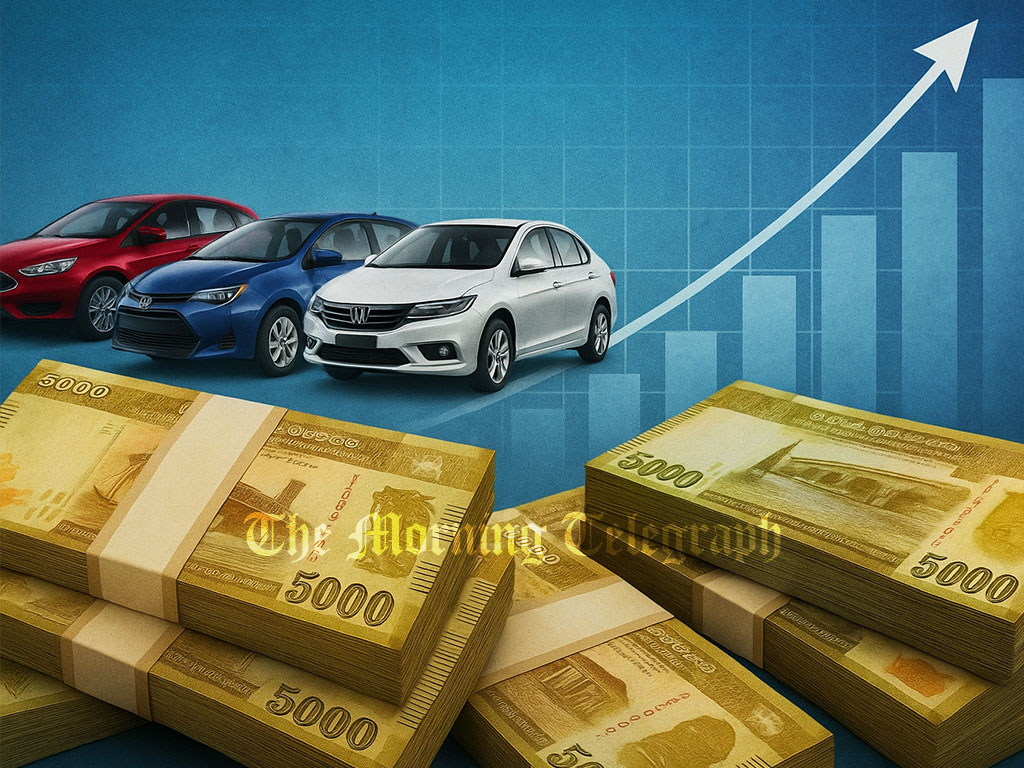
The lifting of vehicle import restrictions has unleashed a massive surge in borrowing, pushing vehicle loans past Rs. 1.16 trillion and helping the government exceed its 2025 fiscal targets.
The Central Bank of Sri Lanka (CBSL) announced that vehicle-backed loans skyrocketed during the first half of 2025, reaching approximately Rs. 1,161 billion. The surge follows the government’s decision to ease vehicle import restrictions in February, unleashing pent-up demand after nearly five years of strict controls.
According to Deputy Governor J. P. R. Karunaratne, the majority of loans were issued under leasing facilities, while mortgage-based vehicle loans accounted for the second-largest share. He disclosed these figures at a media briefing on the Financial Soundness Indicators for the second quarter of 2025. The CBSL report highlighted that total gross loans and advances from Licensed Finance Companies (LFCs) stood at Rs. 1,837 billion during the six-month period, with vehicle-backed loans dominating at 63.2%. By comparison, gold-backed loans made up 19.4% of total lending.

The rapid expansion of vehicle lending has been accompanied by growth in household borrowing. The banking sector extended Rs. 1,010.3 billion in loans to households, representing 40.7% of total private sector credit. This reflects a 14.8% increase compared to the Rs. 736.4 billion issued in the first half of 2024. The Western Province recorded the highest level of borrowing, demonstrating a strong regional concentration in demand.
CBSL Governor Dr. Nandalal Weerasinghe attributed the surge in vehicle loans to a natural rebound after years of restrictions. “The sharp rise in demand was a direct response to nearly five years of accumulated need,” he said, noting that while the backlog has created an initial spike, demand is gradually stabilizing and should normalize in 2026.
The surge in imports has also provided a welcome boost to state coffers. Increased customs duties and related revenues have enabled the government to surpass its fiscal targets for the year. Although the Central Bank initially projected vehicle imports at around USD 1.2 billion for 2025, Dr. Weerasinghe stated the final figure could exceed USD 1.5 billion by year’s end.
Officials clarified that while vehicle loans are overwhelmingly driven by leasing and mortgages, detailed disaggregated data is still being compiled. Nonetheless, the overall lending trends reflect both the appetite of consumers and the financial sector’s role in supporting the post-restriction economic rebound.