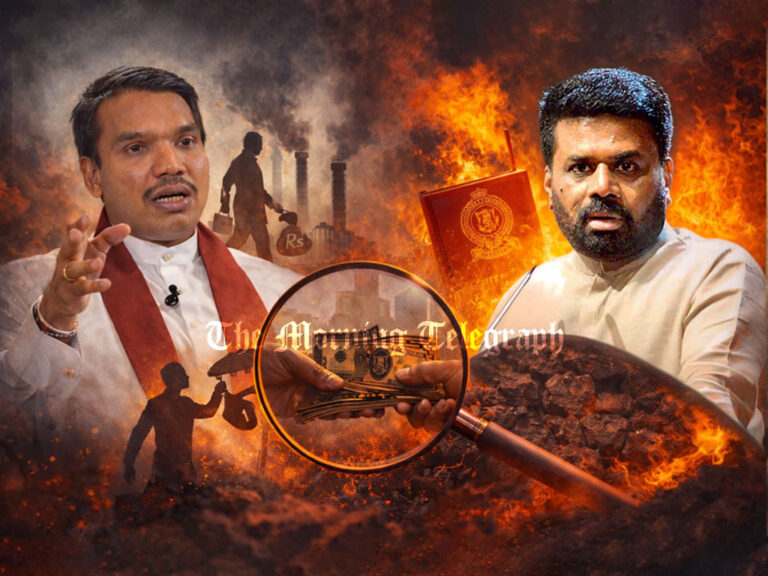
President Anura Kumara Dissanayake halts high-level defence visits to Israel, Iran, and Egypt, signaling a cautious strategy to avoid Middle Eastern rivalries while recalibrating Colombo’s global security partnerships.
Sri Lanka has suspended a planned series of defence missions to Israel, Iran, and Egypt in a move that highlights the government’s desire to tread carefully in the midst of sensitive geopolitical rivalries. President Anura Kumara Dissanayake reportedly instructed the Ministry of Defence to halt the visits, citing concerns that engaging multiple actors in the Middle East at this juncture could complicate Colombo’s foreign policy balance.
The delegation, headed by the Secretary to the Ministry of Defence and including senior representatives of the Army, Navy, and Air Force, had been scheduled to begin its journey with a visit to Israel this week. The program was designed to explore advanced military training programs, intelligence cooperation, and potential procurement of high-grade defence technology. Israel, which has been a quiet but influential partner in strengthening Sri Lanka’s defence sector, was prepared to extend discussions in areas critical to Colombo’s long-term security goals.

For decades, Israel has supported Sri Lanka’s internal security framework, particularly during its protracted internal conflict. Through discreet channels, Israeli advisors and firms provided critical assistance in counter-insurgency operations, communication systems, and surveillance capabilities. These efforts helped Sri Lanka modernize its command and control mechanisms, strengthen its aerial and naval operations, and build specialized military units. More recently, Israeli defence corporations have shown growing interest in supplying unmanned aerial vehicles, electronic warfare technologies, and cyber defence systems tailored to Sri Lanka’s strategic needs.
The abrupt suspension of the mission to Israel signals a wider caution in Colombo’s foreign policy. According to informed sources, the follow-up visits to Iran and Egypt were intended to diversify defence ties beyond traditional partners. Tehran has long been an ally in economic and cultural relations, and in recent years it has expressed readiness to expand into military technology, including radar systems, drones, and defence research. Egypt, meanwhile, has actively sought naval cooperation with Sri Lanka, offering joint exercises, training initiatives, and exchanges in the defence industrial sector. Both nations regard Sri Lanka as a crucial strategic partner, located along maritime corridors that intersect vital trade and security routes across the Indian Ocean.
Analysts note that the decision to suspend these visits reflects a conscious effort by President Dissanayake to avoid being drawn into the shifting and often volatile rivalries of the Middle East. By halting the delegation, his administration signals a preference for maintaining neutrality while reassessing how far to align with emerging blocs in the region. For Colombo, the challenge lies in leveraging defence partnerships without compromising its delicate geopolitical balancing act between global powers.
Alongside the suspension of trips, discussions within the Ministry of Defence about the disposal of surplus ammunition have also stirred diplomatic concern. Sources revealed that an African country had shown interest in purchasing Sri Lanka’s excess stock through a Colombo-based private intermediary. While the transaction promised financial gain, objections quickly surfaced from Chinese and Russian diplomats, who warned that such deals could violate arms transfer regulations and potentially funnel munitions into conflict zones in Eurasia. The controversy underscores the increasing scrutiny surrounding Sri Lanka’s defence-related transactions at a time when global arms transfers are under intense monitoring.
Observers suggest that the government’s restraint in defence diplomacy may also be linked to its broader strategy of minimizing entanglements while focusing on domestic priorities. By pausing high-profile defence engagements, the administration has created space to review its strategic alignments, particularly in a world where great power competition shapes regional security. Sri Lanka’s location along vital maritime trade routes ensures that global and regional powers view the island as a critical node in their strategic calculations.
The suspension of the visits has already generated debate within diplomatic circles, with some arguing that Sri Lanka risks missing opportunities for advanced technology and strategic partnerships. Others insist that the cautious approach strengthens the country’s credibility as a neutral and independent player in international affairs. What remains clear is that Colombo’s future choices in defence and foreign policy will require navigating a complex web of partnerships, rivalries, and expectations from both regional and global actors.
As the President recalibrates the direction of foreign policy, Sri Lanka faces a delicate balancing act. The decisions taken now will not only define Colombo’s military partnerships but also its long-term diplomatic identity in an era marked by shifting alliances and contested global power structures.