
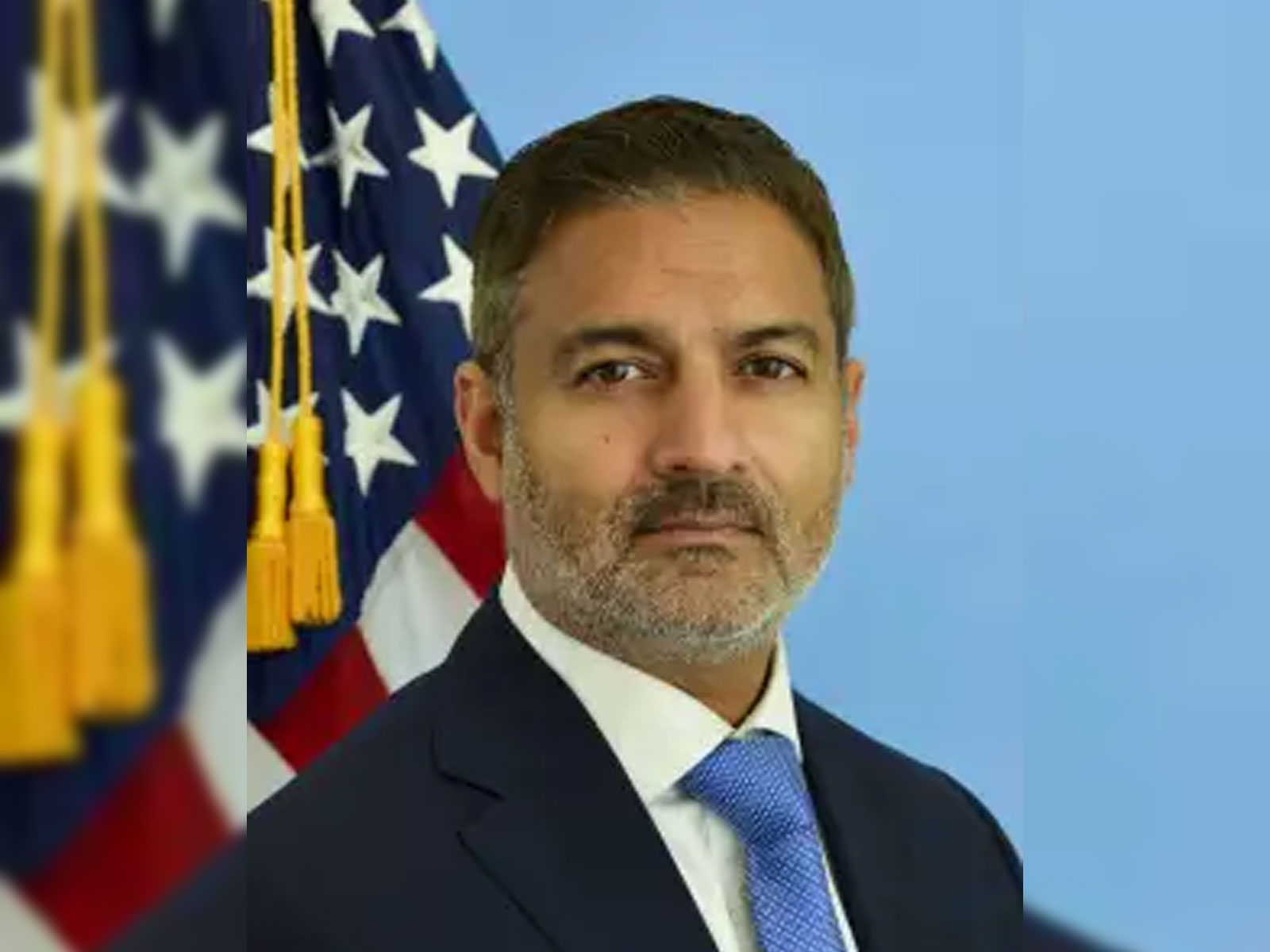
A retired FBI agent exposes chilling new details about the 2019 Easter Sunday bombings in Sri Lanka, revealing ISIS links, global terror networks, and the painstaking international investigation that uncovered the truth behind one of the deadliest terrorist attacks of the decade.
The Easter Sunday of April 2019 stands as one of the darkest chapters in Sri Lanka’s modern history. Families gathered for worship, hotel staff prepared lavish buffets for holiday visitors, and a country still rebuilding after decades of civil war hoped for a peaceful holiday. Instead, a wave of coordinated suicide bombings tore through three luxury hotels in Colombo and three churches in Colombo, Negombo, and Batticaloa. Within minutes, 270 innocent lives were stolen and hundreds more were maimed. Among the dead were five Americans, dozens of Europeans, Indians, and scores of Sri Lankans who had no idea that an extremist ideology born thousands of miles away would reach their shores with such catastrophic force.
For Sri Lanka, the attacks were a painful reminder that peace after the civil war did not guarantee safety in a world where terrorism had evolved. For the international community, the bombings were further evidence that the tentacles of ISIS had spread beyond the Middle East, adapting and metastasizing into global networks capable of orchestrating complex mass-casualty attacks far from their original battlefields. For the United States, it was a call to action. Within hours, the Federal Bureau of Investigation (FBI) mobilized, launching one of its most high-pressure extraterritorial counterterrorism investigations in history.

Today, retired FBI Special Agent Raj Patel, the lead case agent who spent months on the ground in Sri Lanka, has shared his account. Speaking in a special episode of FBI Retired Case File Review, Patel dismantled myths and conspiracy theories that have clouded public memory, and revealed how his team painstakingly pieced together evidence of ISIS inspiration, encrypted communications, clandestine financing, and bomb-making networks. His words shed light on both the complexity of the investigation and the human cost that haunted every step.
Patel’s revelations carry weight not only because of his role but also because of his credibility. Over a 20-year FBI career, he worked cyber intrusions, child exploitation cases across Asia, kidnappings, extortion rings, and high-value detainee interrogations. When Easter Sunday turned into a nightmare, Patel was uniquely positioned to lead the effort. “Our mandate was clear,” he recalls. “We were not just there to support. We were there to collect evidence that could stand in U.S. courts, bring indictments, and deliver justice for the victims—including five Americans who never came home.”
A Nation in Shock, an Investigation Begins
When the bombs detonated that morning, Sri Lanka plunged into chaos. Local police scrambled, hospitals overflowed, and a stunned government declared emergency measures. Forensic teams rushed to blast sites where pews, walls, and ceilings had collapsed. Families wailed outside churches, and rescue workers searched for survivors beneath rubble and shattered glass.
Within 24 hours, Patel and a small team from the FBI’s Los Angeles Division Extraterritorial Squad landed in Colombo. Their arrival was coordinated through the U.S. Embassy, which became the central hub for intelligence meetings and operational planning. Despite the enormity of the task, Patel remembers how small the initial team was—three to five agents including a Special Agent Bomb Technician, digital forensics specialists, and legal attaches flown in from Singapore. “It was overwhelming at first,” he admits. “Multiple bomb sites, dozens of suspects, enormous political pressure, and the eyes of the world fixed on Sri Lanka.”
The team immediately established operational command. Coordination with Sri Lanka’s Criminal Investigations Department (CID), led by investigators with limited prior experience in Islamist terrorism, proved vital. CID detectives offered local knowledge and access to detainees, while the FBI brought forensic expertise and a victim-centered approach honed from previous international cases in Bali, Mumbai, and Nairobi.
The Shadow of ISIS and NTJ
Very quickly, evidence pointed toward the National Thowheed Jamaat (NTJ), a radical Islamist group in Sri Lanka. Its leader, Zahran Hashim, had been known for fiery online sermons calling for violent jihad. What stunned even seasoned investigators was the family involvement: Zahran’s brothers and relatives were among the suicide bombers who targeted churches and hotels.
“This was not random,” Patel explains. “The attack was choreographed, globally inspired, and executed with chilling precision. ISIS’s fingerprints were everywhere—from encrypted messaging apps to propaganda videos that celebrated the attackers as martyrs.”
Investigators traced the procurement of water gel dynamite used in the bombs to black-market suppliers. Lease agreements for safe houses, fingerprints on chemical canisters, and digital files retrieved from shattered devices revealed months of planning. Despite destroying most of their phones, the attackers left behind enough digital residue—metadata, cloud backups, and social media traces—for the FBI’s Critical Analysis and Response Team (CART) to reconstruct communications. Many pointed directly to ISIS facilitators abroad.
Relentless Work Under Extreme Pressure
For the FBI team, days began at dawn and stretched long into the night. Patel recalls rising before sunrise for embassy briefings, spending daylight hours at blast sites or safe houses, and then convening late-night sessions where evidence response teams catalogued DNA samples, fingerprint lifts, and digital devices. “Sleep was a luxury,” he says. “We worked until we dropped.”
The Evidence Response Team (ERT) meticulously documented every site. They collected chemical residue from walls, blood samples for DNA, and structural damage records. Every fingerprint was photographed, every receipt preserved, every suspect interrogated with care.
High-Value Detainee Interrogation Group (HIG) officers were deployed to extract insights from suspects. But Patel emphasizes that no confession stood alone. “If someone admitted to buying chemicals, we demanded receipts. If someone described a safe house, we verified it with landlords and fingerprints. Facts came first. Stories came later.”
The Human Cost
Among the dead was an 11-year-old American boy who had traveled with his family for Easter vacation. His mother, who lost both her husband and son that day, faced unimaginable grief while caring for an elderly relative with dementia. Patel says he kept a photo of the boy in his office as a reminder of why the mission mattered. “Behind every fingerprint and chemical trace was a story of lives stolen. That photograph kept us grounded.”
Five Americans died in the attacks, along with Britons, Indians, Australians, and dozens of Sri Lankans. FBI agents personally contacted victims’ families, offering updates and reassurance. The Bureau’s victim-centered approach became a cornerstone of the mission. “It wasn’t about metrics or headlines,” Patel reflects. “It was about people who deserved answers.”
Challenges of Politics and Cooperation
Working under martial law, the FBI faced significant hurdles. Sri Lanka’s government, still fractured by political rivalries, struggled with transparency. Some officials sought to deflect blame, while conspiracy theories began circulating that the attacks were orchestrated by shadow actors.
“There were moments when politics threatened to derail progress,” Patel admits. “But we stayed focused on verifiable evidence. Chemical residues don’t lie. Fingerprints don’t lie. Surveillance footage doesn’t lie.”
International cooperation proved critical. Representatives from 45 countries participated in briefings, given the global profile of the victims. Patel and his team had to lead not only with technical expertise but also with diplomacy. Transparency kept allies engaged and ensured the investigation did not fracture under competing national interests.
From Colombo to Washington
Back in the United States, coordination with the Department of Justice and U.S. Attorney’s Office ensured that the case met American legal standards. In the end, three foreign nationals were indicted for providing material support to terrorism. For the FBI, the successful indictment was proof that even the most distant attack could result in U.S. accountability.
In 2021, Patel and his team were awarded the Director’s Award for Most Outstanding International Investigation. It was recognition of months of grueling work and the resilience of agents who balanced forensic precision with empathy for shattered families.
Beyond the Investigation
For Patel, Easter Sunday became the defining case of his FBI career. Before Sri Lanka, he had chased cybercriminals, dismantled child exploitation networks across Asia, and even embedded with Joint Special Operations Command (JSOC) in the Philippines. But nothing compared to the scale, complexity, and emotional toll of Sri Lanka. “This case was about resilience—of investigators, of families, of the entire global system determined to hold terrorists accountable,” he says.
Today, Patel continues serving public safety as a Police Special Investigator with the Los Angeles Police Department’s Office of the Inspector General. His reflections remind us that terrorism is not just an abstract threat but a human tragedy that demands both justice and empathy.
Why It Still Matters
The Sri Lanka Easter bombings are more than a historical event. They remain a warning. They show how extremist ideologies can take root in unexpected places, how small groups can exploit local vulnerabilities to cause global reverberations, and how misinformation can distort public memory.
Patel’s account cuts through myths. The attacks were not false-flag operations or mere intelligence lapses. They were deliberate, ISIS-inspired acts of terror carried out with ruthless planning. They exposed gaps in Sri Lanka’s security, highlighted the need for stronger intelligence-sharing, and demonstrated that terrorism today is borderless.
For Sri Lanka, the lessons remain urgent: strengthen counter-radicalization programs, build transparent governance, and invest in intelligence capacity. For the world, the case underscores the necessity of cross-border cooperation in an age where terrorism flows as freely as digital communication.
A Legacy of Justice
The scars of Easter Sunday remain etched into Sri Lanka’s collective memory. Churches have been rebuilt, but families continue to grieve. Survivors carry physical and emotional wounds that may never fully heal. And yet, amid the tragedy, there is also a legacy of justice: an investigation that spanned continents, honored the victims, and reminded the world that facts—not rumors—are the bedrock of accountability.
Patel’s voice, years after the bombs exploded, reminds us that terrorism cannot be fought by rhetoric alone. It requires evidence, perseverance, and above all, humanity. “Every fingerprint mattered. Every receipt mattered. Every victim mattered,” he says. “That is how you fight terrorism—with truth, with justice, and with compassion.”
SOURCE:- SRI LANKA GARDIAN
ORIGINL SOURCE : – https://jerriwilliams.com/

Thanks for sharing fact about that tragic day. May all those who lost their lives Rest In Peace.
One must question Cardinal Cooray for his conduct during the investigation.
Absolutely? He is a disgrace to our Catholic Church. Politically biased moron.
Cardinal Cooray died many years ago. You are confused and mixing up with cardinal Malcolm . His political affiliations in the past are questionable but his faith and leadership of the church is unblemished.
Cardinal Cooray died many years ago.
Absolutely? He is a disgrace to our Catholic Church. Politically biased moron.
Now can stop trying to find Maha Mola Karu