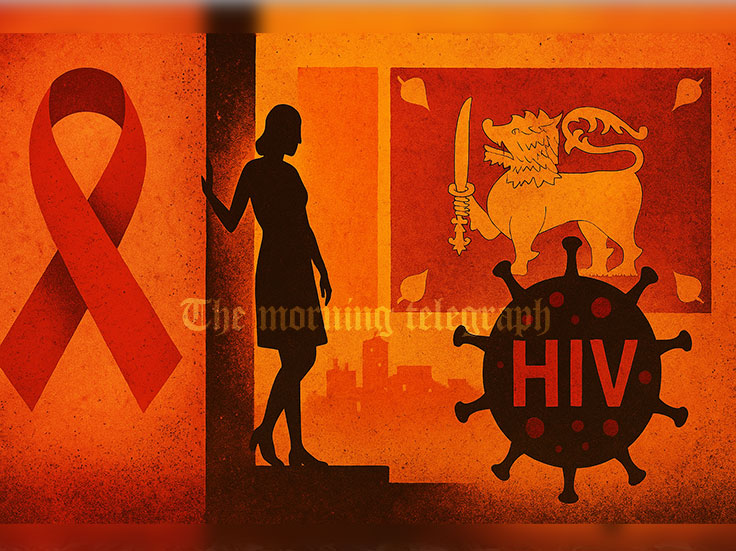
A hidden epidemic is spreading through Sri Lanka, with over 80,000 sex workers and more than 150,000 high-risk individuals left without protection, recognition, or urgent reform. The country faces the possibility of a full-scale HIV crisis that could devastate its healthcare system and economy.
Sri Lanka is sitting on a ticking public health time bomb that too many leaders refuse to acknowledge. Beneath layers of cultural taboos and political hesitation, a crisis is growing steadily, fuelled by unsafe sexual practices, unregulated sex work, and drug-related behaviors. More than 150,000 people are engaging in high-risk activities for HIV and sexually transmitted diseases, yet the official response remains dangerously inadequate.

The National STD/AIDS Control Programme (NSACP) has identified 127,511 high-risk individuals spread across the island. This includes sex workers, men who have sex with men, beach boys catering to tourists, drug users who share needles, and transgender women. Sex workers remain one of the most vulnerable communities, yet the government provides them with no legal protection. Current data indicates that around 6,000 people are already living with HIV/AIDS, most of them concentrated in the Western Province. Instead of triggering national alarm, these figures are met with silence.
The truth is grim. HIV infections in Sri Lanka are not decreasing; they are rising fast. In 2023 alone, nearly 700 new cases were recorded, representing a 13 percent increase from the previous year. Men accounted for the majority of these infections, with a male-to-female ratio of 7.25 to 1. Behind the statistics lies another crisis: women, particularly those struggling with poverty and gender-based violence, remain at heightened risk due to systemic barriers to healthcare access and the absence of protective laws.
At the center of this looming epidemic is government failure. The response so far has been fragmented, limited to short-term campaigns and half-hearted awareness drives. Free testing services exist in theory but rarely reach the communities that need them most. Even sexuality education in schools, considered one of the strongest tools of prevention, has been undermined by conservative resistance and poor implementation. Young people are left uninformed, unprotected, and dangerously vulnerable.
This worsening crisis is compounded by Sri Lanka’s fragile healthcare infrastructure. Shortages of medicine, limited access to antiretroviral therapy, and declining standards of care are all contributing factors. Sex workers, already marginalized, face exclusion from formal health frameworks due to the lack of legal recognition. Stripped of basic rights and support, they are forced to operate in the shadows, perpetuating cycles of stigma and disease transmission. Civil society organizations like the Praja Shakthi Development Foundation have tried to fill the gap, working with thousands of sex workers across several districts, but these efforts cannot replace a coherent national strategy.
The scale of the sex work industry shows why reform cannot wait. With over 80,000 active sex workers in the country, leaving this sector unregulated is a public health disaster. Experts such as Professor Prathibha Mahanamahewa have repeatedly stressed the need for registration and legal acknowledgment to safeguard both human rights and national health. Studies already show that high condom usage among sex workers, estimated at 95 percent, significantly reduces the spread of disease. Yet without systemic support and protection, these positive outcomes are at constant risk of reversal.
Education remains the key to long-term prevention, but Sri Lanka’s system is failing. Experts insist that sexual health education must begin early, continue throughout schooling, and extend into higher education. Knowledge about anatomy, reproductive health, consent, and safe practices is essential for the next generation. Without it, young people remain unprepared and vulnerable to exploitation and misinformation. The lack of a systematic approach to sexual health education is a profound strategic failure, one that places the entire nation at risk.
Deeply entrenched social prejudices further complicate the situation. Topics such as sex work, LGBTQ+ rights, and drug use remain politically taboo, driving those most in need of help underground. This silence is deadly. As policymakers avoid the issue, the crisis grows deeper. Every year of hesitation allows the epidemic to strengthen its grip, pushing Sri Lanka closer to an outcome that will devastate communities and overwhelm the healthcare system.
The path forward is clear. Comprehensive sex education, widespread testing and treatment, legal recognition of sex workers, and robust social support are not optional. They are essential for survival. Sri Lanka must find the courage to prioritize public health over cultural discomfort, to confront prejudice head-on, and to extend protection to the most vulnerable groups. Anything less will be seen as abandonment.
Every day that passes without decisive action worsens the suffering of thousands. Sri Lanka has the scientific knowledge, the medical expertise, and the community networks to stop the crisis. What it lacks is political will and moral commitment. Recognizing the realities of HIV transmission and addressing the needs of high-risk groups is the only way forward. The next step must be bold reforms backed by evidence, not rhetoric.
This is not a debate about morality or ideology. It is a national emergency, a human rights issue, and a threat to national security. Continued hesitation will result in a preventable epidemic that destroys lives, crushes the healthcare system, and leaves deep economic scars. The time for debate has ended. Only immediate action can save Sri Lanka from disaster.
The choice is stark. Confront the crisis with courage or face devastating consequences. If Sri Lanka acts now, there is still hope to avert the worst. But if leaders continue to turn away, the cost will be measured in lives lost, families broken, and a nation brought to its knees by a crisis that could have been prevented.