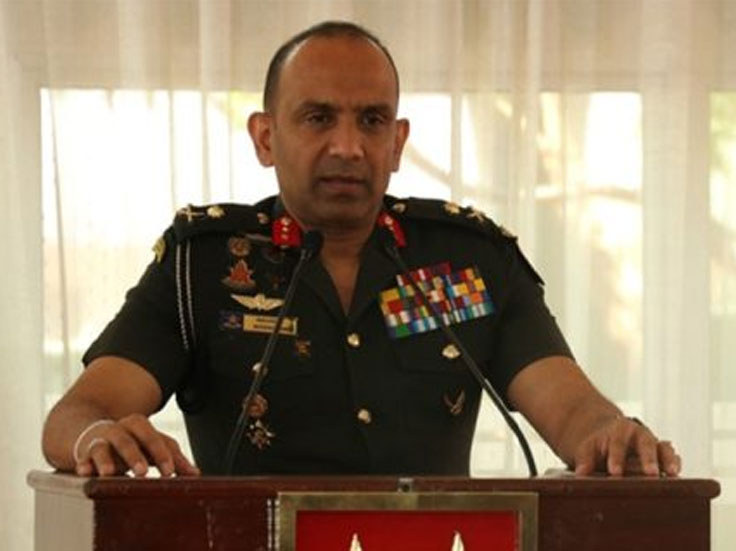
Sri Lanka has shocked its defence and policy circles by appointing a new Chief of National Intelligence with no prior background in intelligence, sparking debate over whether a decorated military commander can lead the country’s most sensitive civilian-security post at a time of mounting national threats.
Sri Lanka has entered uncharted territory with the appointment of Major General Nalinda Niyangoda (Retired) as Chief of National Intelligence, a role traditionally reserved for veterans steeped in the art of intelligence. His career, while exemplary in its military achievements and dedication to disaster management, carries little of the operational spycraft normally expected of the nation’s top intelligence officer. His arrival at the helm has therefore stirred both applause for his service and unease about the future of the intelligence apparatus.
Niyangoda assumed duties at the Ministry of Defence in Sri Jayawardenepura Kotte after receiving his letter of appointment from Defence Secretary Air Vice Marshal Sampath Thuyacontha (Retd). The announcement came on 27 October, with his formal assumption of office the following day. It marks a major career milestone following his service in the Sri Lanka Armoured Corps, leadership in training institutions, his role in disaster response, and a recent stint with FITS Express before retirement in November 2024.

On LinkedIn, Niyangoda describes himself as a highly accomplished officer, armed with a PhD in disaster management and over 35 years of military service. He highlights his expertise in disaster response and emergency planning, including work with the United Nations Mission in South Sudan in 2016 and 2017. His record also includes commanding the Sri Lanka Military Academy (SLMA), instructing cadets, serving as a senior administrator, and overseeing humanitarian operations during Sri Lanka’s long internal conflicts. His decorated military record has been recognized with the RWP, RSP, VSV, and USP medals for distinguished service.
Yet these achievements, as impressive as they are, belong largely to the spheres of military leadership, training, and humanitarian coordination. They are not rooted in the deep operational experience in counterintelligence, surveillance, or intelligence analysis typically associated with the Chief of National Intelligence. The gap between his expertise and the unique demands of this sensitive post has sparked a wave of commentary among defence experts and policy analysts.
The role of Chief of National Intelligence is unlike any other in the defence establishment. It requires the delicate coordination of Sri Lanka’s multiple intelligence agencies across the military, police, and civilian sectors. It demands not only discipline but the ability to detect emerging threats such as extremist resurgence, cyber warfare, and transnational crime. The post has historically been held by figures with extensive grounding in intelligence work, often drawn from divisions specializing in counterterrorism and strategic operations.
Niyangoda’s professional profile suggests none of that direct intelligence experience. His expertise lies in training soldiers, conducting disaster management, and managing humanitarian relief. His military background offers lessons in leadership and crisis management but leaves unanswered questions about his readiness to navigate the intricate networks, psychological insights, and analytical strategies that underpin modern intelligence.
One retired intelligence official put it bluntly: “Intelligence is not about medals or commanding troops. It is about networks, analysis, and the ability to interpret hidden signals. Leadership matters, but without prior exposure to intelligence operations, there is a steep learning curve.”
Supporters of the appointment, however, counter that intelligence leadership is not exclusively technical. They argue that the Chief’s job is not to personally conduct operations but to ensure coherence, coordination, and trust within a fragmented intelligence system. A senior defence commentator observed that Niyangoda’s long record of integrity and leadership could restore administrative stability and professionalism to a system often shaken by politicization and inefficiency. In their view, his lack of direct spycraft experience may be offset by his ability to bring discipline and trust back to an institution where mistrust has often undermined coordination.
Critics are not convinced. They stress that intelligence is not simply another extension of military command. It is a craft of subtlety, demanding psychological nuance, analytical depth, and data-driven decision-making. Unlike battlefield command, intelligence requires interpreting signals from diverse agencies, balancing political pressures, and safeguarding the independence of analysts in a volatile geopolitical landscape.
Observers have pointed out that Niyangoda’s postgraduate studies in disaster management, while rigorous, are more aligned with risk assessment and crisis coordination than the clandestine skills needed for counterintelligence. His work with FITS Express underscores his adaptability and managerial competence but provides no record of direct engagement with intelligence divisions or security analysis.
This contrast has reignited a broader debate about the politicization of top security appointments in Sri Lanka. In the post-war years, the Chief of National Intelligence has often been viewed as a role tightly tied to political and military interests, blurring the line between strategic national security priorities and government agendas. Analysts warn that without independent expertise, the post risks becoming an administrative branch of the state rather than the strategic nerve center it is meant to be.
Sri Lanka’s intelligence apparatus faces unprecedented challenges. The global rise of cyber threats, extremist cells, and transnational crime, combined with the country’s own political instability, requires leadership capable of synthesizing information with impartiality and precision. Whether Major General Niyangoda can pivot from his military and academic background to the unique culture of intelligence will depend on his ability to learn quickly, build trust across multiple agencies, and delegate to professionals with deep intelligence expertise.
His supporters highlight his record of adaptation. From combat service in the Armoured Corps to academic pursuit of a PhD, from training cadets at SLMA to humanitarian deployments in South Sudan, Niyangoda has demonstrated resilience and flexibility. The challenge now is whether he can translate those strengths into the world of intelligence, where battles are fought not on fields of combat but in secrecy, perception, and information.
Sri Lanka’s national security today requires more than discipline. It requires discernment and a strategist’s vision. The coming months will test whether Major General Nalinda Niyangoda can evolve from soldier and disaster management scholar into the strategist of intelligence the country urgently needs. The proof of his suitability will not be found in medals or titles but in his capacity to safeguard the nation with discretion, coordination, and foresight.
The appointment of a Chief of National Intelligence with no direct intelligence experience is both a gamble and a statement about the direction of Sri Lanka’s security apparatus. It reflects the growing tension between political appointments and professional expertise. It raises pressing questions about the balance between loyalty, leadership, and technical skill in safeguarding national security. The debate it has triggered may prove as consequential as the appointment itself.
Whether history will judge this as a bold reform or a dangerous misstep will depend not only on Niyangoda’s ability to adapt but on Sri Lanka’s broader willingness to prioritize expertise and independence in its intelligence framework. For now, the nation watches as a decorated general steps into the shadows of a world where success depends not on commanding troops but on mastering the subtleties of secrecy, perception, and truth.
SOURCE :- SRI LANKA GUARDIAN