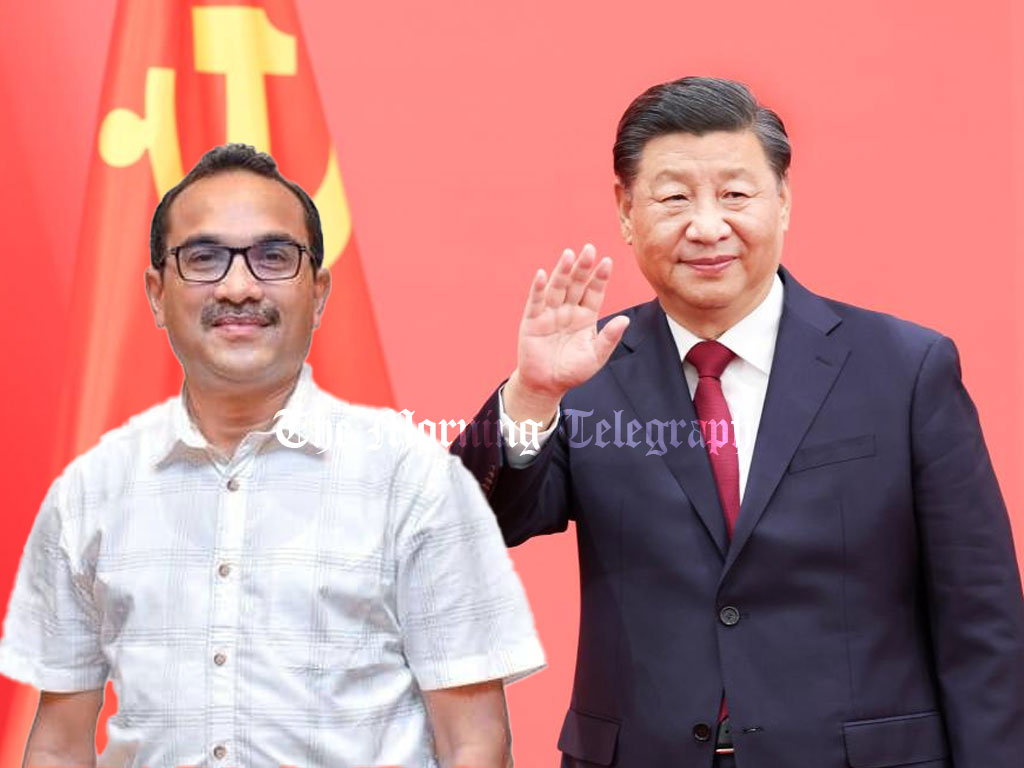
Speculation is mounting in Colombo as Bimal Ratnayake’s deep ties with Beijing and his sudden trip to China after losing his ministerial post raise questions over whether China is quietly grooming him as the future leader of Sri Lanka’s Janatha Vimukthi Peramuna (JVP).
Concerns first surfaced during a dispute over container transshipments linked to a Chinese company. The United States warned the Sri Lankan government that the shipments could contain weapons destined for Houthi rebels in Syria, a charge China flatly denied. Despite American pressure, the Port Authority allowed the consignments to pass uninspected, citing their Chinese origin. Days later, Bimal Ratnayake was abruptly removed from his position as Minister of Ports and Civil Aviation.

Almost immediately after his dismissal, Bimal traveled to China at the official invitation of the Chinese Communist Party. He spent more than a week there, meeting with senior Chinese officials. This swift move fueled suspicions that his political trajectory is closely monitored, if not influenced, by Beijing.
Bimal currently heads the JVP’s international division and has been instrumental in maintaining its longstanding ties with China. The Ministry of Ports, which he once oversaw, is strategically vital for China, especially given its maritime interests in Sri Lanka. For Beijing, Bimal’s appointment to that role would have been viewed as a positive signal. Observers now believe China may be closely following the circumstances of his removal, with many speculating that Beijing sees him as a potential future leader of the JVP.
Although Tilvin Silva has also cultivated relations with China, Bimal is said to have earned greater trust from Chinese officials. Whether China truly intends for him to succeed Anura Kumara Dissanayake as the party’s next leader remains uncertain. Yet, his extended travels to China while serving in senior government roles suggest an unusually close relationship.
Reports further indicate that the Chinese Embassy in Colombo maintains unusually close contact with JVP affairs. Former JVP leader Wimal Weerawansa even revealed that he was informed of his expulsion from the party through a Chinese Embassy source. Such revelations strengthen perceptions that Beijing has an inside track on JVP politics.
The precise reasons for Bimal’s sudden visit to China remain undisclosed, but the timing has raised eyebrows. What is evident, however, is that China maintains a significant interest in the JVP’s internal decision-making and political strategy. For Sri Lanka, a country already caught between great-power rivalries, the question of whether Beijing is backing Bimal as the JVP’s future leader has become part of a larger debate over sovereignty, foreign influence, and the direction of national politics.
If Bimal Ratnayake is indeed China’s preferred candidate to lead the JVP, his future moves will be closely scrutinized, both in Colombo and in international capitals concerned with Sri Lanka’s political independence. For now, the speculation continues, but one thing is clear: China’s role in shaping Sri Lanka’s leftist politics can no longer be ignored.