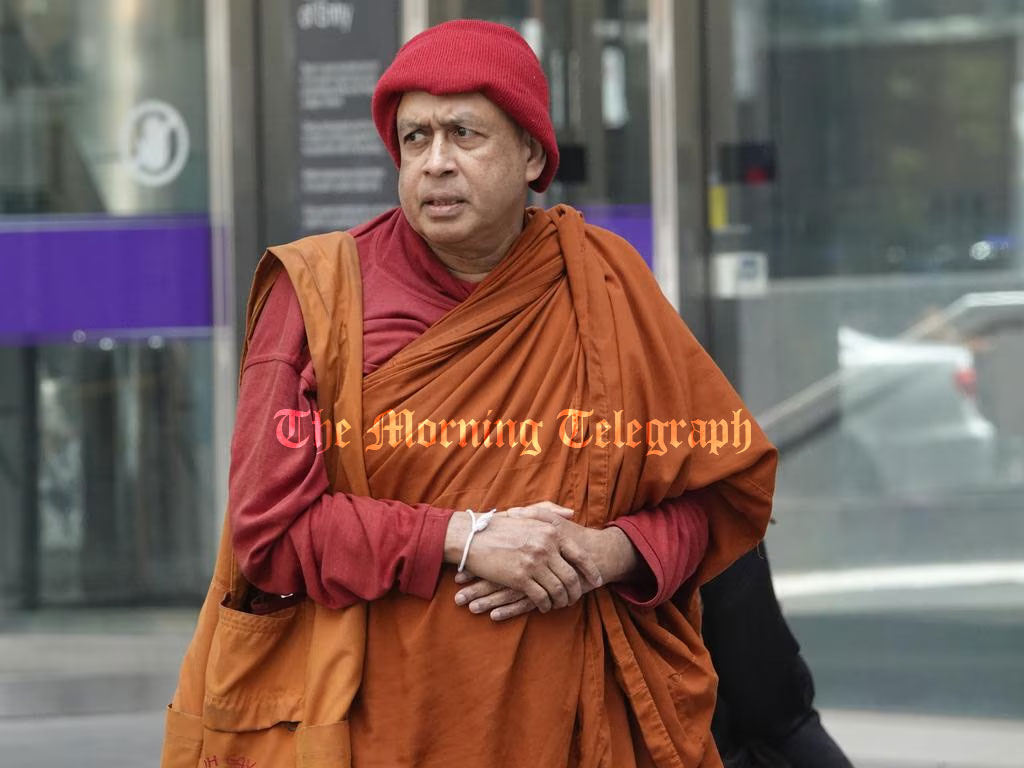
A 70-year-old head monk of a Buddhist temple in Melbourne has been found guilty of sexually abusing young children, some as young as four, in a case that has shocked Australia’s Buddhist community.
Naotunne Vijitha, the former head monk of the Dhamma Sarana Buddhist temple, faced a four-week trial at the County Court in Melbourne. He had pleaded not guilty to 19 historical child sexual offences but was convicted on 17 of those charges.
The court heard that Vijitha abused six girls, aged between four and twelve, in multiple locations including his private living quarters inside the temple, a prayer room, and during Sunday school sessions. Prosecutors said the abuse began after he moved to Melbourne from overseas to take charge of the temple and continued even after the temple relocated to Keysborough in 2000.

The victims, now adults, gave evidence during the trial, recounting traumatic experiences from their childhood. Friends and relatives also testified, supporting the accounts of abuse and describing the lasting impact it had on the victims.
Vijitha’s defence team, led by barrister Nick Papas KC, argued that the allegations, dating back 25 to 30 years, were unreliable due to the long passage of time. He told the jury to set aside emotion, claiming that some of the allegations were “so improbable as to stretch any grounds of credulity.”
Jurors began deliberations on October 23 and returned their verdict on Thursday. They found Vijitha guilty on 17 counts, acquitted him on one charge of an indecent act with a child under the age of 16, and were unable to reach a verdict on one further charge. Judge Pardeep Tiwana told jurors he would accept a majority verdict rather than a unanimous one on the unresolved charge, with deliberations set to continue on Friday.
The case has drawn widespread attention because of the betrayal of trust in a religious environment where children were expected to be safe. Instead, the court was told, Vijitha used his position as a spiritual leader to target vulnerable children who were placed in his care.
The guilty verdicts represent a significant outcome in Australia’s ongoing efforts to confront historical child sexual abuse within religious institutions. They also underline the importance of survivors coming forward, often decades later, to pursue justice against those who abused positions of power.
Vijitha now faces sentencing, with the guilty verdicts ensuring he will serve a substantial prison term for crimes committed against children who once trusted him as a monk and community leader.