- Note that the above image is AI generated
In a dramatic deal sealed in Busan, Donald Trump and Xi Jinping agreed to trim U.S. tariffs on China in return for Beijing’s crackdown on fentanyl, renewed purchases of American soybeans, and the resumption of rare earth exports, but experts warn it may be only a fragile pause in a long-running trade war.
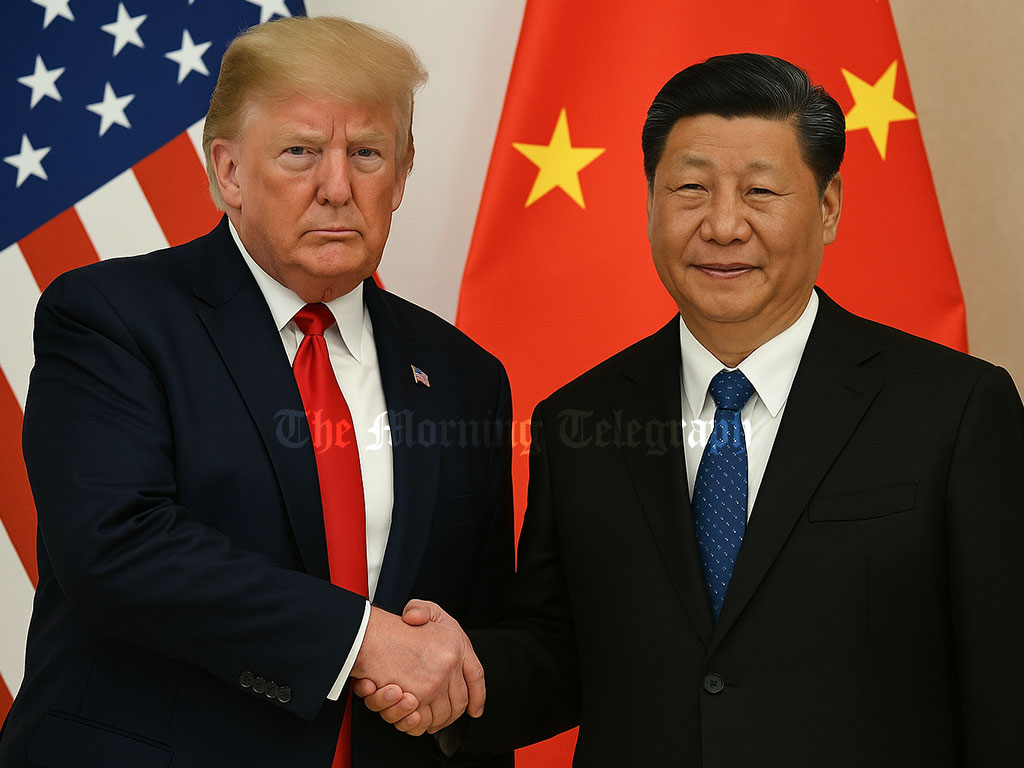
U.S. President Donald Trump and Chinese President Xi Jinping held their first face-to-face talks since 2019, meeting at a South Korean air base in Busan on the sidelines of the Asia-Pacific Economic Cooperation forum. The high-stakes meeting came at the end of Trump’s whirlwind Asia tour, which also included trade discussions with South Korea, Japan, and Southeast Asia. The deal struck between Washington and Beijing resets the tone of the U.S.-China trade relationship but leaves many root disputes unresolved.
Trump emerged jubilant, telling reporters aboard Air Force One that the meeting was “12 out of 10,” hailing Xi’s commitments on fentanyl, soybeans, and rare earths as a major breakthrough. Tariffs on Chinese imports will be reduced to 47% from 57%, with fentanyl-related tariffs cut in half to 10%. In return, Xi pledged that China would work “very hard” to stem the flow of fentanyl precursor chemicals, the lethal opioid fueling record overdose deaths in the United States.

Rare earth elements, critical for cars, fighter jets, and advanced electronics, had been the sharpest weapon in China’s arsenal. Just weeks earlier, Beijing threatened export controls to squeeze Washington. Now, China’s Commerce Ministry says it will suspend restrictions for one year, keeping U.S. supply chains open. Trump claimed the pause averts a potential disaster for U.S. defense and tech industries that rely heavily on Chinese minerals.
In agriculture, China agreed to buy 12 million metric tons of American soybeans through January, then 25 million tons annually for three years. U.S. Treasury Secretary Scott Bessent confirmed the purchases, while also announcing that China approved a plan to bring TikTok under U.S.-controlled ownership. China will also purchase American oil and gas, with Trump touting potential involvement in Alaska’s $44 billion LNG pipeline project.
As part of the compromise, Washington will suspend for one year new restrictions under the U.S. Entity List. Those measures, designed to block Chinese firms linked to sanctioned entities from acquiring advanced American technology, had drawn Beijing’s fury. Maritime logistics and shipbuilding sanctions were also paused, as both sides agreed to halt tit-for-tat port fees that had threatened global shipping.
Despite the upbeat tone, skeptics were quick to pour cold water on Trump’s narrative. Senate Democratic Leader Chuck Schumer said Trump “folded on China,” casting doubt on Xi’s promises. Analysts echoed that caution, noting that under the Phase 1 trade deal signed during Trump’s first term, China failed to meet most of its purchasing commitments. Craig Singleton, senior China fellow at the Foundation for Defense of Democracies, called the new deal “transactional relief, not a structural reset,” warning that tensions would flare the moment one side felt shortchanged.
The meeting itself lasted over 90 minutes and was cordial, with Xi telling Trump that “China’s development and rejuvenation are not incompatible with Making America Great Again.” Both leaders emphasized the importance of avoiding collapse in ties while calibrating their rivalry. Yet major issues like Taiwan and the U.S. clampdown on Nvidia’s AI chip sales were left off the agenda, leaving critical disputes unresolved.
Markets, which had surged ahead of the meeting, offered only a muted reaction afterward. Global investors recognized the deal as a one-year truce rather than a permanent solution. Trade experts say the agreement removes immediate risks but does little to address the structural rifts at the heart of U.S.-China competition from industrial subsidies to digital surveillance, intellectual property theft, and the future of Taiwan.
One striking footnote came just before the talks began, when Trump ordered the U.S. military to resume nuclear weapons testing after a 33-year hiatus, citing China and Russia’s growing arsenals. Beijing quickly responded that it hoped Washington would stick to its moratorium, underscoring how strategic distrust continues to shadow the relationship.
Trump’s Asia tour had already delivered trade deals with Seoul and Tokyo, but Busan was its climax. The agreement effectively resets U.S.-China trade relations to pre-“Liberation Day” levels, when Trump’s April offensive reignited tit-for-tat tariffs. With this truce, only Brazil and India remain subject to higher tariffs among major U.S. trading partners. Yet the fundamental reality remains: the United States and China are rivals entangled in a cycle of coercion and compromise, neither willing to yield, both buying time.
For Trump, the optics of victory matter as much as substance. He promised to visit China in April and host Xi in Washington later this year, framing himself as the only leader capable of “dealmaking” with Beijing. Chinese state media, meanwhile, portrayed Xi as confident and commanding, emphasizing China’s resilience in navigating global risks.
Ultimately, the Busan pact is a fragile truce. It soothes markets and provides political wins, but it is built on transactional pledges, not structural solutions. With fentanyl deaths still rising in America, rare earths remaining a pressure point, and Taiwan looming in the background, both Washington and Beijing know the trade war is far from over. What has been bought is not peace, but time.