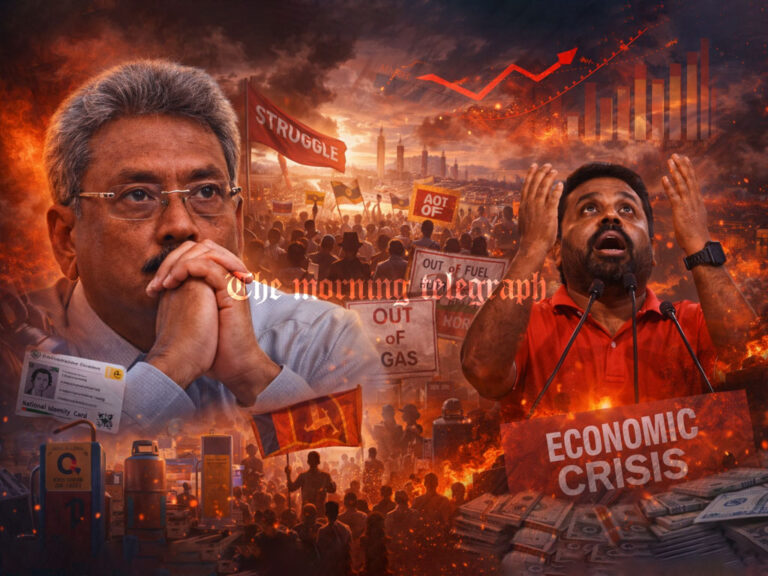
When governments fail their people, they don’t fall at the ballot box, they collapse in the streets. India’s top security strategist says Sri Lanka, Bangladesh and Nepal are the warning signs the world is ignoring.
India’s National Security Adviser Ajit Doval has warned that weak governance is now one of the biggest triggers of regime change, pointing directly to recent political upheavals in Sri Lanka, Bangladesh and Nepal as examples of what happens when governments fail to meet public expectations.
Speaking at an event marking Rashtriya Ekta Diwas, Doval said that the real strength of a nation is not its military or economy but its system of governance and its ability to deliver justice, stability and dignity to the common citizen. He stressed that in the modern world, the “common man” is no longer passive or silent, but informed, demanding, and increasingly unwilling to tolerate failure.

Doval said that when governments lose credibility, removal no longer happens through slow institutional processes but through street pressure, social uprisings, or political breakdowns. He pointed to how public frustration, corruption, and leadership failure fuelled regime collapses in Sri Lanka, political upheaval in Nepal, and sudden power shifts in Bangladesh. According to him, this pattern is a clear warning to every nation in South Asia.
He said governance is now a frontline instrument of national security, and countries that ignore the needs of their people risk not only instability but also internal collapse. He added that nation-building depends on strong institutions, not merely political leadership, and warned that leaders who weaken institutions eventually weaken themselves.
Doval praised India’s current governance direction under Prime Minister Narendra Modi, saying the country is experiencing an “orbital shift” in both administrative structure and global positioning. He pointed to reforms aimed at reducing institutional corruption and hinted that more anti-corruption measures are on the way.
He also called for clarity of vision during change, reminding the audience that even historic transformations are full of noise, resistance and attempts to derail progress. Quoting the legacy of Sardar Vallabhbhai Patel, Doval said true leadership is seen in those who can withstand storms without losing direction.
He stressed that modern governance requires not just laws and structures but effective execution, especially in areas such as women’s safety, empowerment, and equal access to services. He said that empowerment of women is no longer a social slogan, but a national necessity.
Technology, he added, must be used to make governance faster, more transparent, and more accountable, while also ensuring protection against cyber threats. The same digital systems that improve efficiency can also become a weapon in the wrong hands, making cybersecurity a core part of governance.
Doval concluded that the survival of governments now depends on whether they can deliver trust, fairness, and real benefits to the people they serve. Once people stop believing, the system begins to break.