The glittering skylines of Asia’s economic miracle hide a dark truth: a system designed for the super-rich is devouring the continent’s potential, leaving half a billion people in poverty and pushing the planet to the brink.
A new Oxfam report, “An Unequal Future: Asia’s struggle for justice in a warming, wired world,” delivers a chilling indictment of the state of the continent. It paints a picture not of shared prosperity, but of a region where economic growth has become a privilege reserved for a microscopic elite. The core finding of the report is a stark warning about systemic inequality. The richest ten percent of Asians now capture between sixty and seventy seven percent of total national income. Meanwhile, the poorest fifty percent earn a meager twelve to fifteen percent, a share that has been shrinking since 2022. This is not a simple wealth gap. It is a deep and widening chasm that threatens social cohesion and sustainable development across Asia.

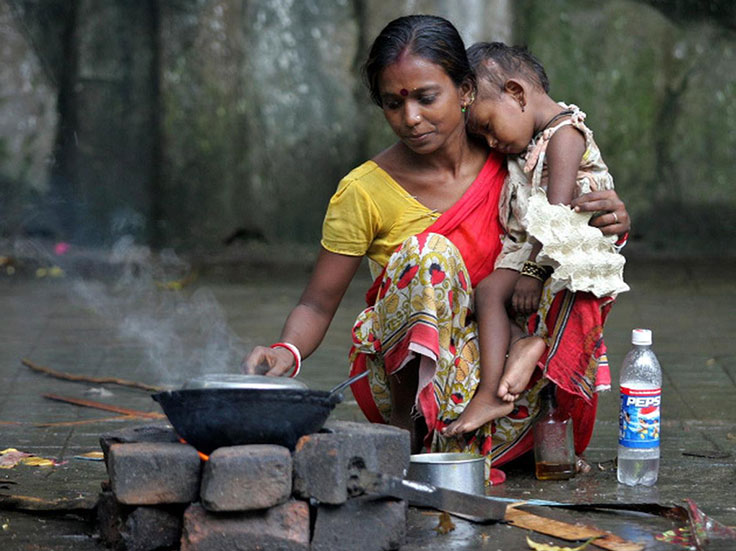
The statistics on wealth concentration are staggering. The richest one percent now holds forty point one percent of national wealth in India and thirty one point four percent in China. The top ten billionaires in Asia alone possess fortunes that surpass the annual GDP of several poorer Asian nations. This is a key phrase highlighting extreme wealth disparity. Over the past decade, the combined wealth of Asia’s billionaire class has skyrocketed by over one hundred twenty percent, exploding from one point five to two trillion US dollars in 2015 to three point four to four trillion US dollars today. This rapid wealth accumulation for the ultra rich stands in grotesque contrast to the lived reality for hundreds of millions. Meanwhile, more than half a billion people in Asia survive on less than four dollars and twenty cents a day. Eighteen point nine percent of the population in developing Asia remains in poverty, living below the three dollar and sixty five cents a day line. This is a grotesque inversion of economic morality, where the rich float on stock options and private jets while the majority scramble for daily survival.
The wealth Gini index for Asia, a key measure of income inequality, has reached zero point seventy two, one of the highest readings in the world. Despite this, governments continue to defend the discredited myth of trickle down economics. The so called success stories conceal a slow moving violence against the poor. In India, the top one percent now pockets twenty three percent of national income, the highest share in the region. In Indonesia, the combined wealth of the richest four people exceeds the total wealth of the poorest one hundred million citizens. As Oxfam warns, economic growth without inclusive mechanisms tends to benefit those who are already rich. This reality borders on tragicomedy when the yachts of billionaires are rising faster than the sea levels threatening coastal communities.
The report exposes how the very tools of modernity have been captured by inequality. Asia’s average tax to GDP ratio stands at just nineteen percent, far below the OECD average of thirty four percent. In nations like Laos and Pakistan, it languishes around ten percent. This is not an accident of fiscal prudence. It is a policy choice deliberately engineered to protect economic elites. Most Asian countries show a continued and heavy reliance on Value Added Tax, a regressive system that ensures the tax burden falls disproportionately on poorer households. Direct taxation, widely considered the lifeblood of a more equitable society, has been quietly strangled. Oxfam’s call for tax justice is explicit. It demands taxing the richest one percent at effective rates of sixty percent on both labour and capital income. It proposes imposing a two to five percent wealth tax on the ultra rich. The proceeds from such progressive taxation should be used to fund universal healthcare and education, essential public services for human development. Yet such radical fiscal justice is precisely what the region’s political classes, many of them direct beneficiaries of crony capitalism, are completely unwilling to contemplate.
This failure of fiscal policy is compounded by a crushing debt crisis. Public investment across Asia is collapsing under the weight of external debt. Oxfam notes that external public debt service by Asian low and middle income countries reached four hundred forty three point five billion US dollars in 2022, and was projected to rise by ten percent through 2024. The result is a devastating cycle of austerity. Twenty five of twenty eight Asian nations now face spending cuts averaging three percent of GDP by 2027, with governments often slashing social expenditures first. In an almost unbelievable statistic, two point one billion people now live in Asian countries where net interest payments to creditors exceed government spending on education or health. These numbers are more than fiscal curiosities. They are profound moral indictments of a system where governments are forced to prioritize paying bankers over feeding children and educating future generations. Bhutan stands out by spending eight percent of its GDP on education, while countries like Pakistan, Cambodia, and Sri Lanka spend less than two percent. The report warns that the entire region risks missing all seventeen of the UN Sustainable Development Goals by 2030, with some targets now delayed until 2062. Asia’s economic miracle, it turns out, has been mortgaged to deep and persistent inequality.
The escalating climate crisis compounds this economic injustice with biblical ferocity. Six of the world’s most climate vulnerable nations are in Asia, with over one point two billion people affected by climate related disasters in the last decade alone. Economic losses from these disasters reached sixty five billion US dollars in 2023, yet less than ten percent of these losses were insured. The continent requires approximately one point one trillion US dollars annually for climate mitigation and adaptation efforts, but only a tiny fraction of this sum is delivered. Worse still, most climate finance comes in the form of loans that further deepen the debt burden of already struggling nations. In 2022, the lowest income Asian countries paid nearly twice as much in debt service as they received in climate finance. This is not genuine assistance. It is a form of usury dressed in the language of green finance, a key phrase describing the failure of international climate support.
The real scandal of the climate crisis lies in the disparity between who pollutes and who pays the price. The Oxfam report calculates that the richest Asians emit forty four times more carbon than someone from the poorest fifty percent. In South Asia, the disparity is even more extreme. The top zero point one percent emit two hundred and three times more carbon than the poorest half of the population. Globally, half of the world’s emissions come from the richest ten percent of people. The wealthiest one percent by income account for sixteen percent of total emissions, which is more than the poorest sixty six percent of people in the world. Yet it is the poor, who contributed least to the problem, who endure the worst impacts of floods, droughts, and heatwaves. They face these climate disasters without insurance, without air conditioning, and without a powerful political voice. This situation has been rightly termed climate apartheid, a world where the poor drown in climate fueled disasters while the rich design floating villas to insulate themselves from the consequences.
Gender inequality adds another deep and painful layer to this hierarchy of suffering. Women in Asia perform two to four times more unpaid care work than men, a crucial but economically invisible contribution. They also remain forty one percent less likely to use mobile internet in South Asia, a key indicator of the digital gender divide. The statistics on women’s representation in power and wealth are as wearying as they are shameful. Only one in ten billionaires in China and India are women. Across the Asia Pacific region, there is only one woman in leadership positions for every four men. During climate disasters, women are invariably hit the hardest. In flood hit areas of Bangladesh, eighty nine percent of women faced acute food insecurity, and ninety one percent suffered from malnutrition. Yet, as Oxfam notes, closing these persistent gender gaps is not just a moral imperative but an economic one. It could add four point five trillion US dollars to the Asia Pacific’s GDP annually. The question is not whether gender equality is affordable. The real question is why patriarchy remains so profitable for the current system.
If economic and climate injustice were not enough, the digital revolution, which was supposed to democratize opportunity, has become another major fault line of inequality. In the Asia Pacific region, eighty three percent of the urban population is online compared to just forty nine percent of the rural population. This urban rural digital divide is a significant barrier to inclusive growth. Some eight hundred eighty five million women in low and middle income countries remain offline, with sixty percent of them living in South Asia and Sub Saharan Africa. In South Asia specifically, the gender gap in mobile internet use is thirty two percent. Such widespread digital exclusion is not a mere technical glitch. It is the digital continuation of centuries of class, caste, and gender oppression. Oxfam details the emergence of AI sweatshops in countries like the Philippines, where underpaid workers labor under constant stress and surveillance without any social safeguards, while the vast majority of profits flow back to Northern tech giants. The future of work, it seems, is already being built on a colonial model.
Unsurprisingly, democracy itself is fraying under the weight of such extreme concentration of wealth and power. Average democracy scores across Asia have fallen by zero point forty five points from 2014 to 2024, a steeper decline than the global average. Press freedom and the integrity of clean elections are at their lowest point in decades. Civic freedoms are eroding in direct tandem with rising inequality. Both trends serve the same powerful masters. The more concentrated wealth becomes, the tighter the elite’s grip on political power grows. It is no mere coincidence that countries with the widest inequality, such as India, Indonesia, and the Philippines, also lead the region in internet shutdowns, media censorship, and the corporate capture of the state apparatus.
Oxfam’s prescription for this multifaceted crisis is radical, precisely because the disease it seeks to cure is terminal for any hope of a just society. The report calls for the immediate creation of National Inequality Reduction Plans with explicit targets to cut the Gini coefficient below zero point three and the Palma ratio below one. It demands governments provide universal, free, and high quality education and healthcare, allocating at least fifteen percent of their budgets to health and twenty percent to education. To fund this, it proposes wealth taxes of two to five percent on the ultra rich and minimum effective tax rates of sixty percent on both labour and capital income for the top one percent. On governance, governments must ban arbitrary internet shutdowns, treat digital connectivity as a public good, and ensure that historical polluters and high emission corporations meet their climate obligations through predictable, non debt creating funding. These are not utopian demands. They represent the bare minimum required for a civilized and sustainable society to survive and thrive.
Reading between the lines, the Oxfam report is more than a list of policy recommendations. It is a profound moral reckoning for a continent at a crossroads. Asia, the region that successfully lifted a billion people from poverty in recent decades, is now poised to trap another billion in a state of permanent precarity. The report makes it clear that extreme inequality is not an unfortunate side effect of economic growth. It is the organizing principle of the current growth model. Asia’s richest individuals are often not visionary innovators but the primary beneficiaries of rigged systems built on the exploitation of cheap labour, cheap credit, and cheap nature. When two point one billion people live in countries where interest payments on debt exceed health or education spending, the fundamental problem is not one of scarcity. It is a problem of systemic theft, where resources are systematically diverted from the many to the few.
The inequality crisis in Asia is not merely an economic issue. It is an existential threat. It directly undermines democratic institutions, destabilizes societies from within, and cripples the collective fight against climate catastrophe. Without urgent and transformative action, Oxfam warns, the region risks missing all seventeen Sustainable Development Goals by 2030. On the current trajectory, by 2062, we may still be waiting for justice. The report’s ultimate conclusion is inescapable. The only sustainable form of growth is equitable growth, and the only miracle worth celebrating is the deliberate and systematic dismantling of entrenched privilege. Anything less, and the future that Oxfam describes will not merely be an unequal one. It will ultimately be uninhabitable for the vast majority of its people.