Sri Lanka’s police are facing growing backlash for allowing – and at times appearing to orchestrate – the public exposure of suspects during arrests, a practice critics argue violates human rights and undermines due process.
The controversy intensified after footage emerged of the suspect in the murder of Weligama Pradeshiya Sabha Chairman Lasantha Wickramasekera being questioned on a public road in Maharagama while cameras rolled. The video circulated widely across news platforms and social media, triggering public debate about whether the police were conducting investigations or staging them for the spotlight.

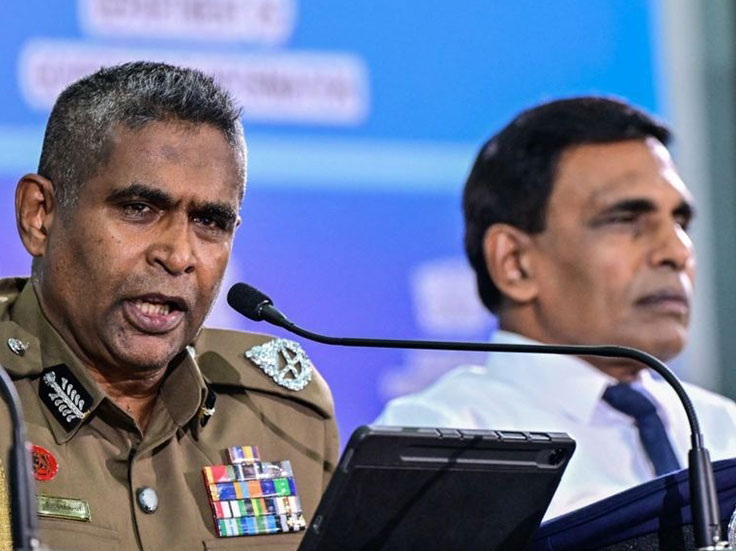
When questioned at the weekly cabinet briefing, journalists demanded to know how interrogating a suspect “on the highway” could be lawful. Police Media Spokesperson F.U. Wutler responded by announcing a probe, admitting that recording and releasing such footage was “absolutely unacceptable” and confirming that the IGP had ordered a Special Investigation Unit inquiry into officers involved.
But the incident is not isolated. In recent months, high-profile arrests have repeatedly featured suspects being filmed, paraded, or publicly displayed. When underworld figure Kehelbaddara Padme was extradited, cameras captured every step of his arrival at the airport. Officers of the Criminal Investigation Unit were even seen garlanding each other, a moment later circulated on social media. A similar media spectacle surrounded the return of Ishara Sewwandi, allegedly linked to the killing of Ganemulla Sanjeewa. Even inside a police station in Panadura, video footage of suspects being interrogated was leaked online.
These incidents have triggered sharp criticism from legal experts and rights advocates. Senior Attorney Saliya Peiris condemned the practice as damaging to the justice process, warning that “such childish actions destroy the professionalism of investigators” and harm ongoing prosecutions by tainting evidence before trial. He stressed that suspects are protected by law and must not be turned into public trophies for entertainment or political gain.
The Human Rights Commission of Sri Lanka agrees. Its director, Nihal Chandrasiri, says exposing suspects before conviction violates the principle of presumption of innocence. A person remains only an accused until proven guilty, he argues, and media-led humiliation is a breach of human rights. Once a suspect’s identity is broadcast, their social standing, career, and safety may be destroyed even if they are later acquitted.
Ironically, multiple Inspector Generals of Police have already issued circulars banning this exact behavior. Former IGP Deshabandu Tennakoon released a directive in July 2024 instructing officers not to expose suspects to cameras. Similar circulars were issued previously. The current IGP, Priyantha Weerasuriya, issued another in October 2024 – but focused on the public’s right to film police officers, not the police filming suspects. The contradiction only deepened public confusion: the police cannot stop citizens from recording them, yet continue to record and release videos of suspects themselves.
Activists warn that televised arrests serve only one purpose: image-building. In an era of viral videos, some accuse the police of turning law enforcement into spectacle, using dramatic footage to show power, gain publicity, or counter public distrust. Critics argue that this pattern reflects a deeper crisis – where justice takes a back seat to optics, and suspects are treated as props before courts even hear their cases.
As outrage grows, the police remain vague on whether the leaks come from officers or third parties. Observers note the silence speaks louder than answers. Until clear accountability is enforced, the line between investigation and media showmanship risks disappearing – and with it, the legal rights of every Sri Lankan.