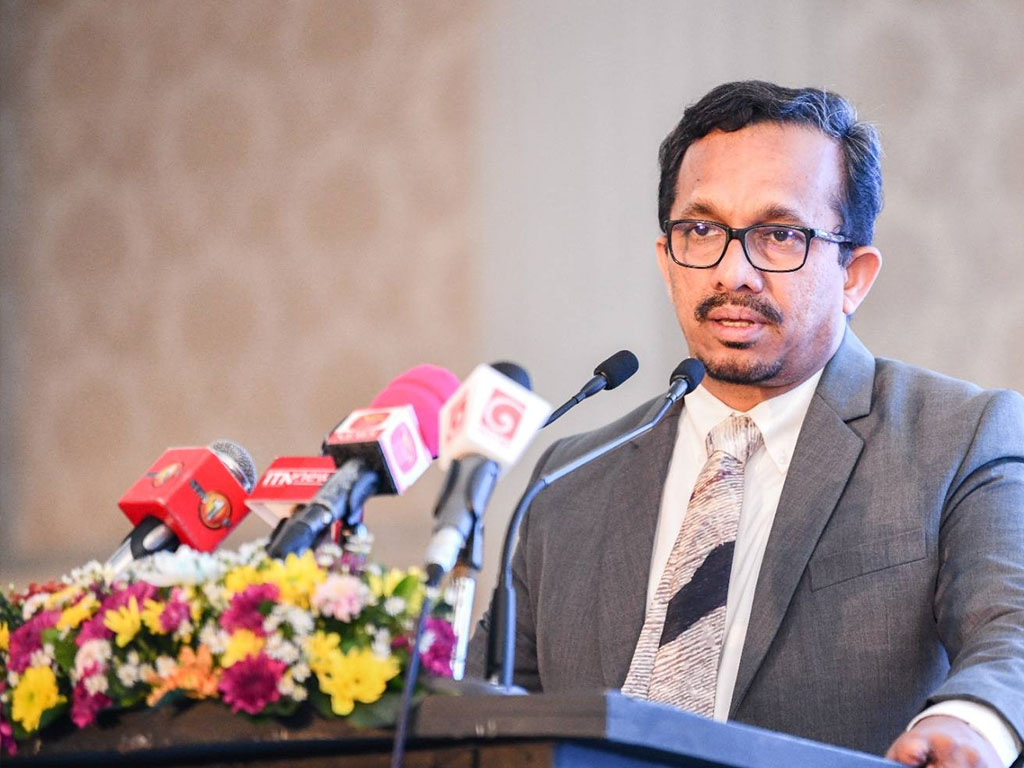
Industries and Entrepreneurship Development Minister Sunil Handunnetti triggered strong debate yesterday after declaring that Sri Lankans who accept Aswesuma benefits should feel ashamed, describing the welfare programme as a form of “legal begging.” Speaking at a public event, the Minister said that any nation dependent on subsidies and handouts cannot progress and insisted that true poverty eradication must come through sustainable economic solutions, not lifelong welfare.
“Aswesuma beneficiaries should be ashamed. It is like begging legally,” Handunnetti said, criticising what he called a dependency mentality that has weakened the country’s workforce and productivity. He argued that Sri Lanka cannot develop if citizens continue to rely on relief payments instead of opportunities for entrepreneurship, employment and self-sufficiency.

He made it clear that the current government has no plan to continue Aswesuma forever or turn it into a political slogan to win votes. “The goal should be to end Aswesuma through a clear programme and plan. I would be happy to see the day when this subsidy no longer exists,” he said, adding that the end of the scheme must come through economic empowerment, not force or intimidation.
However, Handunnetti acknowledged that millions still depend on the allowance due to long-term economic mismanagement, inflation and unemployment. He stated that any change must ensure people do not fall into extreme hardship. “It is up to the people to decide will poverty always exist, or will we challenge it and move forward?” he asked, placing responsibility on citizens as much as on the state.
His remarks drew mixed reactions. Supporters said the Minister was right to call out a welfare culture created by decades of weak governance, while critics accused him of insulting struggling families who receive Aswesuma because they have no other means of survival. Analysts noted that the Minister’s speech marks a shift from traditional politics where welfare has been used as a vote-buying tool. Handunnetti instead argued for a transition from subsidies to entrepreneurship, job creation and economic restructuring.
The Aswesuma programme currently supports over 2 million low-income individuals. Whether it will be gradually phased out or replaced by a new model remains unclear. What is certain is that Handunnetti has opened a conversation few politicians have dared to touch: Is welfare protecting the poor or trapping them in permanent poverty?