In a courtroom confession that laid bare a tale of unimaginable betrayal, Febrio De Zoysa detailed how he murdered a Sri Lankan immigrant family in Canada that had taken him in, stabbing to death four children, their mother, and a friend, leaving a father as the sole survivor of a horrific massacre.
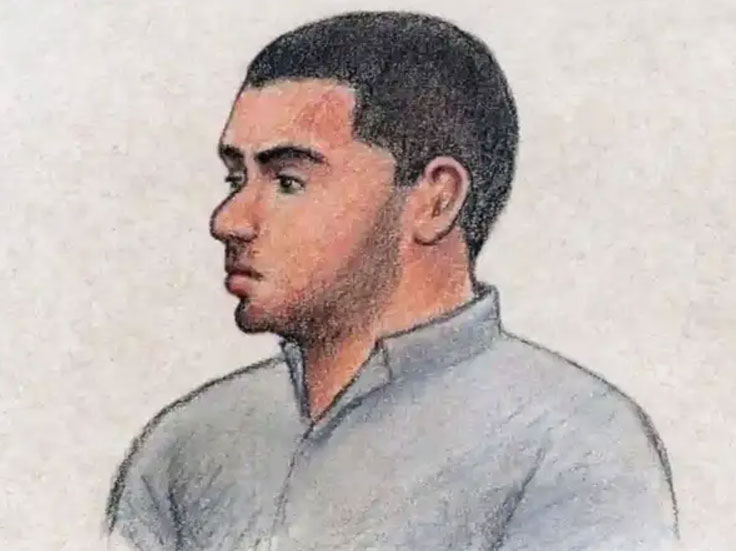
The Ottawa Superior Court became the setting for a harrowing narrative of violence and loss as 20-year-old Febrio De Zoysa pleaded guilty to the intentional murders of six people, a case that stands as one of the most shocking acts of violence in Canada’s capital. The guilty plea brings a formal legal resolution to a tragedy that unfolded on March 6, 2024, in the quiet Barrhaven suburb, a tragedy that claimed the lives of four young children, their mother, and a family friend, all Sri Lankan nationals who had embarked on new lives in Canada. The sole survivor, father Dhanushka Wickramasinghe, was left to grapple with the annihilation of his entire family by a man they had welcomed into their home. De Zoysa, who was 19 at the time of the attacks and an international student from Sri Lanka living in the family’s basement, was sentenced to life in prison with no possibility of parole for 25 years, a sentence that is fixed by law and irreversible for the first-degree murder charges.

The proceedings revealed a calculated and brutal sequence of events, pieced together from police investigations and De Zoysa’s own detailed, albeit traumatic, accounts given to authorities. The Crown prosecutor, Dallas Mack, informed the court that De Zoysa’s homicidal plan began to crystallize five days before the massacre, on March 1. His stated motives, as he told an Ottawa police investigator, were a tangled web of desperation, financial anxiety, and a profound sense of alienation. He claimed he was tired of rules and people, feeling that “the whole world is crazy.” Facing the impending expiration of his student visa and the cancellation of his financial support from his family in Sri Lanka due to his academic failures, he saw no way out. “I had no money, I did not want to return to Sri Lanka, and I didn’t have the courage to kill myself,” De Zoysa stated, explaining his warped rationale for turning his despair outward onto the very people who had shown him kindness.
The instrument of death was a 38-centimeter hunting knife that De Zoysa had purchased online, originally intended, he claimed, for suicide. In the days leading up to the attack, he had spiraled further into isolation, ceasing all academic engagement and spending excessively on video games and takeout food. The Wickramasinghe family, meanwhile, continued with their lives, unaware of the danger festering in their basement. On the day of the murders, Dhanushka Wickramasinghe was working his two jobs, as a cleaner and a taxi driver, taking breaks to ferry his children to and from school and share a meal with his wife. The normalcy of that day was underscored by a simple, familial errand: stopping to buy a box of donuts on the way home. That evening, De Zoysa set his plan in motion, luring the family’s other tenant, 40-year-old Gamini Amarakoon, into his basement bedroom under the pretense of watching a movie. As Amarakoon walked in, De Zoysa attacked, stabbing him multiple times and killing him within seconds.
The sound of the struggle alerted Darshani Ekanayake, the 35-year-old mother, who was upstairs with her children. She called her husband, who was still out working. Worried, Dhanushka Wickramasinghe also called De Zoysa to inquire about the commotion. In a chilling act of deception, De Zoysa managed to convince the couple that the screams were merely from the movie, assuring them that everything was fine. Having successfully allayed their suspicions, he then ascended to the main and upper floors of the house. There, he carried out the heart of his horrific plan, systematically stabbing to death Darshani Ekanayake and her four children. The victims were:
- Seven-year-old Inuka Wickramasinghe
- Four-year-old Ashwini Wickramasinghe
- Three-year-old Ranaya Wickramasinghe
- Two-month-old Kelly Wickramasinghe
A forensic expert would later determine that the mother and children died within seconds of being attacked, a small mercy in an otherwise unspeakable act. The details of these murders, as recounted by De Zoysa to police, were described as too traumatic to publish. After the killings, De Zoysa then waited for the father to return home, calling him around 5:20 p.m. to ask when he would be back. He spent the intervening hours, he said, watching TikTok videos in a futile attempt to calm his nerves. Dhanushka Wickramasinghe returned home late that night after finishing work and a visit to the gym. Noting the dark house, he assumed his family was asleep. He sat in his car in the garage for about ten minutes, scrolling through social media, a moment of quiet before walking into a nightmare.
As he entered his home through the garage door, he was immediately confronted by De Zoysa, who was armed with the hunting knife. Wickramasinghe greeted him, only to be met with a sudden and violent assault. In a desperate struggle for his own life, the father eventually managed to wrest the knife from De Zoysa’s grasp. He then fled to a neighboring house, screaming for help and yelling that someone had killed his children. De Zoysa pursued him, arming himself with another knife from the family’s kitchen. Neighbors, alerted by the screams, called 911. When police officers arrived at the scene, they found Febrio De Zoysa sitting calmly on the front steps of the home. His first words to the arresting officers were a stark confession: “I was going to be deported; I had no choice. I killed them all.” He repeated this admission multiple times after being read his rights. Inside, police discovered the gruesome scene: six victims, dead in their own home. Dhanushka Wickramasinghe survived but sustained serious injuries that required multiple surgeries.
In the aftermath of the tragedy, Dhanushka Wickramasinghe has shown remarkable resilience. In previous interviews, he shared his profound grief and his struggle to find a path forward. “Last year was a very difficult and painful year for me. I now know that everything is impermanent,” he told the CBC. He keeps his family close in spirit, wearing pendants that they wore. “These pendants are what they were wearing. I wear them all the time,” he said. Rather than being consumed by bitterness, he has chosen to channel his loss into helping others, establishing a small charity named the ‘Abhises Foundation’ after his son. “I lost everything, my whole world. I gained a lot here. I love the people of Ottawa. I don’t think I’ll leave here. I want to live here as a good person,” he added, expressing a deep connection to the community that supported him through his darkest hours.
During the court hearing, when given the opportunity to speak, Febrio De Zoysa offered an apology. He stated that he was deeply sorry for his actions and that he would “spend the rest of [his] life trying to understand the reality of what [he] did.” He acknowledged that the victims’ family members “took good care of me” and attributed his actions to being “sick” at the time. His defense lawyer, Ewan Little, did not formally raise a mental health defense but suggested his client was a young man, far from home, with little life experience or coping skills. He emphasized that De Zoysa’s parents were “good people” who could never have anticipated such a horrific outcome when they sent their son to study abroad. Little acknowledged the magnitude of his client’s crime but noted that by pleading guilty, De Zoysa was “doing the right thing and what is expected of him,” thereby sparing the survivors and the public the ordeal of a trial. The final sentence saw De Zoysa receive a life sentence for the six murders and a concurrent 25-year sentence for the attempted murder of Dhanushka Wickramasinghe, ensuring he will spend at least a quarter-century behind bars before he can even apply for parole. The case serves as a stark reminder of the complex intersections of immigration pressure, mental distress, and the catastrophic consequences that can ensue, leaving a trail of devastation across two countries and forever altering the lives of all who were touched by the tragedy.