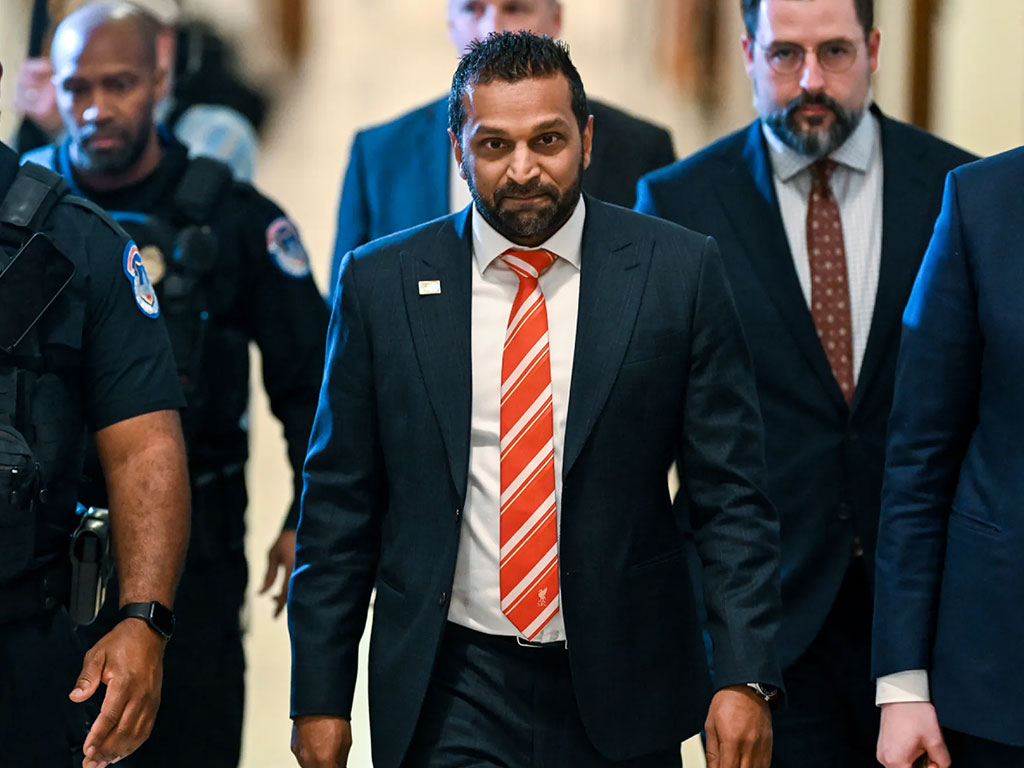
In a rare act of quiet diplomacy, FBI Director Kash Patel’s secret mission to Beijing marks a potential thaw between Washington and Beijing over fentanyl control, even as deep mistrust continues to shadow the world’s most powerful rivals.
FBI Director Kash Patel’s unannounced visit to Beijing last week has raised eyebrows across Washington and Beijing alike. According to sources familiar with the trip, Patel met with senior Chinese security officials to discuss joint law enforcement measures targeting the production and trafficking of fentanyl, a synthetic opioid that has become the leading cause of overdose deaths in the United States. The visit, reported first by Reuters, marks the most direct engagement between the two countries since U.S. President Donald Trump and Chinese President Xi Jinping held talks last month and declared a fragile “consensus” to cooperate against the drug trade.

Patel’s discreet arrival in the Chinese capital on Friday and departure the following day underscores the sensitivity of the mission. Neither Beijing nor Washington publicly acknowledged the visit, reflecting the tension surrounding any form of intelligence or law enforcement collaboration between the two powers. China’s Ministry of Public Security and Ministry of Foreign Affairs both declined to comment, while the U.S. Embassy in Beijing also remained silent. The secrecy surrounding Patel’s trip hints at how delicate the balance remains between cooperation and confrontation.
The clandestine meeting followed a modest easing of trade restrictions, as President Trump halved tariffs on Chinese goods from 20% to 10% after his discussions with Xi. The two leaders reportedly agreed that Beijing would intensify efforts to stem the flow of fentanyl and its precursor chemicals into the U.S. market. Trump told reporters that Xi had promised to “work very hard to stop the flow,” signaling a diplomatic breakthrough on an issue that has long poisoned bilateral relations.
Treasury Secretary Scott Bessent confirmed that the renewed understanding would be managed through a newly established bilateral working group. The framework, he explained, represents a shift from previous Trump administration policies that relied heavily on sanctions and punitive actions to pressure Beijing. Instead, the focus now appears to be on structured dialogue and mutual accountability. Whether Patel’s visit directly addressed the group’s framework remains uncertain, but it is widely viewed as an essential step in operationalizing the new agreement.
For Chinese officials, however, the issue remains politically charged. Beijing has repeatedly defended its handling of fentanyl regulation, claiming it has enacted sweeping controls on precursor chemicals and clamping down on illegal exporters. At the same time, it has accused Washington of using the crisis as “political blackmail.” Despite these grievances, the Xi-Trump summit saw both sides reach a limited but notable convergence—not only on fentanyl but also on broader economic cooperation. This included China’s decision to resume U.S. soybean purchases and to suspend new export restrictions on rare earth elements vital to global technology production chains.
Patel’s mission represents more than an attempt to address the U.S. opioid crisis; it is a signal that the White House may be pursuing a more pragmatic engagement strategy with Beijing. Analysts note that the timing of the visit, just weeks after Trump’s high-profile meeting with Xi, reflects Washington’s desire to stabilize relations without compromising its strategic leverage. It also hints at an understanding that cooperation on narcotics control could serve as a confidence-building measure amid ongoing disputes over trade, technology, and security in the Indo-Pacific region.
Yet, beneath the cautious optimism, the mission highlights the fragility of this new diplomatic opening. The absence of official acknowledgment from either side underscores the mistrust that continues to define U.S.-China relations. Even as both nations recognize the mutual benefit of curbing the fentanyl epidemic and stabilizing trade, decades of rivalry and suspicion linger beneath the surface. The cooperation, though promising, remains tenuous—one misstep away from collapse.
Observers argue that Patel’s secret journey may represent the first cautious step toward rebuilding dialogue between two superpowers that have spent years locked in economic and political confrontation. Whether this fragile truce will endure is uncertain. Still, as Reuters noted, the visit may mark the earliest sign of a thaw between Washington and Beijing—a delicate start in repairing one of the world’s most consequential rivalries.