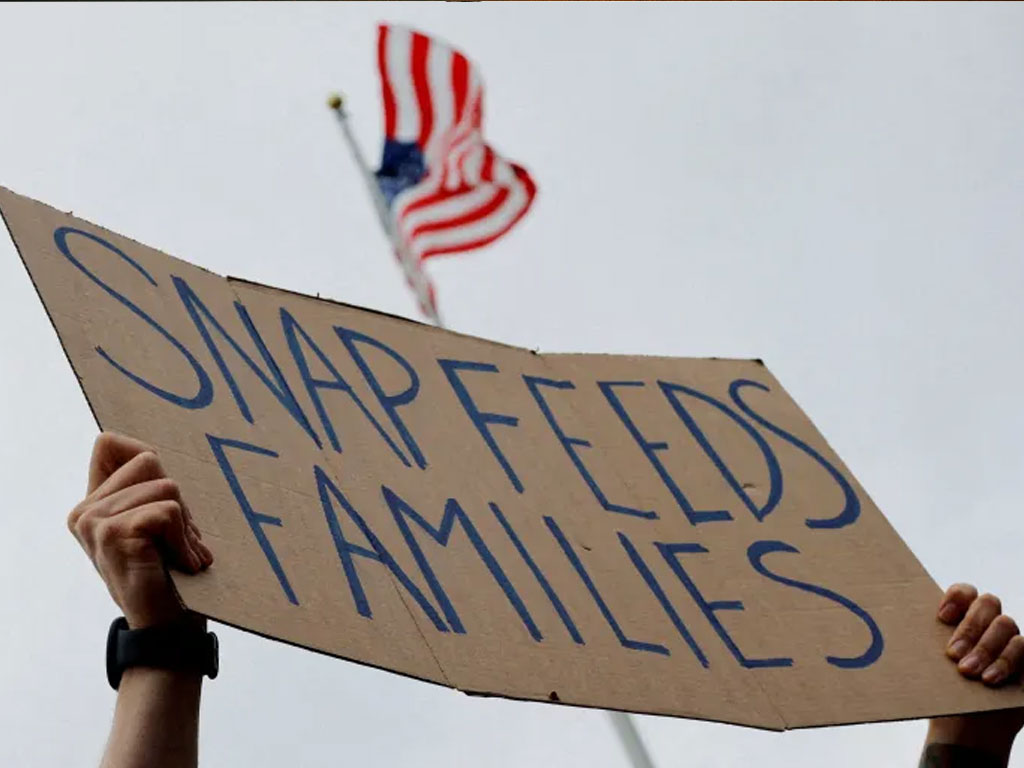
In a move sparking outrage across America, President Donald Trump has ordered states to slash food aid payments for low-income families, leaving millions with only partial benefits amid the longest government shutdown in U.S. history.
The Trump administration has directed US states to stop paying full food assistance benefits to low-income families, calling them “unauthorized.” The order came through a memo from the Department of Agriculture, which oversees the Supplemental Nutrition Assistance Program, commonly known as SNAP or food stamps. The memo stated that states could distribute only 65 percent of November benefits after the Supreme Court allowed the administration to withhold part of the funding while further legal hearings continue. This decision affects more than 42 million Americans who depend on the programme, many of whom have already begun receiving partial benefits because of the ongoing government shutdown.

Several states, including New York, Massachusetts, California, Wisconsin, and Pennsylvania, had been issuing full payments following a lower court ruling that instructed the federal government to fund the programme in full. However, the Supreme Court later paused that ruling, prompting the USDA to demand that states stop distributing 100 percent of benefits and recover any extra funds already released. The memo warned that non-compliance could result in federal funding cuts for state administrative costs and make states liable for overpayments. State leaders have pushed back strongly, with Wisconsin Governor Tony Evers refusing to comply and Massachusetts Governor Maura Healey warning that her state would challenge the administration in court.
The conflict is the latest chapter in the ongoing funding dispute over SNAP during the nation’s longest government shutdown. The programme, which supports about one in eight Americans, costs nearly nine billion dollars each month, providing an average of seven hundred fifteen dollars for a family of four. The administration’s decision to restrict funding could deepen food insecurity for millions, as many households already struggle to afford basic groceries amid stalled negotiations in Washington. Lawmakers remain divided on how to restore full benefits and reopen the government.