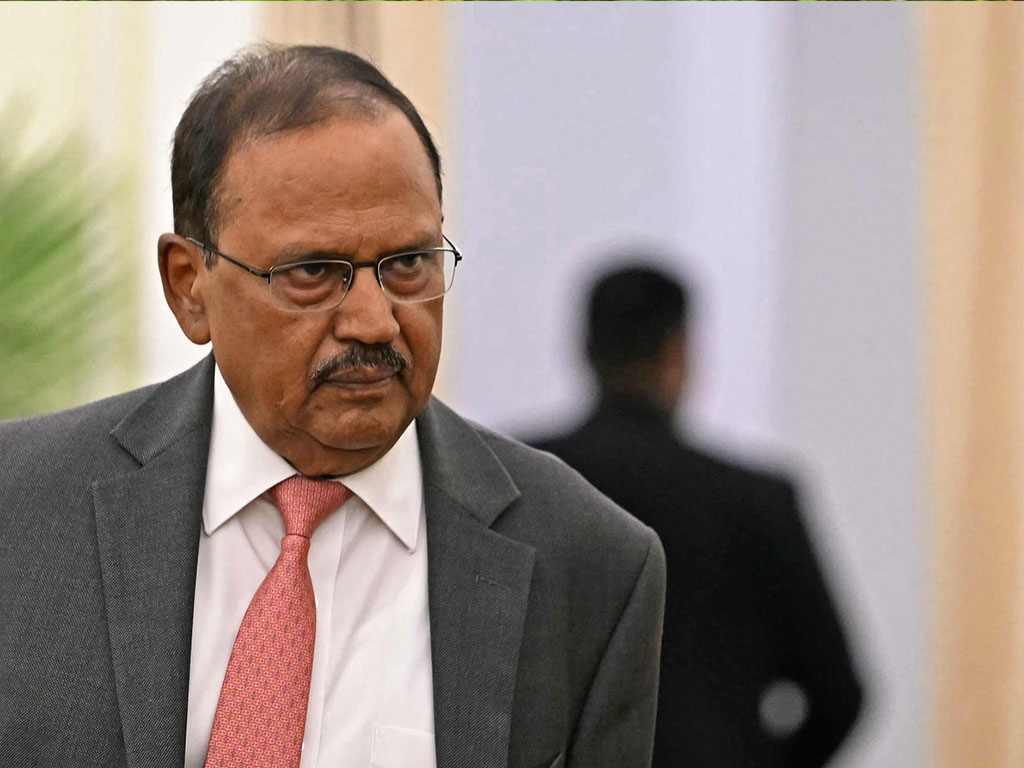
A deep investigation into how India’s security chief is rewriting the narrative of South Asia’s political upheavals, exposing the complex power play between domestic failure and foreign influence that’s redrawing the region’s map.
Indian National Security Advisor Ajit Doval has fundamentally reframed South Asia’s political turmoil through a single provocative assertion. Speaking at the Sardar Patel Memorial Lecture on National Unity Day in October 2025, Doval declared that “poor governance” alone caused the uprisings that toppled governments across Bangladesh, Nepal, and Sri Lanka over the preceding three and a half years. This strategic narrative carefully sidesteps the substantial evidence of foreign influence in these political transitions, instead placing blame squarely on domestic leadership failures within each nation.

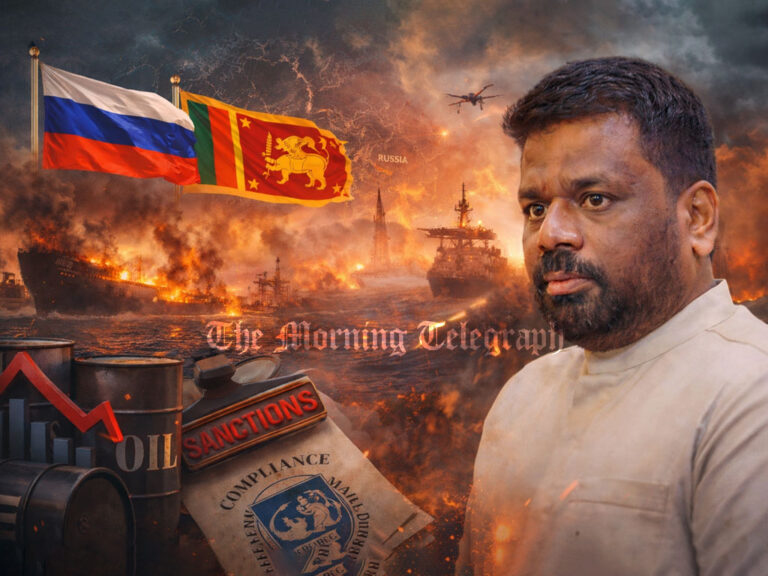
The timing and selective nature of Doval’s analysis raises significant questions about India’s strategic objectives in the region. While specifically mentioning Sri Lanka (2022), Bangladesh (2024), and Nepal (2025) in his governance critique, Doval notably excluded Pakistan from his analysis, where Imran Khan’s government fell in April 2022. This omission becomes particularly revealing when examining the geopolitical patterns connecting these political upheavals. Both Khan and ousted Bangladeshi Prime Minister Sheikh Hasina had drawn Western disapproval for their Russia policies—Khan for proceeding with a Moscow visit during the Ukraine conflict, and Hasina, according to her former cabinet minister Mohibul Hasan Chowdhury, for refusing to condemn Russia’s military actions. This pattern of leaders facing political turmoil after challenging Western foreign policy preferences suggests dimensions Doval’s “poor governance” framework deliberately ignores.
The case of Bangladesh reveals even deeper complexities that challenge Doval’s simplistic narrative. Sheikh Hasina directly alleged that Washington engineered her removal after she refused to hand over strategically vital Saint Martin’s Island in the Bay of Bengal. This small island, located just nine kilometers from Bangladesh’s Cox’s Bazar-Teknaf peninsula near the Myanmar border, holds significant strategic value in the increasingly contested waters. Doval’s failure to address these substantive allegations of foreign interference, while focusing exclusively on governance deficiencies, reveals the political nature of his analysis.
Understanding Doval’s perspective requires examining his background and longstanding strategic priorities. Unlike his predecessors, Doval emerged from intelligence services and has wielded unprecedented influence since becoming NSA in 2014. He maintains a reputation for particular hostility toward Chinese influence in the region, a position that consistently shapes his policy approach. Former Sri Lankan President Gotabaya Rajapaksa revealed that, two years before his presidential campaign, Doval pressured him to halt the Chinese-funded Colombo Port City project and reclaim the Colombo International Container Terminal. During Sri Lanka’s Yahapalana administration, Doval similarly insisted Sri Lanka terminate or take back all major Chinese-funded infrastructure projects, including both the Colombo Port City and Hambantota port. This established pattern of opposing Chinese projects makes his singular focus on “poor governance” as the cause of regional instability particularly noteworthy.
The domestic Indian political context further illuminates Doval’s strategic messaging. His declaration came precisely when Congress leader Rahul Gandhi was encouraging Indians to adopt Nepal-style youth-led campaigns to pressure the Modi government. The ruling BJP expressed fury over this strategy aimed at inspiring revolt against Modi. By attributing neighboring uprisings solely to governance failures, Doval implicitly warned against similar movements in India while avoiding direct acknowledgment of their potential effectiveness.
Doval’s framework struggles to explain the more extreme manifestations of regional unrest. How does “poor governance” alone explain Nepali insurgents setting their parliament ablaze even after Prime Minister KP Sharma Oli resigned? In Sri Lanka, the JVP’s determined bid to seize control of parliament during the Aragalaya movement from March to July 2022 nearly resulted in the building being burned, an outcome only prevented by security forces. Gotabaya Rajapaksa’s successor, Ranil Wickremesinghe, personally visited parliament to thank military personnel for thwarting this attempt, highlighting the severity of the threat that transcended mere protest against governance deficiencies.
The Sri Lankan case presents the most compelling challenge to Doval’s narrative. Both Central Bank Governor Dr. Nandalal Weerasinghe and former Finance Ministry Secretary Mahinda Siriwardena documented how the SLPP government caused unprecedented crisis by failing to address economic issues despite clear warnings. Siriwardena’s 2025 publication “Sri Lanka’s Economic Revival – Reflection on the Journey from Crisis to Recovery” detailed how top leadership devastated the economy. On this basis, Doval’s assertion that poor governance sparked Sri Lanka’s uprising holds merit. However, as both officials noted, while governance failure created conditions for crisis, the massive scale and meticulous planning of the political project that became Aragalaya suggested significant external backing.
The months leading to Sri Lanka’s explosion of protest revealed systematic external intervention. From the initial outbreak outside President Gotabaya Rajapaksa’s Mirihana residence on March 31, 2022, to the storming of the Presidential Palace on July 9, interested parties intervened at multiple levels to undermine governmental authority. The visit of Basil Rajapaksa to New Delhi in December 2021, as Sri Lanka’s crisis deepened, now appears particularly significant. Received by Doval himself during this two-day visit, Basil Rajapaksa sought solutions as the country teetered toward the eruption that would ultimately topple his brother’s government. New Delhi clearly recognized where Sri Lanka was heading and advanced its strategic planning accordingly.
India’s involvement in Sri Lanka’s crisis response became increasingly substantial as the situation developed. Doval engaged deeply from the earliest stages, with India providing billions in assistance that ultimately trapped Sri Lanka in post-Aragalaya debt. The controversial Economic Transformation Act finalized by President Ranil Wickremesinghe in 2023 and passed by parliament in July 2024 created significant future difficulties that many observers overlooked in their desperation for stabilization.
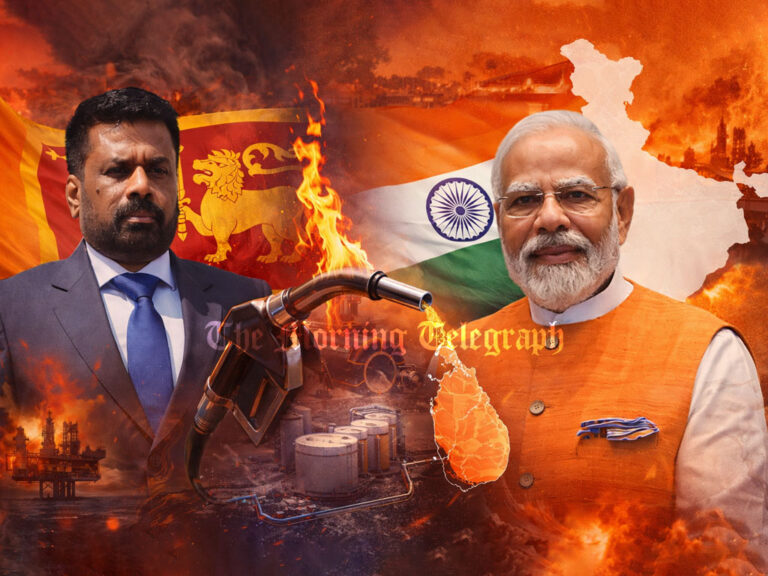
The ultimate political beneficiary of Sri Lanka’s turmoil reveals the complex outcomes of these upheavals. The JVP-led NPP, which held just three parliamentary seats during the Aragalaya protests, comfortably won both presidential and parliamentary elections in 2024. This previously marginal political force, established only in 2019, found its fortunes transformed by the protest movement. Significantly, NPP leader Anura Kumara Dissanayake followed the established pattern of making New Delhi his first overseas destination after taking office in September 2024, continuing the tradition of his predecessor Gotabaya Rajapaksa and other Sri Lankan presidents.
The concrete manifestations of strengthened India-Sri Lanka relations emerged clearly in April 2025 with the signing of seven Memorandums of Understanding covering defense, energy, digitalization, healthcare, and development assistance. These agreements, some facing legal challenges dismissed by Sri Lanka’s Supreme Court in August 2025, demonstrated India’s confidence in the NPP government or alternatively, revealed New Delhi’s strategic exploitation of Sri Lanka’s compromised position amid global financial constraints, particularly the “dwindling financial state of Uncle Sam.”
The defense relationship deepened significantly with India’s Mazagon Dock Shipbuilders Limited acquiring a controlling 51% stake in Colombo Dockyard PLC in June 2025. This $52.96 million deal gave India’s premier warship and submarine builder, affiliated with India’s Ministry of Defence, control over Sri Lanka’s largest shipyard, previously nurtured by the late Minister Lalith Athulathmudali before his assassination by an LTTE hitman. While Japanese partner Onomichi Dockyard cited financial difficulties from multiple crises as their reason for divesting, MDL proceeded with the acquisition, indicating India’s strategic priorities transcended immediate economic considerations.
Sri Lanka’s sovereignty faced further constraints through the one-year moratorium on foreign research vessels imposed by President Wickremesinghe during 2024 under significant American and Indian pressure. This ban specifically targeted Chinese scientific vessels, particularly following the August 2022 visit of Yuan Wang 5 to Hambantota port, which Indian media portrayed as a satellite and missile-tracking threat to Indian security. The NPP government’s failure to formally announce a position on continuing this ban despite earlier promises demonstrates the continuing constraints on Sri Lankan foreign policy autonomy.
The long-standing issue of Indian fishing fleets poaching in Sri Lankan waters exemplifies the asymmetrical nature of the relationship. Despite this persistent problem damaging relations with Tamil Nadu, reportage of Opposition Leader Sajith Premadasa’s three-day Delhi visit indicated no discussion of the matter. While President Dissanayake and Prime Minister Dr. Harini Amarasuriya received appreciation for taking firmer stands against poaching, the main opposition appeared uncertain in its position, reflecting the broader Sri Lankan difficulty in developing coherent approaches to managing the relationship with India.
Perhaps most revealing was the absence of discussion regarding India’s accountability for its role in Sri Lanka’s civil war during Premadasa’s visit. The Valvetiturai Citizens Committee, backed by Yasmin Sooka’s International Truth and Justice Project, sought compensation for the VVT massacre perpetrated by the Indian Army. As political parties remained silent, the fundamental irony persisted: those demanding full implementation of the 13th Amendment forced on Sri Lanka by India ignored New Delhi’s own responsibility for the “massive terrorism project” it unleashed on the island.
The historical record remains clear: without India’s disastrous intervention that cost 1,500 Indian military lives and ultimately led to Rajiv Gandhi’s assassination, the LTTE would never have transformed from a guerrilla group into the conventional fighting force that emerged after the Indian Peacekeeping Force withdrawal in March 1990. The combat experience gained against one of the world’s largest armies provided the crucial foundation for the LTTE’s military development, a reality Sri Lanka never honestly examined or documented for international understanding.
Against this complex backdrop, Doval’s “poor governance” narrative represents a sophisticated political gambit. By attributing regional upheavals exclusively to domestic failures, he sidesteps questions about external influences, geopolitical pressures, and the complex ways these factors interact with genuine popular grievances. The convenient timing for India’s domestic politics, the strategic exclusion of certain cases like Pakistan, and the avoidance of documented external interference allegations in Bangladesh and Sri Lanka all reveal the constructed nature of this narrative.
South Asia’s turmoil undoubtedly features significant governance deficiencies. Sri Lanka’s economic collapse, Nepal’s political instability, and Bangladesh’s democratic backsliding all provided fertile ground for unrest. However, Doval’s selective framing deliberately overlooks the geopolitical dimensions that have consistently shaped these crises. From pressure on Chinese projects to reactions against independent foreign policies to the strategic exploitation of economic crises, external forces have consistently influenced and occasionally engineered the region’s political transformations.
The absence of a cohesive Sri Lankan approach to India relations, highlighted by Premadasa’s visit, reflects the broader regional pattern of individual nations struggling to navigate complex geopolitical currents. As China consolidates its global position and the Russia-Ukraine conflict continues reshaping international alliances, South Asian states find themselves caught between competing powers, with India increasingly asserting its narrative control over the region’s political developments.
Doval’s convenient truth about poor governance provides a politically useful framework for India, deflecting attention from broader geopolitical machinations while placing responsibility for instability solely on regional governments. This narrative serves both domestic political purposes, in warning against opposition-inspired mobilization, and international objectives, in positioning India as a stable regional power contrasting with its troubled neighbors. The reality, as always, proves more complex, a tangled web of domestic failure, popular anger, geopolitical competition, and external intervention that Doval’s carefully constructed narrative deliberately obscures.