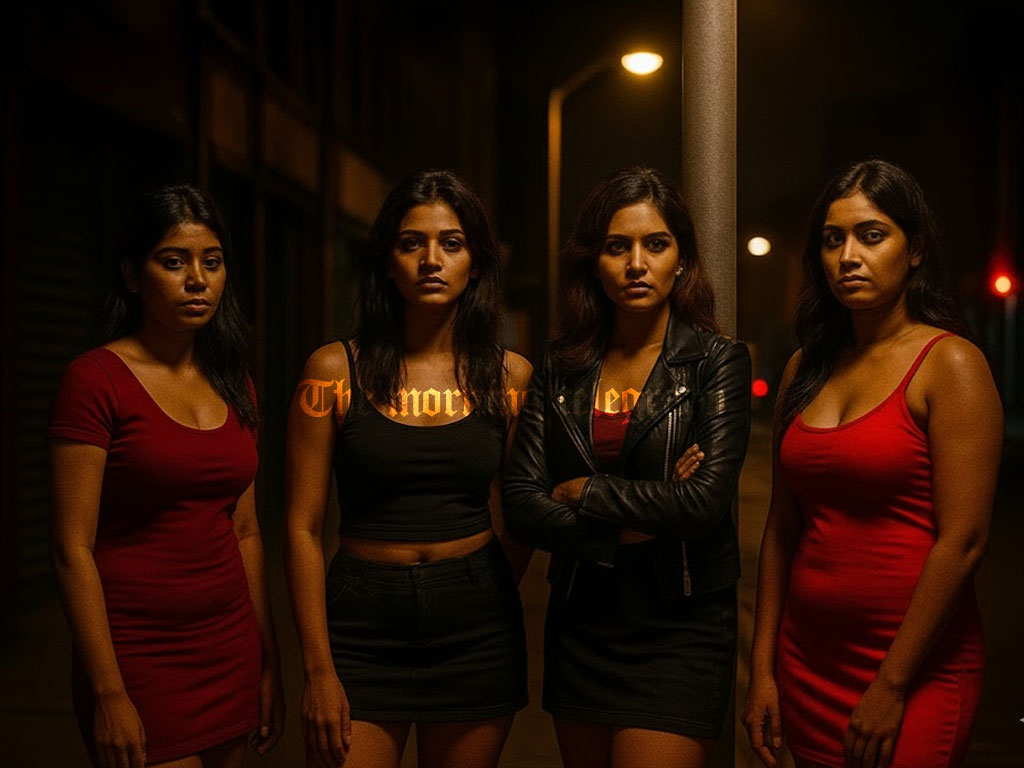
A powerful new movement involving nearly 10,000 female sex workers has emerged across Sri Lanka, signalling the strongest unified demand yet for legal recognition, social protection and an end to systemic discrimination faced by women in the sex trade.
Around 10,000 female sex workers have come together under a single organisation seeking both legal status and social acceptance. The group operates under the banner of the Prajasakthi Sanwardana Padanama, also known as the Community Empowerment Foundation. According to its Executive Director H. A. Lakshman, the formation of this collective comes at a time when sex workers are routinely subjected to arrests, social exclusion and loss of government welfare support that is accessible to others. He confirmed that this is the largest organised body representing sex workers in the country.

More than 10,000 women from Colombo, Kurunegala, Hambantota and Gampaha have formally joined the organisation. Many of these women have turned to sex work due to severe economic hardship, failed marriages, rape, trafficking and long term gender based vulnerabilities. There are cases where women have entered prostitution with the knowledge or involvement of their spouses. Some have developed addictions to narcotics, creating additional challenges for rehabilitation and social reintegration.
At the same time, the organisation has begun developing self employment programs aimed at helping women leave prostitution by offering alternative income generating opportunities. Lakshman stated that the Foundation is now actively working toward securing legal recognition for sex work as a legitimate economic activity.
Earlier reports highlighted the worsening crisis. The Daily Mirror previously revealed that the soaring cost of living and rising unemployment had pushed thousands of Sri Lankan women into extreme survival tactics. Thousands turned to online prostitution as a last resort, a stark consequence of the economic meltdown. According to the report, the government’s failure to stabilise the economy or provide sustainable relief has deepened the vulnerability of women and exposed a growing national emergency that demands urgent policy action.
The COVID 19 pandemic further accelerated this deterioration. When garment factories and other businesses shut down, thousands of women lost their only source of income. Even as Sri Lanka attempts to recover, economic instability still dominates daily life. Women facing job loss, debt, exploitation and desperation continue to fall into online sex work or physical prostitution as a means of survival.
An NGO named National Women’s Unity, which works closely with groups affected by the crisis, reported at the time that nearly 40,000 housewives have turned to online prostitution since 2022 because of economic pressure. This figure highlights the depth of the social and economic damage faced by women and underscores why organised sex workers are now demanding legal recognition, protection and dignity.