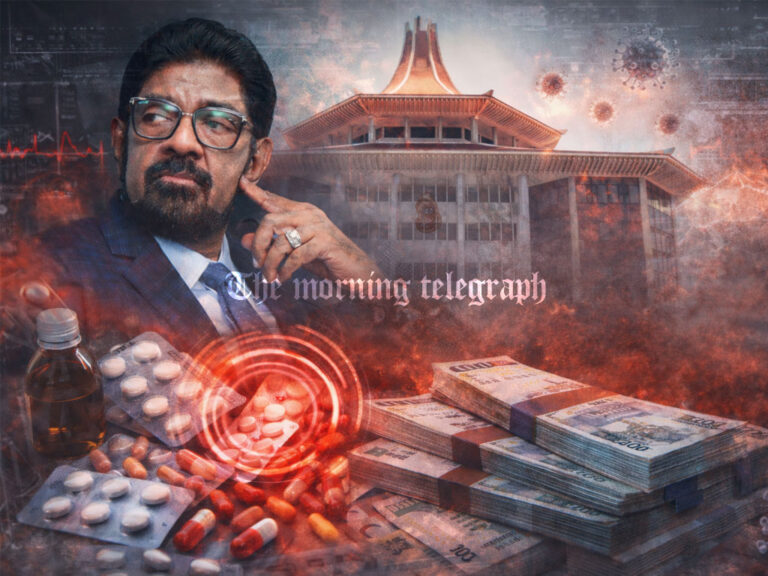
For decades, K. Mathivanan was respected as a loyal servant of Sri Lankan cricket, a club stalwart, long-time administrator, and former Vice President of Sri Lanka Cricket. But today, his name is back in the headlines for very different reasons. Once celebrated for his administrative discipline, Mathivanan now finds himself in the middle of an increasingly personal and public legal battle against the SLC, a fight that many insiders say has little to do with saving cricket and everything to do with settling scores.

A Legacy Overshadowed by Litigation
As the former President of the Colombo Colts Cricket Club and a fixture in cricket administration for decades, Mathivanan’s contributions are undeniable. Yet, his decision to file legal action against SLC — challenging its election processes and governance, has split opinion across the cricketing fraternity.
Some see it as the last stand of a veteran administrator who refuses to let go. Others describe it as an act of bitterness, born from exclusion and declining influence within the sport’s modern structure.
Even as his health reportedly deteriorates, with recent images of him travelling overseas in a wheelchair, Mathivanan’s determination to wage this legal war has intensified. To critics, it appears less a campaign for reform and more an obsession with control.
The Question of Motive
Those close to the case question whether Mathivanan’s crusade truly stems from a vision for clean governance or a deep-seated frustration at having been sidelined. Sources inside SLC argue that his repeated interventions have caused unnecessary instability, stalling progress on cricket reforms and diverting focus from development programs.
“Every time SLC takes a step forward, there’s a petition or an objection,” one senior official remarked. “It’s as if the man can’t stand to see the system move on without him.”
While Mathivanan has publicly spoken of “transparency and meritocracy,” critics point out that during his own tenure, the same issues – political influence, favoritism, and opaque decision-making flourished. To many, his current posture rings hollow.
A Vision Stuck in the Past
Mathivanan’s “vision” for Sri Lankan cricket centered on club empowerment, player welfare, and anti-corruption sounds noble on paper. But insiders question whether it aligns with the realities of today’s cricketing ecosystem, one driven by professionalism, corporate partnerships, and modern governance frameworks.
His old-school approach, admirable in its purity, risks alienating the very generation of players and administrators trying to move cricket forward.
The Cost of Disruption
Meanwhile, the legal proceedings he initiated have bogged down administrative operations, discouraged sponsors, and drained SLC’s attention and finances. “Every lawsuit means another delay,” said a senior club representative. “Grassroots cricket suffers while egos clash in court.”
Even some of Mathivanan’s long-time supporters at Colombo Colts Cricket Clubnow express quiet disillusionment. “He was once a pillar of strength for the club,” one member said. “But now it feels like he’s fighting ghosts, not governance.”
A Respectful Farewell or a Bitter Legacy?
There is still time for Mathivanan to reclaim his legacy as a reformer, mentor, and symbol of integrity. But if his fight continues down this path of perpetual confrontation, history may not remember him as the visionary he believes himself to be.
Instead, it might remember him as a man who loved cricket too much to let it go.