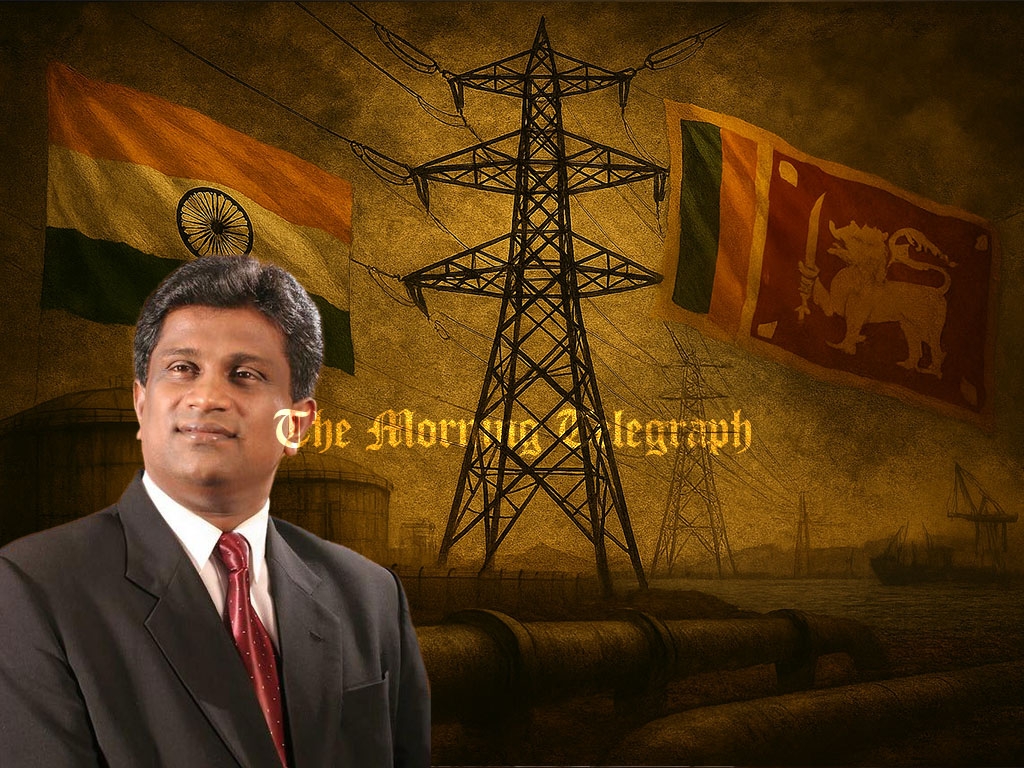
A senior opposition MP warns that Sri Lanka’s failure to advance its critical energy connectivity project with India risks sabotaging national growth, foreign investment, and the future of Trincomalee’s strategic potential.
MP Ajith P. Perera questioned in Parliament why the long discussed Indo Sri Lanka Energy and Power Connectivity Project remains delayed despite its national importance. Speaking during the Energy Ministry’s expenditure debate for the 2026 budget, the MP said that although several ideas had been proposed regarding a bilateral Connectivity Plan, the government has shown no real progress in any sector.
He stressed that the development of Trincomalee through Energy Connectivity with India is vital for Sri Lanka’s future energy security, economic expansion and regional stability. The MP said that this project should be advanced with full cooperation between both nations, adding that Sri Lanka’s long term economic survival cannot be separated from India. He urged the government to expedite work so both countries can benefit from win win opportunities.

The MP accused the current National People’s Power administration of secretly signing agreements with India while avoiding transparency. He said India has no reason for secrecy and warned that the government should not hesitate to move forward. He added that past members of the Janatha Vimukthi Peramuna were taught anti India ideology and senior ministers may have attended those classes, but such outdated thinking should not influence national strategy today.
He said India has transformed its economic model by shifting many sectors to private enterprise and encouraged Sri Lanka not to fear doing business with India. The MP also raised concerns about the stalled investment program for the Trincomalee Oil Tank Farm, noting that 66 tanks remain unused. He called for immediate progress on the project and stressed the urgency of developing the Trincomalee Port, arguing that the lack of development there is alarming when Colombo and Hambantota continue to expand.